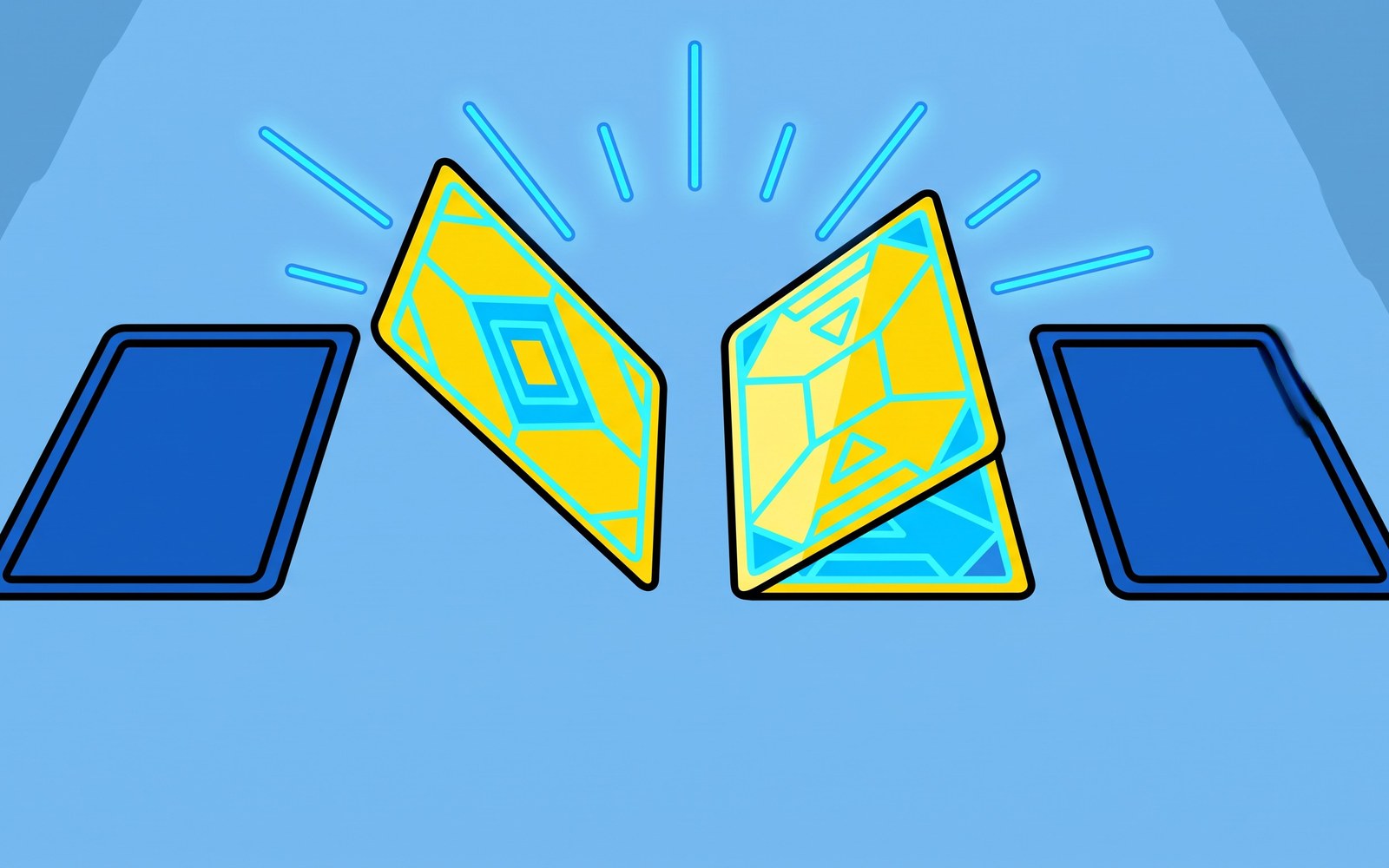
Here is a puzzle that has embarrassed a lot of clever people. Four cards sit on a table. Each has a letter on one side and a number on the other. You can see: A, K, 4, 7. Someone claims a rule: if a card has a vowel on one side, it has an even number on the other. Which cards must you turn over — and only those — to find out whether they’re lying?
Most people say A, and many add 4. The A is right: a vowel with an odd number behind it would break the rule, so you must check it. But 4 is a trap. The rule says vowels imply even numbers; it says nothing about what’s behind an even number. Turn the 4 and find a consonant, and you’ve learned nothing. The card almost everyone forgets is the 7 — an odd number. If a vowel is on its other side, the rule is broken. The correct answer is A and 7. In the classic experiments, fewer than one in ten people got it.
That’s the deflating half. Now the strange half. Change nothing about the logic — keep the exact same “if P then Q, which cards falsify it” structure — but dress it in a human situation. Four people are drinking in a bar. The rule is: if you’re drinking alcohol, you must be over 21. The cards show what each person drinks on one side and their age on the other: beer, soda, 25, 16. Who do you check? Almost everyone, instantly, correctly, turns over beer and 16. The beer-drinker might be underage; the sixteen-year-old might be drinking. Nobody wastes a move on the soda or the twenty-five-year-old.
Same puzzle. Same logical form. One version defeats almost everyone; the other is so easy a child can do it. That gap is the interesting thing, and psychologists have argued about it for decades. Peter Wason built the original task in the 1960s to show something uncomfortable: people don’t naturally reason by trying to break a rule. Given “if vowel, then even,” the mind reaches for cards that could confirm it (the vowel, the even number) and skips the one card that could refute it (the odd number). We look for the hit, not the counterexample. That habit has a familiar cousin in everyday life, where it goes by the name confirmation bias.
Why does the bar version rescue us? One camp, led by the evolutionary psychologists Leda Cosmides and John Tooby, argued we carry something like a specialized instinct for policing social contracts — a cheater-detector. “Alcohol implies over-21” is a rule with a benefit (drinking) and a requirement (being of age), and a cheater is someone who takes the benefit without meeting the requirement. Framed that way, the “odd number” card stops being an abstract logical object and becomes a person who might be getting away with something, and suddenly we know exactly where to look. Others push back: maybe it’s not cheating specifically but any rule about what’s permitted or obligated (deontic reasoning), or simply that concrete, familiar content gives the mind a foothold that bare symbols don’t. The debate isn’t settled, and that’s part of what makes the task such a durable little instrument — it keeps being able to distinguish between theories of how we think.
What survives all the argument is the humbling core. The machinery you’d use to check a claim isn’t general-purpose. Handed a bare “if this, then that,” most of us reason poorly and don’t notice. Handed the very same structure wrapped in someone possibly cheating, we turn into sharp little logicians. We are not built to test rules. We are built to catch people. Logic, it turns out, is something we mostly do by borrowing the wiring meant for each other.
The science, to look up: Peter Wason’s selection task (1966; Wason & Shapiro 1971); the thematic-content effect — Griggs & Cox (1982), the drinking-age version; the social-contract / cheater-detection account — Cosmides & Tooby (1992); and the competing deontic / pragmatic-reasoning-schemas view — Cheng & Holyoak (1985). The “why” is genuinely contested; hold any single explanation loosely.
Sources
- The Wason selection task (Peter Wason, 1966/1971)
- the thematic-content effect (Griggs & Cox, 1982)
- social-contract / cheater-detection theory (Cosmides & Tooby, 1992)
- deontic reasoning schemas (Cheng & Holyoak, 1985)
Liked this? Get the next one in Working Theory.
Going weekly in August (it's in beta now). One genuinely interesting read on building, the brain, and the science most people missed.
Subscribe →