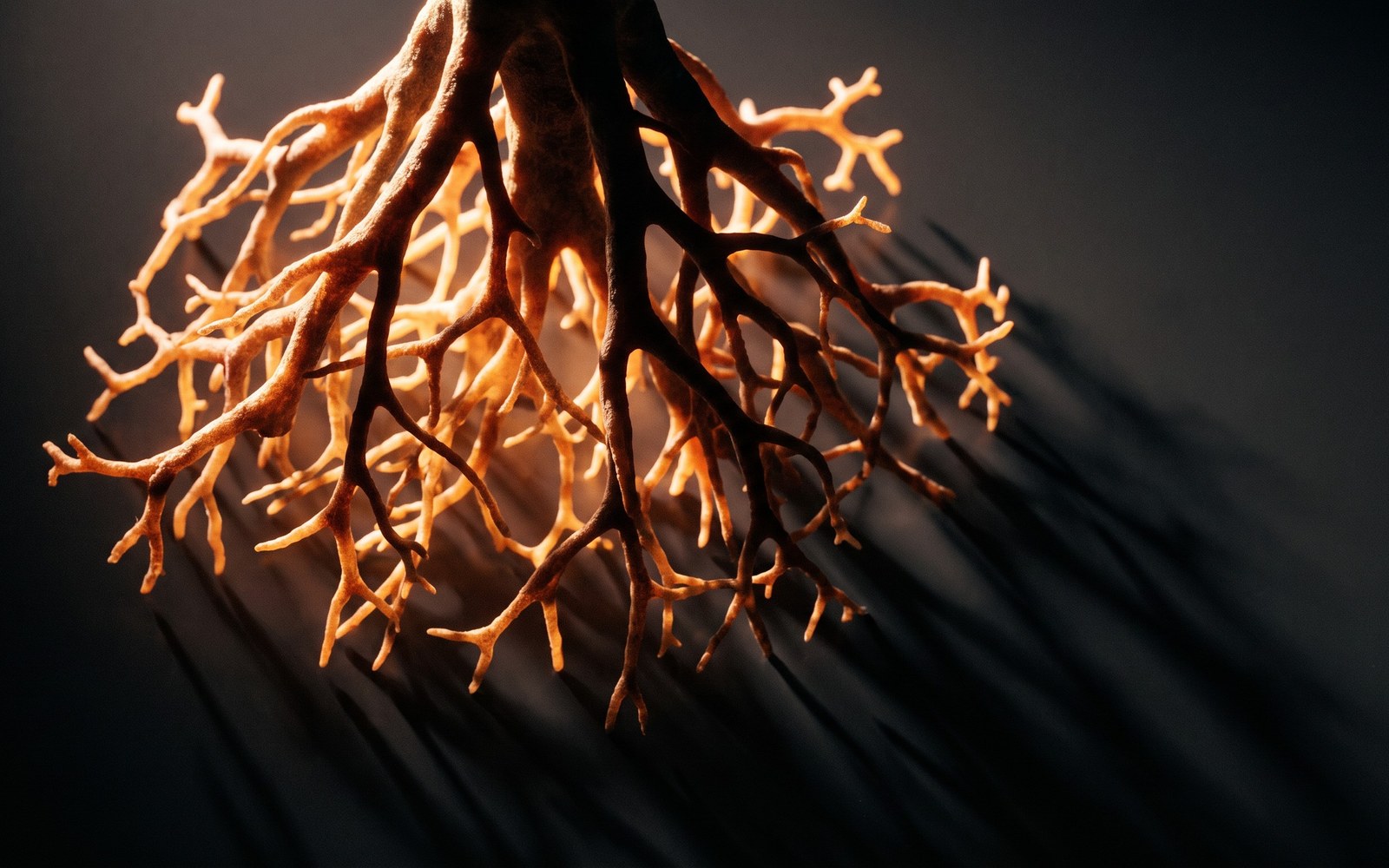
You have an organ that isn’t drawn in the anatomy textbook. It has no fixed shape, no single location, and, unlike every other organ you own, you weren’t born with it. You assembled it during your first years of life, mostly by accident, out of whatever microbes happened to reach you: from birth, from milk, from dirt, from the people who held you. It weighs on the order of a couple of pounds, roughly in the neighborhood of your brain, and most of it lives in your large intestine. In 2006, two microbiologists, O’Hara and Shanahan, argued we should stop thinking of it as passengers and start calling it what it functionally is, a forgotten organ.
Consider what it does for a thing you never consciously grew. It digests what you can’t: the fiber your own enzymes can’t break down gets fermented by your gut microbes into short-chain fatty acids, which feed the cells lining your colon and ripple outward into your metabolism and immune signaling. It manufactures things you need, including certain vitamins. It trains your immune system, a large share of your immune tissue sits along the gut wall in constant negotiation with these microbes, and that early back-and-forth helps calibrate what your body learns to tolerate versus attack. And it talks to your brain, along what’s called the gut-brain axis, through the vagus nerve and a stream of chemical signals.
That last one deserves an honest caveat, because it’s the part that gets oversold. Real two-way signaling between gut microbes and the brain genuinely exists and is a live, serious field of research. It is also a field where the sweeping headlines, microbes that set your mood, cure your anxiety, decide your personality, run well ahead of what anyone has actually shown. The reliable version is quieter: there’s a channel there, and we’re still learning what travels down it.
This is also a good place to correct a “fact” you’ve almost certainly been told. For decades the line was that you’re ten parts bacteria to one part human, ten microbial cells for every human cell. That 10:1 ratio circulated everywhere, including in textbooks. In 2016, Sender, Fuchs and Milo went back and actually recomputed it, and landed much closer to 1:1, roughly as many bacterial cells as human cells, give or take, a figure that shifts noticeably every time you use the bathroom. Still staggering. Just less mythic than the number that got famous.
The word “organ” isn’t a metaphor here, and that’s the part worth sitting with. An organ is a body of tissue that performs a function the rest of you depends on. By that test the microbiome qualifies plainly: raise an animal germ-free, with none of it, and development goes wrong in measurable ways. What makes it strange is that this organ is built out of things that aren’t you, running on their own genome, carrying far more genes than your own cells do, and yet the arrangement is stable enough, and load-bearing enough, that losing it makes you ill. The tidy line the textbook draws around “you” turns out to be more of a negotiated border than a wall.
The science, to look up: the gut microbiome as an organ, O’Hara & Shanahan, “The gut flora as a forgotten organ” (2006); the revised human-to-bacterial cell ratio, Sender, Fuchs & Milo (2016); short-chain fatty acids and the gut-brain axis.
Sources
- O'Hara & Shanahan (2006), 'the forgotten organ'
- Sender, Fuchs & Milo (2016), revised cell-count ratio
- short-chain fatty acids
- the gut-brain axis.
Liked this? Get the next one in Working Theory.
Going weekly in August (it's in beta now). One genuinely interesting read on building, the brain, and the science most people missed.
Subscribe →