Last time: why did so many Europeans in 1914 believe a general war had become impossible? Decades without a war between the great powers, plus economies now tangled together by trade and investment, convinced writers like Norman Angell that war had become too costly to be worth fighting. That belief was comforting — and it was being formed in the same years a much smaller, poorer corner of Europe was already on fire.
On the morning of June 15, 1910, a young Bosnian Serb in his early twenties named Bogdan Žerajić waited on a Sarajevo street with a revolver in his coat. The man he was waiting for was Marijan Varešanin, the Austro-Hungarian governor of Bosnia, on his way to formally open the provincial assembly. Žerajić fired five shots. All five missed. He turned the sixth bullet on himself and died on the pavement.
He left no manifesto that survives, no note explaining the plan. What we do know, from later accounts collected by the historian Vladimir Dedijer, is simpler and in some ways more telling: Žerajić was not a lone eccentric. He was a product of a political current running through young Bosnian Serbs at the time — students and dropouts who read banned newspapers, believed Bosnia belonged with Serbia, and had grown up entirely inside a grievance that was only two years old but already felt permanent.
That grievance had a name and a date. In October 1908, Austria-Hungary had formally annexed Bosnia-Herzegovina — meaning it declared the territory its own outright, rather than just administering it, which is what it had been doing since 1878. To the empire’s neighbors and to Bosnia’s own Serb population, this was theft dressed up as paperwork. Serbia, which saw Bosnia’s large Serb population as part of its own future, reacted with fury. And within two years, that fury had produced a martyr. Gavrilo Princip, the young man history remembers, is documented as having visited Žerajić’s grave and drawn inspiration from it — a thread this series picks up properly later. For now it’s enough to know: Sarajevo did not become dangerous in 1914. It had been dangerous for six years already.
To understand why, you have to go back to that annexation and the decade of crisis it opened.
Bosnia-Herzegovina had technically still belonged to the Ottoman Empire in 1908, even though Austria-Hungary had run it since an 1878 treaty gave it administrative control. In October that year, Austria-Hungary’s foreign minister, Alois von Aehrenthal, decided to stop pretending and simply annexed the territory outright. He timed it to land alongside Bulgaria declaring full independence from the Ottomans, so the two moves would blur together in the headlines.
Aehrenthal had also struck a private deal beforehand with Russia’s foreign minister, Alexander Izvolsky, at a meeting in the town of Buchlau. Izvolsky walked away from that meeting believing Austria would support Russian warships gaining access through the Turkish Straits — the narrow waterway connecting the Black Sea to the Mediterranean — in exchange for Russia not objecting to the annexation. Austria took its prize. The Straits support never came, because the other powers wouldn’t back it. Izvolsky was left looking like he’d sold out Serbia’s interests for nothing.
Serbia mobilized troops in protest — mobilizing means calling up an army and moving it toward a war footing. Russia backed Serbia rhetorically but couldn’t back it militarily; it was still recovering from a lost war with Japan a few years earlier. Then in March 1909, Germany stepped in on Austria’s side with a demand that amounted to an ultimatum — a final demand backed by a threat of war if refused. Russia, unready to fight, backed down. Serbia had no choice but to follow, formally accepting the annexation it hated.
The crisis was over. Nothing about it was settled. Serbia was legally boxed in and privately furious. Russia’s leadership quietly resolved never to be humiliated like that again — a resolve that would matter enormously five years later. And a new generation of Bosnian Serbs, watching their own future get negotiated away by foreign ministers in a room they weren’t in, started organizing.
Two organizations came out of the annexation crisis directly. Narodna Odbrana, meaning “National Defence,” was founded in Serbia in 1908 as a response to the annexation — officially a patriotic and cultural group, but one with real ties into paramilitary and intelligence circles. And a looser, younger, more informal network calling itself Young Bosnia grew up alongside it — mostly students, mostly poor, mostly furious, meeting in cafés and reading rooms across Bosnia to talk about a Serbia that would one day include them. None of this was new in spirit. Serbian nationalism reached back to an 1844 political program by the statesman Ilija Garašanin, called “Načertanije,” which first sketched the idea of uniting all South Slav peoples under Serbia. What the annexation crisis did was give that old idea an urgent, specific target.
Then came the Balkan Wars, and everything got worse.
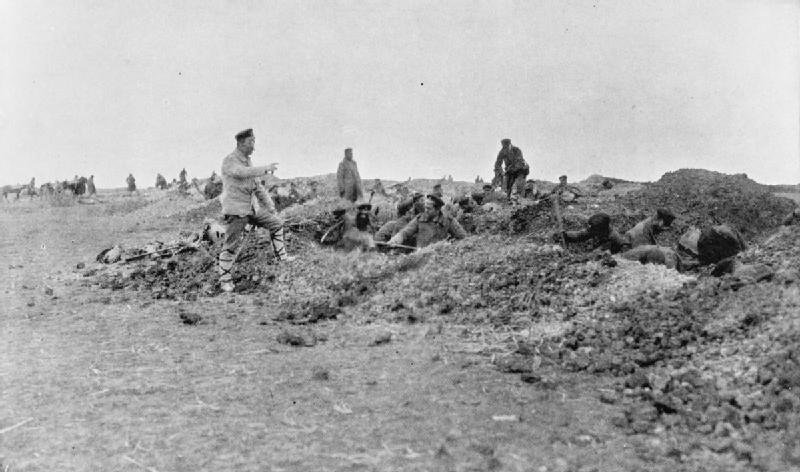
In 1912, Serbia joined Bulgaria, Greece, and Montenegro in what’s called the Balkan League and attacked the Ottoman Empire, which by then was the “sick man of Europe” — a once-huge empire that had been losing territory for a century. The First Balkan War stripped the Ottomans of nearly all the land they still held in Europe. It lasted only months. Then, in 1913, the winners turned on each other: Bulgaria, unhappy with its share of the spoils, attacked its former allies and got crushed by Serbia, Greece, Romania, and the Ottomans combined in the Second Balkan War.
When the fighting stopped, Serbia had nearly doubled in territory and population. Its army, small and untested a year earlier, had now fought two real wars and won. Leon Trotsky, later a leader of the Russian Revolution but at the time a young journalist covering the fighting for the newspaper Kievskaya Mysl, filed dispatches describing the brutality up close — burned villages, forced marches, the raw machinery of ethnic score-settling that the Balkan Wars ran on. His reporting, later collected in English as The Balkan Wars 1912–13, is one of the clearest outside accounts of what those two wars actually looked like on the ground.
For Austria-Hungary, Serbia’s transformation was a five-alarm fire. Austria-Hungary was not one nation. It was a patchwork empire of a dozen different peoples — Germans, Hungarians, Czechs, Poles, Croats, Serbs, and more — held together more by the Habsburg royal family than by anything else. A big chunk of those peoples were South Slavs, the same ethnic family as Serbia’s population. A bigger, bolder, battle-tested Serbia right next door wasn’t just a rival country anymore. To Austria-Hungary’s chief of the general staff, Conrad von Hötzendorf, it was a magnet that could pull the empire’s own Slav populations away and tear the whole structure apart from the inside. He had been arguing for a preventive war against Serbia for years. After 1913, more of Vienna started listening.
Historians agree the Balkan Wars mattered. They disagree on how much weight to put on them alone. Christopher Clark, in The Sleepwalkers, treats the Balkan Wars as a severe shock to the system but resists blaming any single event, pointing instead to a tangle of choices made by many actors over many years. Samuel Williamson argues more directly that Austria-Hungary's own leadership bears real, independent responsibility — that 1908 and 1912–13 were the specific moments Vienna's fear of Serbia hardened into policy, not just background noise. Richard Hall's detailed operational history of the wars themselves lays out just how much territory, confidence, and battle experience Serbia gained in those two years — the raw material either side of the "how much did this matter" debate has to explain.
By the end of 1913, the picture looked like this. Serbia was larger, richer in confidence, and convinced its cause was righteous and unfinished. Austria-Hungary was frightened in a way it hadn’t been before, and its top general was openly arguing for a war to settle the Serbia question once and for all. Russia had a debt to repay Serbia for 1908, and a private vow never again to back down the way it had that March. Bosnia’s young radicals had a martyr in Žerajić’s grave and an organization or two willing to help them act. None of this made anything after it happen inevitably. But by 1914, every piece needed for the next crisis to turn into something much worse was already sitting in place, waiting for a spark.
Why did Austria-Hungary's own generals come to see Serbia — not Russia, not France — as the single most urgent threat to the empire's survival?
Because Austria-Hungary wasn't one nation but a dozen peoples held together loosely, and a large share of them were South Slavs — the same ethnic family as Serbia. After the Balkan Wars nearly doubled Serbia's size and gave it a battle-tested army, it stopped looking like a small neighbor and started looking like a magnet that could pull the empire's own population apart from within.
Sources: Christopher Clark, The Sleepwalkers: How Europe Went to War in 1914 (2012); Vladimir Dedijer, The Road to Sarajevo (1966); Richard C. Hall, The Balkan Wars, 1912–1913 (2000); Samuel R. Williamson Jr., Austria-Hungary and the Origins of the First World War (1991); Misha Glenny, The Balkans: Nationalism, War, and the Great Powers, 1804–1999 (1999).