In the summer of 1914, a twenty-year-old Englishwoman named Vera Brittain was waiting on exam results. She had spent the spring cramming for the entrance scholarship exam to Somerville College, Oxford, at a time when most people around her thought a young woman studying at a university was a strange thing to want. She kept a diary. In it she wrote about tennis parties, dances, the books she was reading, and small arguments with her father about her future. It is an ordinary diary, kept by an ordinary young person, and it survives because she happened to keep writing in it for years afterward. Historians now read it as “Chronicle of Youth.”
That summer, her days followed a pattern that would have felt familiar to families like hers all across Britain. Tennis in the afternoon. Visitors for tea. Plans for the autumn. She was ambitious and a little impatient with the world she’d been born into, but nothing in her entries suggests she thought that world was about to end. Why would it? She had grown up in a Europe that had not fought a major war between its great powers in over four decades. War, to her, was something that happened in history books, or in smaller wars far away, fought by other people’s armies.
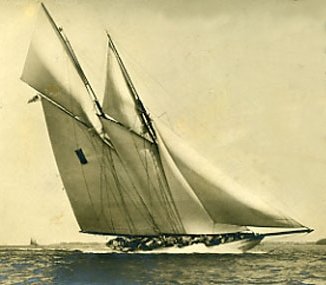
She was not unusual in this. Across the English Channel, in Germany, the Kaiser — Wilhelm II, Germany’s emperor — was doing what he did every late June: sailing his racing yacht at Kiel Week, a week of regattas on the Baltic coast that had become a fixture of the European elite’s summer calendar. Kings, generals, and ordinary young women with exam results pending were all, in their own ways, living inside the same quiet assumption: that this peace, like the ones before it, would simply continue.
None of them knew what a single date sitting on the calendar that very week — June 28, 1914 — was about to set moving. Vera Brittain did not know it. Nobody watching the Kaiser’s yacht at Kiel knew it either, not yet — word of what had happened that day would reach the Kaiser at the regatta itself and cut his sailing short. They were living, all of them, in the last ordinary summer.
To understand why nobody saw it coming, you have to understand what Europe looked like on paper in 1914. Six countries counted as great powers — nations with the industry, the armies, and the reach to shape events beyond their own borders. Britain ran the largest empire on earth. France held the second-largest. Germany, unified only in 1871, had grown in one generation into an industrial giant with a modern army to match. Austria-Hungary was a sprawling, multi-ethnic empire trying to hold together a dozen different peoples under one crown. Russia was enormous and still mostly agricultural, but its army was the biggest in Europe by raw numbers. Italy counted as the sixth great power, though the weakest of the six, and its loyalties would not stay where they were in 1914 for very long. Beyond these six sat the Ottoman Empire, once a great power itself, now much shrunken after losing most of its European territory in the Balkan Wars of 1912 and 1913.
These six powers had not fought each other in a general war — a war involving most or all of them at once — since 1871, when Germany and France fought the Franco-Prussian War. Forty-three years is a long time. It was long enough that almost nobody alive in 1914 could remember what a war between great powers actually felt like. And that long peace had produced a real, widely held belief: that general war between developed nations was becoming obsolete, a relic, something the modern world had simply outgrown.
The clearest statement of that belief came from a British writer named Norman Angell. In 1909 he published a pamphlet, expanded a year later into a book called “The Great Illusion,” arguing that war between industrialized economies no longer made sense. Their economies were too tangled together, he argued — too much trade, too much credit, too much investment crossing borders — for a winner to actually gain anything from beating a loser. Even the winning country, he said, would end up poorer than before the war started. The book sold enormously well and was read seriously across Europe, including by military officers and statesmen who did not necessarily agree with all of it but could not simply dismiss it either. It gave a name and an argument to something a lot of people already sensed: that this kind of war was becoming economically pointless, and pointless things don’t happen.
Angell’s argument was only part of why the peace felt so solid. There were other reasons too, and none of them look unreasonable in hindsight, even though the peace they described did not last. Trade between the great powers had grown to levels never seen before; Germany was Britain’s second-largest trading partner in 1914, and British and German banks were tied together by loans and investments that ran in both directions. The royal families of Europe were, in an odd literal sense, one extended family — King George V of Britain and Kaiser Wilhelm II of Germany were first cousins, both grandsons of Queen Victoria. Russia’s Tsar Nicholas II was a first cousin of George V too, through their mothers, two Danish sisters — a closer family tie to London than to Berlin, even though Nicholas and Wilhelm also called each other cousin by marriage. Socialist parties across Europe, growing fast and increasingly organized, argued that working people in different countries had more in common with each other than with their own governments, and that ordinary soldiers would refuse to fight their fellow workers across a border. And the sheer size of modern armies and modern weapons made a lot of serious people assume that any general war, if it ever did happen, would be short — too destructive and too expensive for any government to sustain it for long. In London, a Times journalist named Michael MacDonagh kept his own diary of daily life that same summer, and it reads the same way Brittain’s does: full of ordinary business, with no sense that anything unusual was approaching.
None of these were foolish beliefs. They were held by serious, well-informed people who had good reasons for holding them. Trade really was deeply tangled. The royal families really were related. The socialist movement really was large and really did preach international solidarity. What nobody could see from inside 1914 was how all of that would hold up against a specific, unpredictable chain of events still waiting to happen. That is not a flaw in their reasoning so much as a limit on it — nobody can reason their way to a future they have no data for yet.
This gauge shows where historians' debate actually sits — not a simulated probability. It never invents a number; it points at a real argument.
Historians don't fully agree on how solid the "long peace" belief really was underneath. Norman Angell's case for war's economic obsolescence was genuinely mainstream reading in 1914, and most ordinary Europeans, diplomats included, expected the peace to hold. But David Fromkin, in "Europe's Last Summer" (2004), argues that at least some figures inside a few governments were willing to risk a general war, or even quietly hoped for one, and were not nearly as surprised by escalation as the wider public. That's a separate question from a deeper argument over who ultimately bears responsibility for the war once it started — a debate running from Fritz Fischer's controversial 1960s claim of deliberate German aggression to Christopher Clark's "The Sleepwalkers" (2012), which stresses shared miscalculation over any one country's design. That second debate belongs more to later parts of this series; we'll return to it.
Vera Brittain got her exam results that summer. She would go up to Oxford. Her diary keeps recording tennis, and reading, and family dinners, the small unremarkable texture of one more English summer. Somewhere else on the map, in a corner of Europe she had probably never thought much about, a date was approaching that none of the great powers, none of the diplomats, none of the young women filling diaries with tennis scores, had any reason yet to fear. June 28, 1914 was still just a date on the calendar. Nobody in this story knows yet what it’s going to bring.
In one sentence: why did so many smart, informed people in 1914 believe a general war was impossible?
Because every real, measurable trend they could see — trade, royal ties, working-class solidarity, the sheer cost of modern weapons — pointed toward war being too expensive and too irrational for any government to choose it.
Sources
- Christopher Clark, The Sleepwalkers (2012)
- Fritz Fischer, Germany’s Aims in the First World War (English translation, 1967; originally published as Griff nach der Weltmacht, 1961)
- Norman Angell, The Great Illusion (1909/1910)
- David Fromkin, Europe’s Last Summer (2004)
- Vera Brittain, Chronicle of Youth: The War Diary, 1913-1917, ed. Alan Bishop (1981)
- Michael MacDonagh, In London During the Great War (1935)
- David Stevenson, 1914-1918: The History of the First World War (2004)