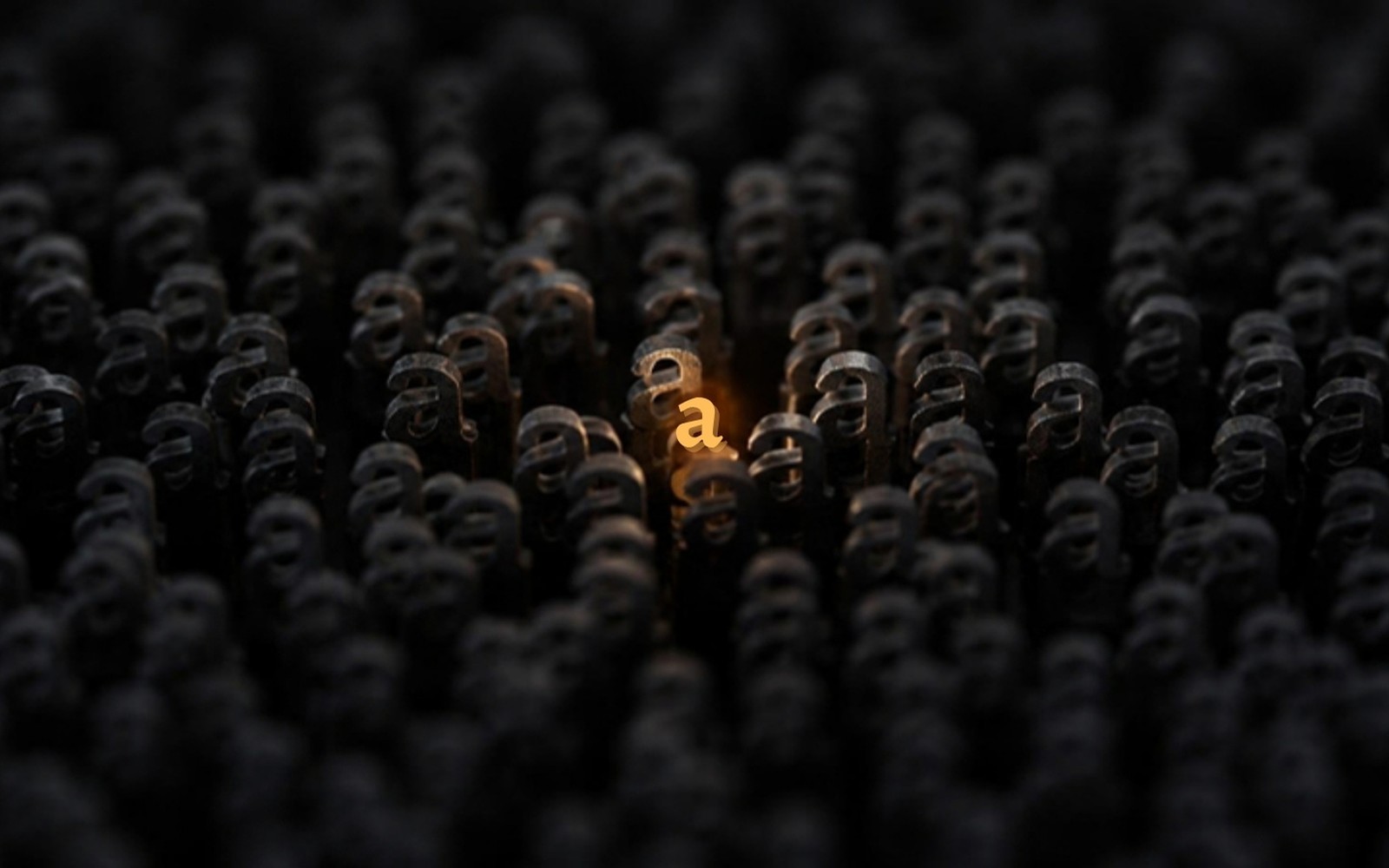
Learn a new word today — say you finally look up petrichor, the smell of rain on dry ground — and there’s a decent chance you’ll run into it again within the week. In a novel, in a caption, in a conversation you’d otherwise have half-heard. And when you do, it won’t feel like a coincidence. It’ll feel like the word has been following you, or like it suddenly got popular the moment you learned it. Neither is true. What changed wasn’t the world’s supply of the word. It was you.
This little haunting has a name — the frequency illusion — coined around 2005 by the Stanford linguist Arnold Zwicky. It also has a much better-known nickname with a strange origin: the Baader–Meinhof phenomenon, after a newspaper reader in 1994 who happened across the name of the German militant group twice in quick succession and wrote in about the eerie feeling. The nickname stuck, which is itself a small demonstration of the thing it describes. But the real mechanism is less spooky and more revealing than either name suggests.
Zwicky pinned it on two ordinary quirks working together. The first is selective attention. Your brain is drowning in far more input than it can process, so it runs an aggressive filter, and most of what reaches you gets there because something tagged it as worth noticing. The moment you learn a word, you hand your filter a new thing to flag. The word was almost certainly around you before — in the same books, the same feeds, the same ambient chatter — but it slid past unlabeled, part of the noise. Now it’s labeled. The detector didn’t find more signal; it just got more sensitive to a signal that was already there.
The second quirk is confirmation bias, and it’s what turns a single new sighting into a felt pattern. Each time you spot the word again, the encounter lands as proof — see, it really is everywhere — and the hit gets remembered. What doesn’t get remembered is the vast, uncounted background of all the moments the word wasn’t there. You tally the confirmations and quietly discard the misses, and out of that lopsided bookkeeping comes the powerful, entirely mistaken sense that the frequency itself has spiked.
A close cousin rides along with all this — the recency illusion, the conviction that whatever you’ve just started noticing must be new. It’s why people are forever certain that some usage or slang or trend “sprang up out of nowhere lately,” when the archives show it’s been quietly around for decades. Same machinery: you mistake the moment you tuned in for the moment the thing began.
I’d be honest that these are descriptive phenomena more than precisely measured constants — “illusion” here means a misperception of frequency, not a number someone clocked in a lab. But you feel them constantly, and the reason it’s worth knowing is quietly humbling. The overwhelming sense that something is everywhere all of a sudden is not evidence about the world. It’s evidence about your attention — a readout of what your filter just started flagging. The dots were always there. You only just got the pen that circles them.
Sources
- frequency illusion — Arnold Zwicky (2005/2006)
- the Baader–Meinhof nickname (1994 newspaper letters column)
- recency illusion
- selective attention and confirmation bias
Liked this? Get the next one in Working Theory.
Going weekly in August (it's in beta now). One genuinely interesting read on building, the brain, and the science most people missed.
Subscribe →