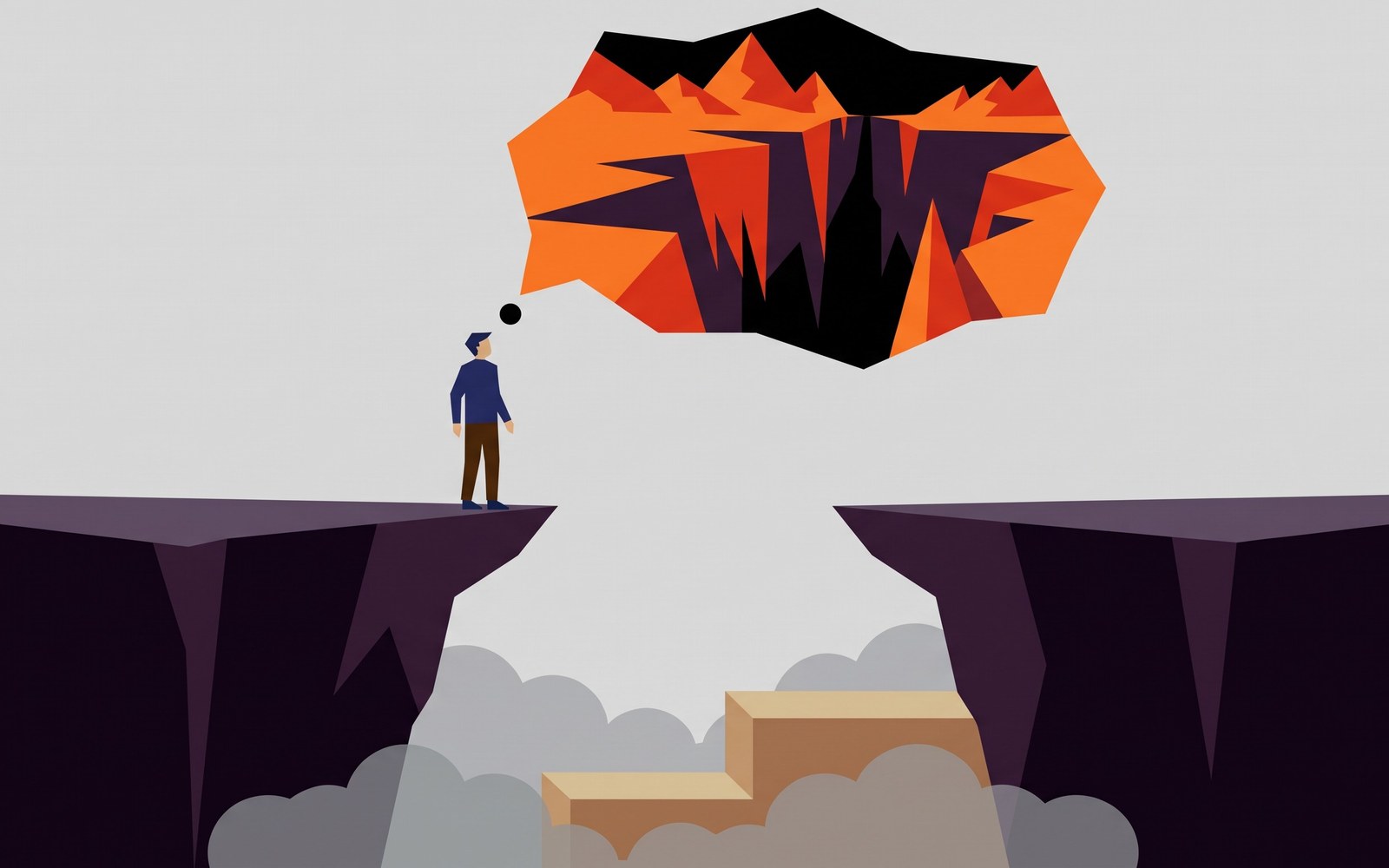
A user looks at your product, wants what it does, and doesn’t move. You assume the problem is the actual cost of switching — the export, the re-setup, the hour of learning a new layout. So you cut steps. You write a migration tool. The needle barely moves. That’s because the thing standing between them and you was never mostly the real cost. It was the forecast of the cost — and the brain forecasts this particular feeling badly, in a direction you can exploit.
Daniel Gilbert and Timothy Wilson spent years asking a simple question: when people predict how a future event will make them feel, how close do they get? The answer is that we’re decent at predicting the direction — this will feel bad, that will feel good — and quite poor at the intensity and the duration. We reliably overestimate how bad a bad thing will feel and, especially, how long the badness will last. They named the second half the durability bias, and the reason behind it is almost funny: we forget that we’re good at coping. Faced with a real setback, people rationalize, reframe, adapt, get on with it — a quiet machinery Gilbert calls the psychological immune system. When we forecast, we can’t see that machinery working, so we leave it out of the estimate. He called that blind spot immune neglect. The dread is vivid; the coping is invisible. So the dread wins the prediction.
Now put a hesitant user in that frame. Before they start, the switch is a story they tell themselves: a whole afternoon lost, a mess of half-moved data, the awful feeling of being a beginner again in a tool they used to be fluent in. Every one of those is a forecast, and every one is inflated — because they can’t feel, in advance, how quickly they’ll adapt to your product once they’re inside it. The gap between the imagined disruption and the experienced disruption is real, it’s systematic, and it’s yours to close.
Which changes what you build. If the barrier were the real cost, the fix would be pure friction removal. Because the barrier is mostly the anticipated cost, the higher-leverage work is aimed one step earlier — at the estimate itself, before they ever touch the product. Show the after-state, not the effort: a screen of their world already moved in beats a promise that moving in is easy. Shrink the imagined unit of pain — “import in the background, keep using your old tool until you’re ready” turns a dreaded afternoon into a nothing. Let them borrow someone else’s coping: a line like “most people are set up in under ten minutes” is doing forecasting work, quietly correcting the number they invented. You are not lying about the cost. You’re replacing a bad estimate with a truer one.
The same bias runs in reverse, and it’s worth saying because it will save you from a bad roadmap. Users overestimate how good your shiny new feature will make them feel, too — and immune neglect’s cousin, adaptation, means that overestimate evaporates fastest of all. The delighter that tested through the roof is, three weeks later, just the furniture (the treadmill from “every feature starts fading the moment you ship it”). So spend accordingly: the durable win is removing anticipated pain, which is chronically over-weighted, rather than buying a spike of anticipated joy, which is chronically over-weighted and short-lived. People are worse at predicting their own feelings than they think. Build for the feeling they’ll actually have, not the one they’re bracing for.
The science, to look up: affective forecasting and the impact bias — Daniel Gilbert & Timothy Wilson; Wilson & Gilbert, “Affective Forecasting” (2005); the durability bias, immune neglect and the “psychological immune system” — Gilbert, Pinel, Wilson, Blumberg & Wheatley, “Immune Neglect” (1998). Effect sizes vary by domain — hold the shape, not a number.
Sources
- Affective forecasting and the impact bias — Gilbert & Wilson
- the durability bias and immune neglect (Gilbert, Pinel, Wilson, Blumberg & Wheatley, 1998)
Liked this? Get the next one in Working Theory.
Going weekly in August (it's in beta now). One genuinely interesting read on building, the brain, and the science most people missed.
Subscribe →