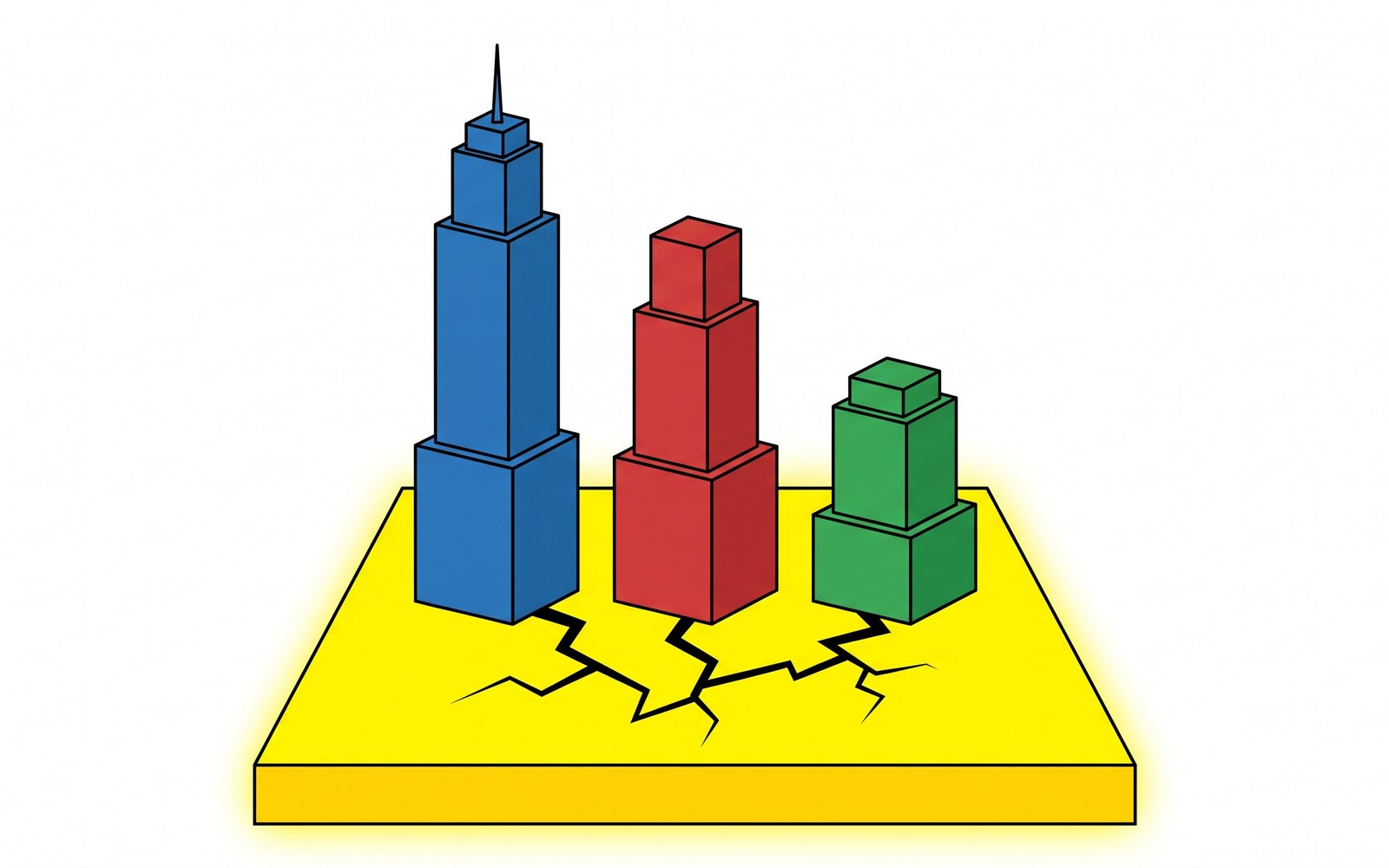
Something odd happened in the middle of September. Three companies that spend every other week trying to out-ship, out-price and out-hire each other — OpenAI, Anthropic and Google DeepMind — turned out to have been quietly talking to one another for weeks. Not about a merger. About safety: embedding third-party evaluators inside frontier labs, backing independent verification, and, per reporting, sketching a standards body for the industry. OpenAI’s policy chief confirmed the talks; Sam Altman said the company would join Anthropic in letting outside evaluators in; the whole thing crystallized around an essay Dario Amodei published days earlier arguing the field should slow down. It rhymed with an August letter in which a hundred-plus companies called, together, for defenses against “rogue AI.” Fierce rivals, coordinating. It looks like a contradiction. It’s actually one of the oldest patterns in social psychology, and it hides a build decision that applies to you at a thousandth the scale.
In 1954, Muzafer Sherif took two groups of boys to a summer camp called Robbers Cave, let them curdle into rival tribes, and then tried to un-curdle them. Contact didn’t work; shared meals didn’t work. What worked was a superordinate goal — a problem that mattered to both groups and that neither could solve alone. The camp’s water supply failed; the truck bringing food got stuck. Suddenly the tribes pulled the same rope, and the rivalry drained out of the room while they did. The insight has held up for seventy years: competition doesn’t dissolve because people are asked to be nice. It dissolves in the presence of a threat that’s bigger than the contest between them.
That’s what you’re watching. “The whole category loses public trust and gets regulated into a crater” is a superordinate threat — it’s above the fight over who has the best model, and no single lab can fix it alone. So the labs cooperate on exactly that layer, and only that layer, while competing as hard as ever on everything above it.
Here’s the part that’s about you, even if you’re one person shipping a weekend project into a new category. Some of your problems are product problems — your onboarding, your pricing, your speed — and you win those by being better than the next tool. But some are category problems: does anyone trust products of this kind at all? Is there a standard way for them to talk to each other? Has the whole space earned the right to exist in a serious buyer’s stack? You cannot out-execute your way through a category problem, because the thing that’s broken isn’t your product — it’s the floor all the products stand on. And trust in a young category is a commons: when one player behaves badly, the doubt attaches to the category, not the offender, and it lands on you too. A poisoned floor sinks your beautiful tower along with everyone else’s.
So the build decision is to know which layer you’re operating on before you decide whether to hoard or to share. On the tower — the product itself — compete without apology; that’s where you’re supposed to win alone. On the floor, act like the labs are acting: adopt the open standard instead of trying to own the plumbing, contribute to the shared credibility of the category, interoperate even when a walled garden would feel safer this quarter. It looks like helping your competitors, and it is. It’s also the only move that keeps the category alive long enough for anyone — possibly you — to win it. Don’t try to privatize the floor. Build the tallest tower on it.
The research, to look up: superordinate goals and the Robbers Cave experiment — Muzafer Sherif (1954/1961); the tragedy of the commons — Garrett Hardin (1968); the common in-group identity model — Gaertner & Dovidio. The camp studies are small, of their era, and ethically dated — take the mechanism, not the methods.
The news, to check: OpenAI, Anthropic and Google DeepMind coordinating on AI safety (third-party evaluators, independent verification, a possible standards body) — TechCrunch and Bloomberg, Sept 15 2026; Dario Amodei’s essay calling for an industry-wide slowdown, Sept 12 2026; the 100-plus-company “rogue AI” call to action, TechCrunch, Aug 27 2026. The standards-body detail was attributed reporting (The Information), not a confirmed announcement — hedged accordingly.
Sources
- Superordinate goals and the Robbers Cave experiment (Muzafer Sherif, 1954/1961)
- the tragedy of the commons (Garrett Hardin, 1968). News: OpenAI/Anthropic/Google DeepMind safety coordination, Sept 15 2026
Liked this? Get the next one in Working Theory.
Going weekly in August (it's in beta now). One genuinely interesting read on building, the brain, and the science most people missed.
Subscribe →