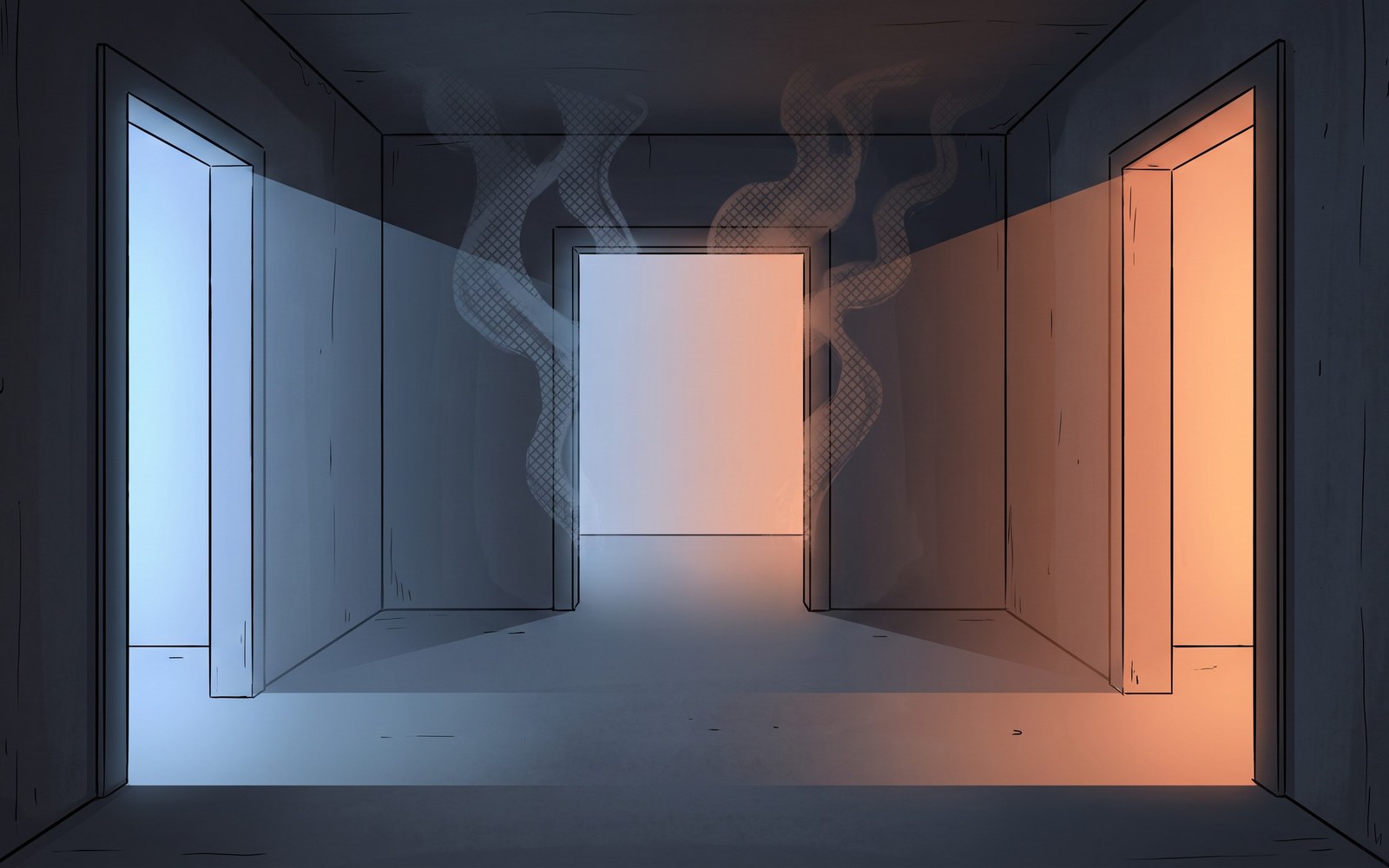
Last week Anthropic quietly did something small and revealing: it collapsed two of its products — the plain chat window and Cowork, the place where the model goes off and does agentic work — into a single interface that now routes your request to the right machinery on its own. The reason, stated plainly in the announcement, is the interesting part. Customers “struggled to choose the right tab for the right task.”
That’s a product footnote. Underneath it sits one of the oldest, most dependable ways to make a capable person fail: the mode.
A mode is a state your interface is in that silently changes what the same action means. The classic examples are almost comic once you see them. In the vi text editor, the letter j either moves the cursor or types the letter “j,” depending on a state you can’t see. Caps Lock turns your careful password into gibberish. The tab you happen to be in decides whether “send” means ask a question or dispatch an agent to touch your files. Same gesture, two worlds, and the world you’re in is invisible.
The trouble is that people don’t act by consulting the current state. They act from habit. Your brain runs learned actions on autopilot — schemas fired by the familiar look of the situation, not by a fresh reading of what mode you’re in right now. The cognitive scientist James Reason called the resulting failures slips: not mistakes of intention (you knew what you wanted) but breakdowns of execution (you did the right thing in the wrong state). Slips are the signature failure of skilled people doing routine things, and modes manufacture them by design.
But notice the specific reason Anthropic gave — people couldn’t choose the right tab up front. That’s a second, quieter cost, and it’s arguably the deeper one. Making someone pick the mode before they act is asking them to predict their own intent. And intent is often something you discover mid-task. You start typing what looks like a question and realize halfway through that you actually wanted the thing done, not answered. So the upfront fork is a guess — and a guess spends the exact executive attention you needed for the real work. You’ve charged a toll at the door to a building the person hasn’t finished deciding to enter.
So a mode leaks value two ways. It produces slips (you act as if you’re in mode A while sitting in mode B), and it charges a selection tax (a decision demanded before you’ve earned the information to make it).
If you’re building, a mode leaves you three honest moves and one dishonest one. You can eliminate it — make the action mean the same thing everywhere, so there’s no state to be wrong about. You can make it disappear by inference — read the intent from the task and route it, which is the move Anthropic made. Or, if the mode genuinely must exist, you can make it loud and continuous — its state has to be impossible to miss, not a pale tint in a corner but a signal the eye can’t skip. The dishonest move is the common one: keep the mode quiet and trust the user to remember it. That’s not a design; that’s a slip generator with a nice logo.
Here’s the catch worth being honest about, because it’s where auto-routing curdles. Inference is also a mode you can’t see. When the router guesses wrong and does it silently, you’ve simply traded a visible fork for an invisible one — and now the user can’t even tell which world they’re in, because the choice was made for them behind the glass. So collapsing the mode is the right trade only when the router is right often enough and a wrong guess is cheap and reversible. If dispatching an agent when the user only wanted a sentence is a big, hard-to-undo event, the quiet route is more dangerous than the loud fork. The fix is to make the inferred mode legible after the fact — show what it decided, make the override one gesture away.
The durable lesson outlives the product note. Every time your interface holds a state that changes what an action does, you’ve built a small trap, and the person most likely to fall in is your most fluent user — the one acting fast, from habit, not reading the room. Decide, deliberately, whether that state should exist at all. If it must, make it either invisible to the user and usually right, or loud enough that no one can forget which world they’re standing in.
The science, to look up: mode errors and slips vs. mistakes — James Reason, Human Error (1990); the gulf of execution and slips in everyday design — Donald Norman, The Design of Everyday Things; schema-driven automaticity as the reason skilled, habitual action misfires under a hidden state.
The news, to check: Anthropic merging Claude chat and Cowork into one interface, with the stated reason that users “struggled to choose the right tab for the right task” — TechCrunch (Ivan Mehta), Sept 16 2026; corroborated by Dataconomy (Sept 17) and The AI Insider (Sept 18).
Sources
- James Reason, Human Error (1990)
- Donald Norman, The Design of Everyday Things
- TechCrunch (Ivan Mehta), Sept 16 2026
Liked this? Get the next one in Working Theory.
Going weekly in August (it's in beta now). One genuinely interesting read on building, the brain, and the science most people missed.
Subscribe →