Last time: the desert war ran on its own clock for two years, mostly ignored by the main story — but where did the main thread of this series actually leave off before North Africa took over the telling? In June 1941, at a border nobody expected Germany to cross so soon. Part 10 ended with Britain surviving the Atlantic; Part 11 spent two years in North Africa running in parallel. This part goes back to pick up the thread that matters most: Germany invading the Soviet Union, and the war's real center of gravity opening up.
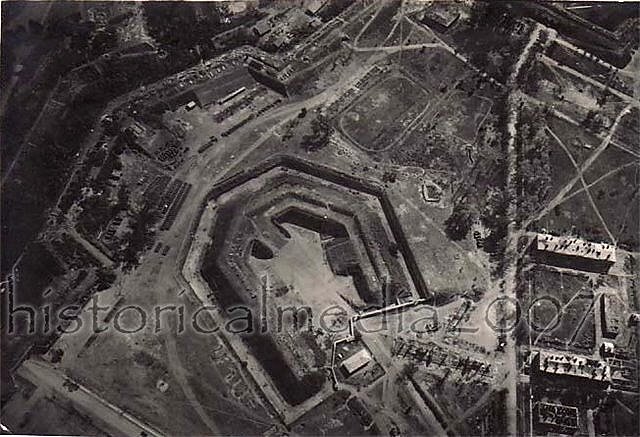
At 4:15 on the morning of June 22, 1941, Major Pyotr Gavrilov was asleep in officers’ quarters inside the Brest Fortress, a Russian-built citadel on the new Soviet-German border, when German artillery started falling on it without warning. There had been no declaration of war. Gavrilov, commander of the 44th Motor Rifle Regiment, made it to his men and organized what defense he could inside a fortress that was, within hours, cut off entirely behind German lines. Most of the garrison was dead, captured, or scattered within days. Gavrilov kept fighting. He and a shrinking group of survivors held pieces of the fortress for 31 days, past any hope of relief, past any reasonable expectation that Moscow even knew they were still alive, living on stored rations and fortress well water while German assault teams worked the ruins room by room. He was finally captured on July 23, unconscious from wounds and starvation. He survived four years in German captivity, was liberated in 1945, and in 1957 — after a Soviet writer’s book revived public memory of the siege — was named Hero of the Soviet Union. He died in 1979, buried with military honors at the fortress he’d refused to leave.
Gavrilov’s month at Brest is a true story and also, without anyone at the time intending it, a preview in miniature of the whole campaign to come: a German plan built around the idea that Soviet resistance would collapse fast, running into defenders who didn’t get the memo, and a schedule that started slipping before the invasion was a week old.
The plan, and the scale nobody had tried before
Hitler signed the directive for Case Barbarossa on December 18, 1940, ordering the Wehrmacht to “crush Soviet Russia in a rapid campaign” before Britain was finished off — the plan’s own wording assumed weeks, not years. When it launched seven months later, it launched at a scale no invasion in history had matched: roughly 3.8 million Axis personnel along a front nearly 1,800 miles long, from the Baltic to the Black Sea, backed by somewhere around 3,500 tanks and several thousand aircraft. It’s worth saying plainly, because the popular image of this campaign is all tanks and speed: the force also depended on roughly 600,000 to 700,000 horses to haul supplies. Blitzkrieg’s fast armored spearheads existed, but most of the army behind them still moved the way armies had moved for a century.
Three Army Groups crossed the border that morning, each aimed at a different prize. Army Group North pushed through the Baltic states toward Leningrad. Army Group South drove into Ukraine, toward Kiev and the resource-rich Donbas region. Army Group Centre, the main weight of the invasion, aimed through Belarus toward Smolensk and, eventually, Moscow — the axis this part mostly follows, because it’s the one that determined how the whole campaign ended.
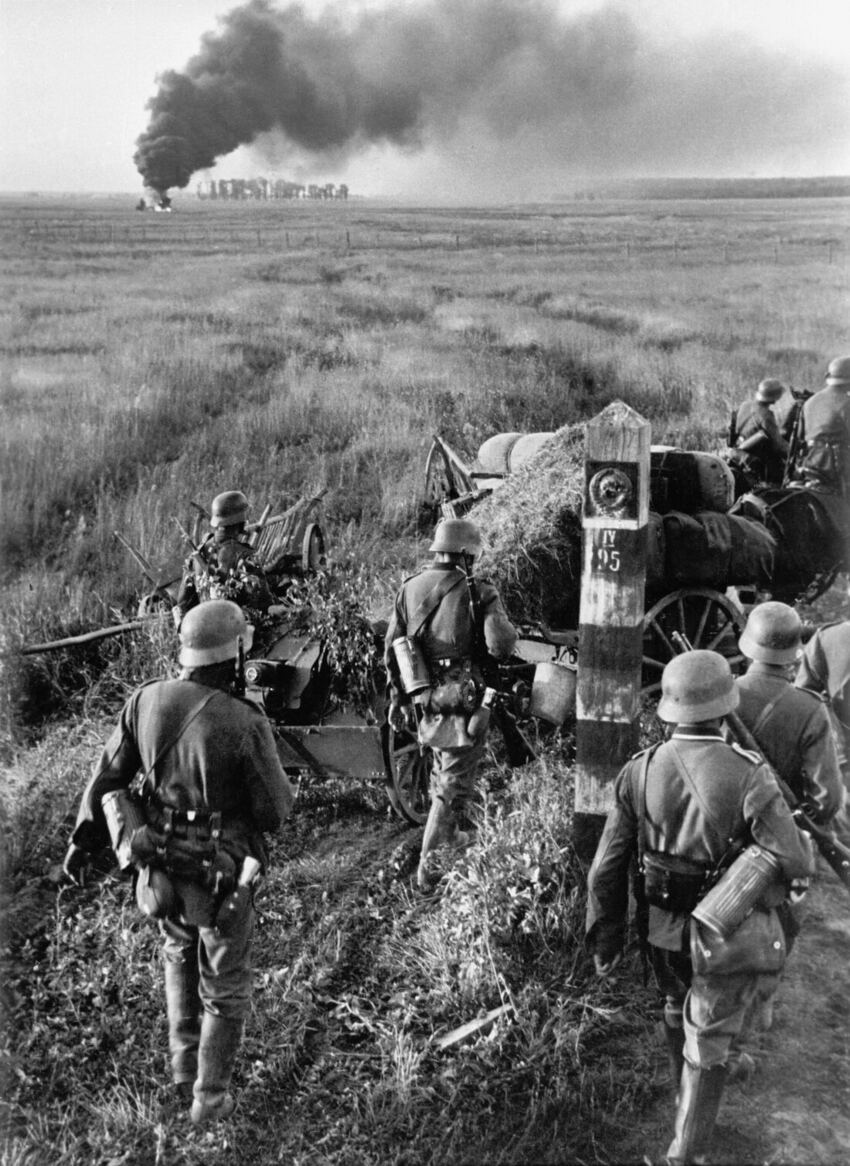
The opening days matched the plan’s assumptions almost exactly. The Luftwaffe destroyed close to 2,000 Soviet aircraft in the first 48 hours, most of them still parked on the ground. Whole Soviet fronts collapsed into encirclement battles — kessel, “cauldrons,” the Germans called them — faster than anything Europe had seen. The Białystok-Minsk pocket closed within the first ten days. It looked, from inside German headquarters that summer, exactly like the short war the directive had promised.
Smolensk, the hinge nobody meant to build
Then Smolensk happened, and the schedule started coming apart.
The battle for Smolensk, fought roughly from early July through early September 1941, was supposed to be another quick encirclement on the road to Moscow. Soviet forces, by the accepted postwar accounting, took around 760,000 casualties there — killed, captured, missing, and wounded combined — a number that on its own looks like exactly the kind of catastrophe the German plan expected to keep inflicting all the way to the capital. But Smolensk cost the Wehrmacht five to six weeks it had not budgeted for. That’s the number worth sitting with, more than the casualty count: a campaign planned to be over in months lost more than a month of its own timetable to a single battle it technically won. The Red Army kept feeding divisions into the fight even after the pocket closed, and every week those divisions bought was a week Army Group Centre wasn’t advancing.
By late August, Hitler made the decision the entire subsequent debate about this campaign turns on: rather than push straight for Moscow while Army Group Centre still had momentum, he diverted a large part of its armor south to help close a second, even larger encirclement forming around Kiev.
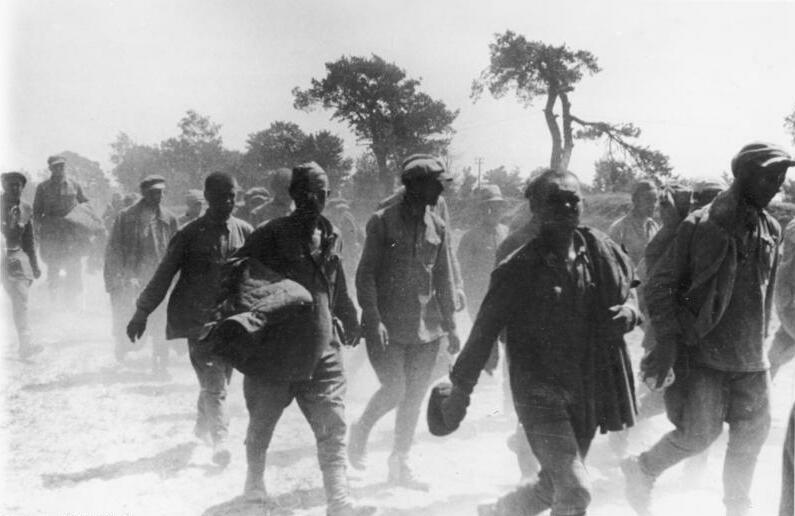
The First Battle of Kiev, fought through August and September, closed as the largest encirclement of the entire campaign — somewhere around 450,000 Soviet troops trapped, with the total prisoner count genuinely disputed between German claims running past 600,000 and Soviet-line accounting putting it closer to a quarter million. Either way, it was a staggering tactical victory. It was also, depending on which historian you read, either the decision that cost Germany Moscow, or a battle whose outcome barely mattered because the campaign was already broken by the time it was fought.
This gauge shows where historians' debate actually sits — not a simulated probability. It never invents a number; it points at a real argument.
Heinz Guderian, the panzer general ordered south to Kiev, argued in his postwar memoir Panzer Leader (1952) that the diversion cost Germany the six to eight weeks that made the difference between reaching Moscow before winter and stalling short of it — a case revived and formalized by historian R. H. S. Stolfi in Hitler's Panzers East (1991). It's a real, named, still-argued position, not a fringe one. But the weight of recent archival scholarship leans the other way. David Glantz's body of work — Barbarossa (2001), the three-volume Barbarossa Derailed (2010-2014) — argues the failure was structural from the start: German planning underestimated how much force the Soviet Union could keep regenerating, and the supply system couldn't sustain the offensive past roughly the Smolensk line no matter which city the panzers turned toward next. David Stahel's trilogy on the campaign, including Kiev 1941 (2012), goes further and argues directly against Guderian and Stolfi: unit strength returns and fuel stocks show the German war effort was already crumbling by the time Kiev fell in September, meaning no alternate routing of the panzers would have delivered Moscow. Guderian was present for the decision and had every reason to want it seen as the turning point; Stahel and Glantz were reading the supply returns decades later, and the supply returns are not flattering to the "near-run thing" reading. Both sides agree the math got worse after Kiev. They disagree about whether the math was survivable before it.
The overreach the maps don’t show
Here’s the part a map of arrows can’t capture, and it’s the actual reason “logistics beats intention” is the mechanism for this part rather than any general’s decision: Soviet railways ran on a wider gauge of track than German trains used. Every mile of captured Soviet rail line had to be physically re-laid to standard gauge before a German supply train could run on it — and the crews doing that work could not keep pace with an army advancing dozens of miles a day. Fuel, ammunition, replacement parts, everything an army that size needed to keep functioning, was bottlenecked behind a construction crew re-hammering rail spikes into ties, hundreds of miles behind the front line the trains were meant to be feeding.
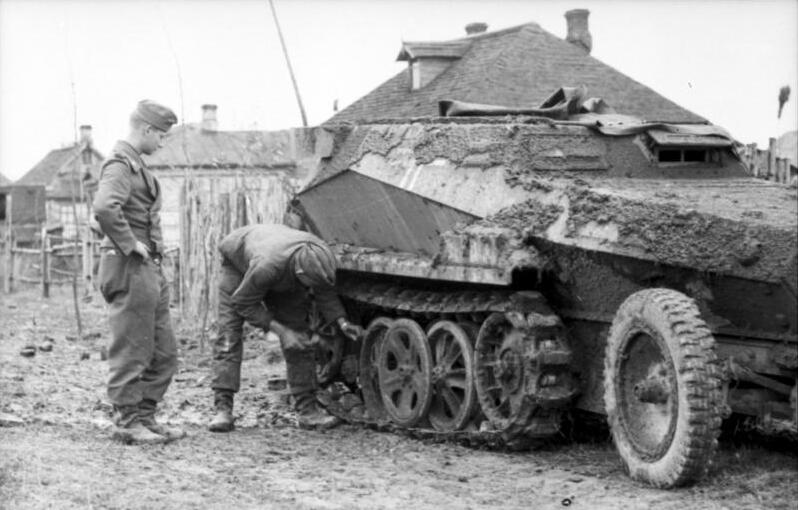
By late October 1941, German unit returns show only about a third of the Wehrmacht’s motor vehicles were still functioning. That’s not battle damage, mostly — that’s mechanical attrition on a supply system that had already outrun what it could sustain, before the weather turned against it at all. The rasputitsa, the seasonal mud that turns Russian and Ukrainian roads into bog every autumn and spring, arrived with an unusually early snow and thaw on October 6 and 7, and it made a genuinely bad situation worse. But it’s worth being precise here rather than reaching for the easy myth: period accounts and later historians are explicit that the German advance was already slowing from Soviet resistance and supply strain before the mud hit. General Winter is a good story. It’s not the explanation historians who’ve actually read the unit returns settle on.
Typhoon, and the closest the war would come to Moscow
Operation Typhoon, the final drive on the Soviet capital, opened September 30, 1941. German reconnaissance units reached Khimki, roughly 19 miles from the Kremlin, and Krasnaya Polyana, about 18 miles out, in early December — the closest German forces ever got, close enough that some accounts describe forward units glimpsing the city through binoculars. It was also, by then, an army running out of everything at once: fuel, replacement vehicles, and — because the campaign had been planned to finish before winter — proper winter clothing. December brought real cold, official Soviet readings down to nearly minus 29 Celsius, and German units recorded over 130,000 documented frostbite cases.
Soviet veterans interviewed decades later, through archives like Artem Drabkin's iremember.ru project and historian Catherine Merridale's own interviews for Ivan's War, describe that December less as a single dramatic turning point than as a slow, exhausted realization: the German attacks that had seemed unstoppable all summer were arriving thinner, slower, less confident — an army that had clearly stopped believing its own timetable, fighting soldiers who, after five months of catastrophic losses, were still there.
German soldiers' own accounts of that winter, recorded secondhand — most of the surviving unguarded testimony comes from secret Allied recordings of POW conversations that only began in 1942, so 1941 itself is remembered rather than caught live — describe an army whose confidence broke well before its lines did: men reminiscing bitterly about summer optimism, layering civilian coats over uniforms that were never designed for the cold they were now fighting in.
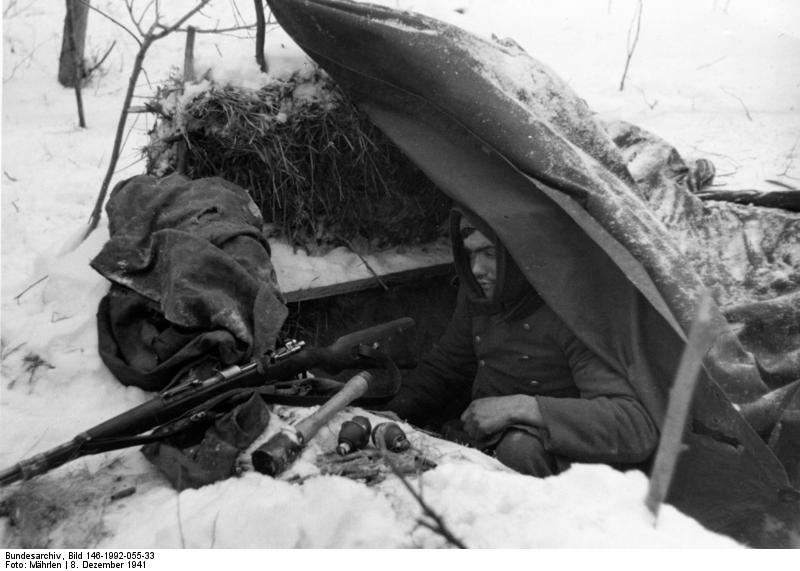
Marshal Georgy Zhukov opened his counteroffensive on December 5, 1941, throwing fresh Soviet reserves — troops moved from Siberia and the Far East, held back for exactly this moment — against an exhausted, overextended, undersupplied German line. It worked. German forces were pushed back somewhere between 60 and 150 miles by early January 1942. Moscow, the capital the whole campaign had been aimed at since December 1940, held.
What Stalin was told, and refused to hear
None of this needed to be a surprise, and that’s the part of this story that’s easiest to lose once the tanks start rolling.
An army that had already stopped believing its own plan
By January 1942, Army Group Centre had been pushed back from the edges of Moscow, and the campaign Hitler had expected to finish before winter was headed into a second year on a front nearly 1,800 miles long. The three-way argument this part opened with — Guderian’s diversion, Glantz’s structural failure, Stahel’s earlier collapse — is really an argument about exactly when Barbarossa became unwinnable. Nobody in the argument thinks it was ever going to plan.
In one sentence: what actually stopped the Wehrmacht short of Moscow — the Russian winter, or something that had already gone wrong before the winter arrived?
Something that had already gone wrong. The winter made a crisis worse, but German unit returns show the advance slowing from resistance and supply strain in the weeks before the mud and cold even arrived — a third of the Wehrmacht's vehicles were already broken down by late October, and the campaign's own supply lines, built for a war of weeks, were simply outrun by an invasion that kept advancing past the point its trains could reach it. The Russian winter gets the blame because it's dramatic and it's real. The trains that never caught up are the less cinematic, better-documented answer.
Sources
- David M. Glantz, Barbarossa: Hitler’s Invasion of Russia 1941 (Tempus, 2001)
- David M. Glantz, Barbarossa Derailed: The Battle for Smolensk, 3 vols. (Helion, 2010-2014)
- David M. Glantz, Stumbling Colossus: The Red Army on the Eve of World War (University Press of Kansas, 1998)
- David Stahel, Operation Barbarossa and Germany’s Defeat in the East (Cambridge University Press, 2009)
- David Stahel, Kiev 1941: Hitler’s Battle for Supremacy in the East (Cambridge University Press, 2012)
- David Stahel, Operation Typhoon: Hitler’s March on Moscow, October 1941 (Cambridge University Press, 2013)
- Heinz Guderian, Panzer Leader, trans. Constantine Fitzgibbon (Michael Joseph, 1952)
- R. H. S. Stolfi, Hitler’s Panzers East: World War II Reinterpreted (University of Oklahoma Press, 1991)
- G. F. Krivosheev (ed.), Soviet Casualties and Combat Losses in the Twentieth Century (Greenhill, 1997)
- Sönke Neitzel and Harald Welzer, Soldaten: On Fighting, Killing, and Dying — The Secret World War II Transcripts of German POWs (Simon & Schuster, 2011)
- Catherine Merridale, Ivan’s War: Life and Death in the Red Army, 1939-1945 (Metropolitan Books, 2006)
- Svetlana Alexievich, The Unwomanly Face of War, trans. Richard Pevear & Larissa Volokhonsky (Random House, 2017; Russian orig. 1985)
- Artem Drabkin / iremember.ru — Red Army veteran oral history archive
- Sergei Smirnov, Brestskaya krepost [The Brest Fortress] (1956)
- Christian Hartmann, Operation Barbarossa: Nazi Germany’s War in the East, 1941-1945 (Oxford University Press, 2013)