Last time: Fighter Command — reinforced by pilots from Poland, New Zealand, the Caribbean, and a dozen other nations — held off the invasion Operation Sea Lion depended on, and the Blitz killed tens of thousands of British civilians without breaking the country's will to keep fighting. But holding an island against invasion and bombing doesn't feed it. What was the other war Britain was fighting, every single day, just to keep eating? Britain grew barely a third of its own food and produced almost none of its own oil, so every night the Blitz burned through London, a separate and far longer battle was already underway at sea — merchant ships crossing the Atlantic, and German submarines trying to sink them before they arrived. That fight started on the war's first day and didn't end until its last one in Europe, and for a long stretch of it, the outcome was genuinely in doubt.
On the night of April 28, 1943, a Royal Navy destroyer called HMS Duncan was running short on fuel in the middle of the North Atlantic, in the middle of a battle that had already been going on for a week. Her captain, Commander Peter Gretton, led Escort Group B7 — a mixed force of destroyers, frigates, and corvettes assigned to protect Convoy ONS 5: 42 merchant ships, slow and heavily loaded, crossing from Britain toward North America. Gretton had known for days that more than 40 German submarines, organized into three patrol lines, were converging on his convoy. He also knew, from the fuel gauge in front of him, that he might not be able to finish the fight he was already in.
Gretton later wrote about that battle in his own memoir, Convoy Escort Commander, published in 1964 — a first-person account of one of the longest, most heavily contested single convoy battles of the entire war. It ran from April 21 to May 6, 1943, and by the time it ended, the Germans had sunk 13 of the 42 merchant ships. It looked, on paper, like a German victory. It was the opposite. Escort Group B7 and the reinforcements that reached it sank seven U-boats outright and damaged seven more — a trade the German submarine fleet could not sustain, and one that historians now treat as the single clearest turning point in a six-year fight for the ocean itself.
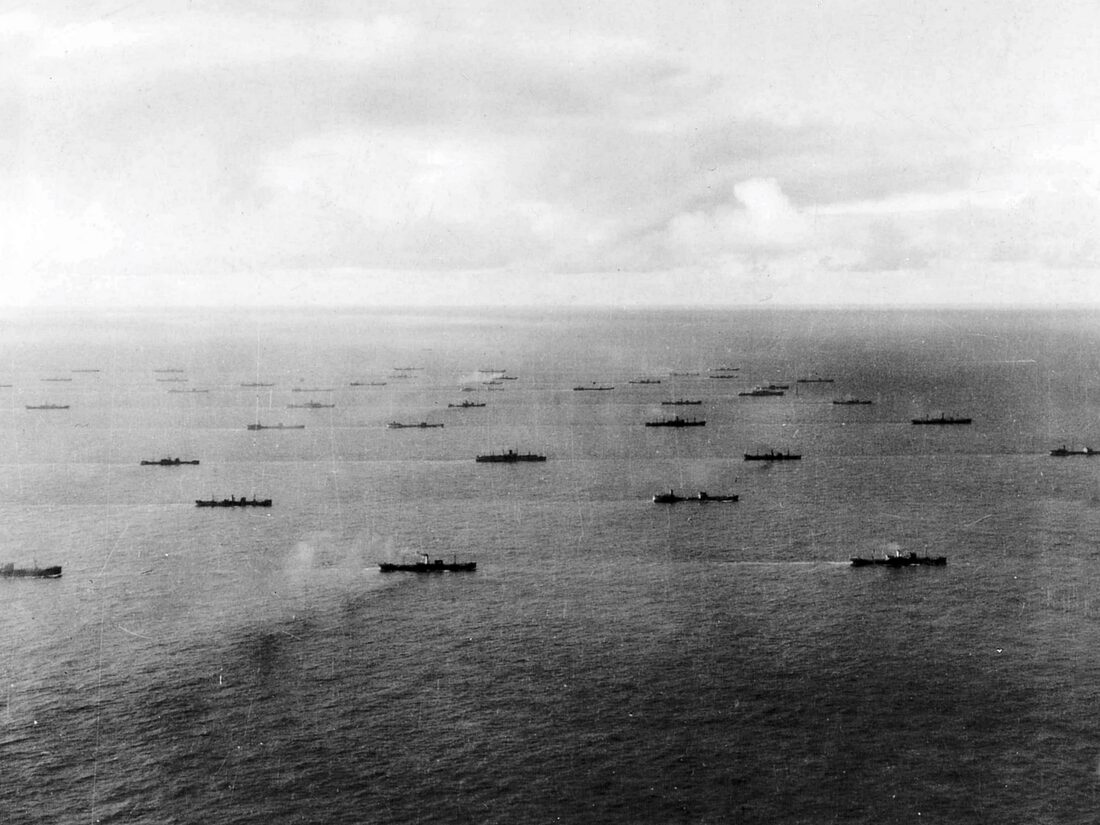
The Battle of the Atlantic ran from September 3, 1939 — the day Britain declared war — to May 8, 1945, the day the war in Europe ended. No other single campaign of the Second World War lasted that long, and Winston Churchill said plainly, after the war, which part of it had frightened him the most: “The only thing that ever really frightened me during the war was the U-boat peril.” It was not fought for territory. It was fought over cargo. Britain imported roughly two-thirds of its food and nearly all of its oil, and every division the United States eventually landed in Europe had to cross this ocean first, in a ship, before it could fight anywhere at all. Losing the Atlantic didn’t mean losing a battle. It meant Britain starving, or running out of fuel, while still nominally undefeated.
Germany began the war with only 57 U-boats, many of them small and short-ranged, and for the first two years the wolf packs punished the Allies badly. The “Happy Time” of September and October 1940 — the U-boat crews’ own name for it — sank more than 270 Allied ships. Then, after Pearl Harbor brought the United States into the war, came something worse. In the first weeks of 1942, the U.S. East Coast was still lit up at night, its coastal shipping still sailing unescorted and alone, exactly as it had in peacetime. Five German submarines, in an operation the U-boat command called Drumbeat, sank nearly 157,000 tons of shipping off American shores in January and February 1942 without losing a single boat. It was part of a wider slaughter — 397 ships, over two million tons, sunk along the American coast before Admiral Ernest King finally ordered coastal convoys into effect in May 1942.
The United States had not been fully neutral in this fight even before it formally entered the war. The Lend-Lease Act, signed in March 1941, let Britain draw on American war material without paying cash up front, and that same year U.S. Navy ships began escorting convoys partway across the ocean under an arrangement the White House called a “Neutrality Patrol” — a name that stopped meaning much once German U-boats started shooting back. On October 17, 1941, U-568 torpedoed the destroyer USS Kearny, killing 11 American sailors. Two weeks later, on October 31, U-552 sank the destroyer USS Reuben James — the first U.S. Navy ship lost to enemy action in the entire war, 115 of her roughly 160 crew killed, more than five weeks before Pearl Harbor. The United States was, in every practical sense, already fighting this particular battle before it declared war on anyone.
Dönitz himself came close to the truth and missed it. After a string of unlucky encounters between his U-boats and Allied convoys, he ordered a security review of the Enigma machine his whole fleet depended on. His own cryptographers concluded the machine itself was almost certainly sound, and that any leak had to be traffic analysis, spies, or direction-finding instead. They were wrong. But it is worth sitting with how close that review came to the actual answer, and how completely it talked itself back out of it — a real moment where the German side almost saw the thing that was quietly beating them.
The turn
By March 1943, the wolf packs were winning badly enough that even the Admiralty briefly doubted the convoy system itself could hold. Two convoys sailing close together, HX 229 and SC 122, lost 82 ships between them that month — the worst month of shipping losses of the entire war. It is the low point of the whole campaign, and nothing about it looked, from inside March 1943, like the eve of an Allied victory.
Then, within weeks, it inverted completely. The ONS 5 battle described at the top of this piece — Gretton’s Escort Group B7 losing 13 merchant ships but sinking 7 U-boats and damaging 7 more, April 21 to May 6, 1943 — is the hinge most historians point to first. Weeks later came what the Allies started calling “Black May”: across the whole month of May 1943, the Atlantic convoys lost only 34 to 39 ships, while 43 U-boats were sunk — roughly a quarter of Germany’s entire operational submarine fleet, gone in thirty days.
Same two numbers, tracked across the turn — Allied merchant ships lost (solid bar) against U-boats sunk (outlined bar). Watch which one is longer.
Two convoys, 82 merchant ships lost between them in a single month — the worst month of shipping losses in the whole war. Nothing about this looks like the eve of a turnaround.
Gretton's Escort Group B7 loses 13 ships — but sinks or cripples half the wolf pack sent against it. A trade Germany's submarine fleet cannot sustain.
The bar flips entirely. Across the whole month, more German submarines are sunk than Allied ships — roughly a quarter of Germany's entire operational U-boat fleet, gone in thirty days.
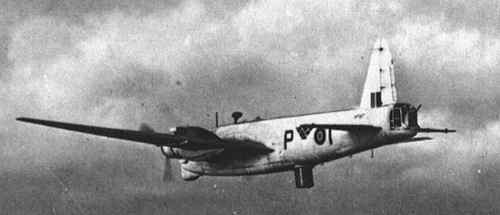
What changed, between March and May, was not any one thing — it was several real advantages arriving at once. Small escort carriers, converted from merchant hulls, could now sail with a convoy instead of relying on land-based aircraft alone, closing the “Mid-Atlantic Gap” where no aircraft had previously had the range to reach. Centimetric radar, small enough to fit on an escort ship or a patrol aircraft, could detect a surfaced U-boat’s low silhouette at a range German receivers couldn’t even hear. The Leigh Light, first used to sink a U-boat on July 5, 1942, let Coastal Command aircraft illuminate and attack submarines on the surface at night — the one time of day a U-boat had always been able to count on being invisible. None of these depended on codebreaking to work. All of them turned the ocean into a place a U-boat could no longer safely surface, day or night, anywhere along a convoy’s route.
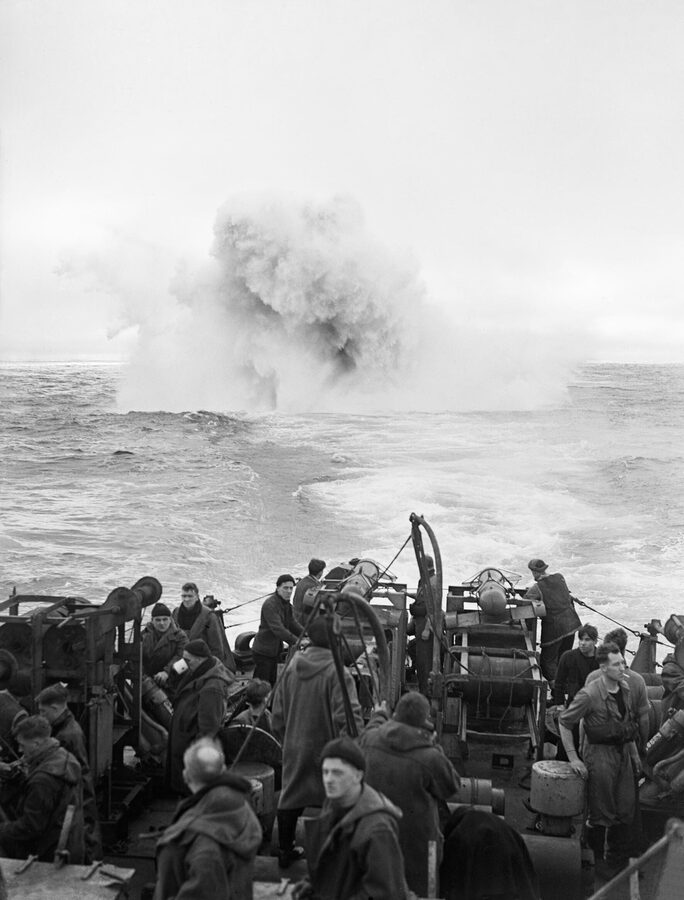
You are Grand Admiral Karl Dönitz, commander of Germany's U-boat fleet and the strategist behind the wolf-pack tactic itself. In the last thirty days you have lost 43 boats — about a quarter of your entire operational force — while sinking barely enough tonnage to matter. Your crews are dying faster than any other service branch on either side of the war. What do you do?
Every U-boat withdrawn from the North Atlantic is a convoy route German intelligence can no longer threaten. Every U-boat kept there is a crew added to a loss rate already running out of control.
Dönitz withdrew. On May 24, 1943, he pulled the U-boats out of the North Atlantic convoy routes, and privately admitted to his staff, "We had lost the Battle of the Atlantic." He did not stop the U-boat war entirely — boats kept operating elsewhere, at real but reduced cost, for two more years — but the campaign's central object, closing the Atlantic route Britain depended on, was over. By the war's end, 783 of Germany's roughly 1,150 commissioned U-boats had been destroyed, and about three-quarters of the men who served in them had died — the highest loss rate of any service branch, on either side, in the entire war.
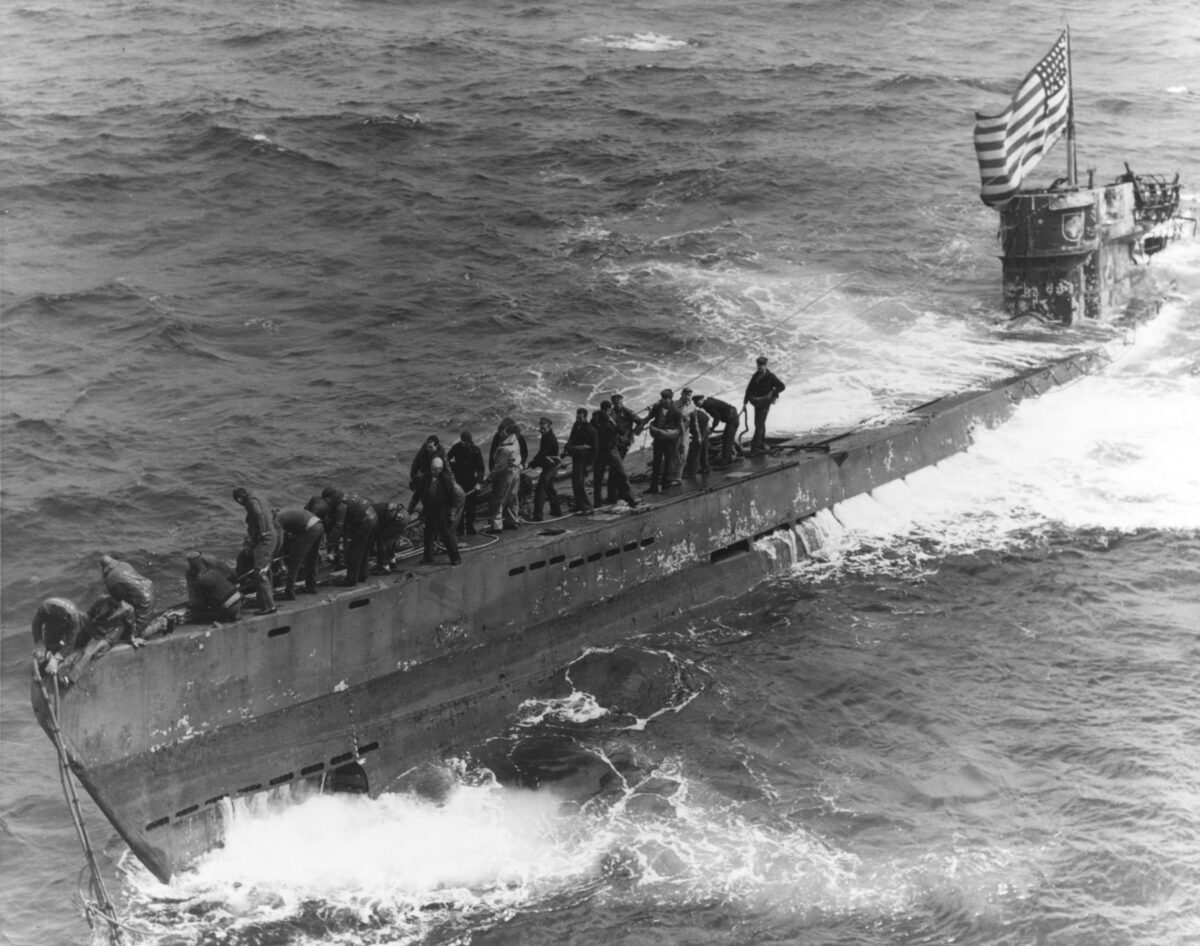
A year after Dönitz’s withdrawal, on June 4, 1944, a U.S. Navy task group under Captain Daniel V. Gallery did something almost no one on either side thought was still possible by that point in the war: they captured a German submarine intact. U-505, damaged and forced to the surface by depth charges from Gallery’s escort carrier group, was boarded before her crew could scuttle her or destroy her code materials — one of only six U-boats taken at sea by the Allies in the entire war. She was towed, under strict secrecy, all the way to Bermuda. Today she sits in Chicago’s Museum of Science and Industry, a physical object anyone can walk up to and touch — not a photograph, not a wreck on the ocean floor, but the actual boat.
This gauge shows where historians' debate actually sits — not a simulated probability. It never invents a number; it points at a real argument.
Historians still argue over exactly what won the Atlantic in spring 1943, and the debate runs in two directions, not one. Patrick Beesly — who had himself served in the Admiralty's own U-boat tracking room during the war — argued in Ultra and the Battle of the Atlantic (1983) that codebreaking-driven convoy routing was the central Allied advantage, especially before 1943. Clay Blair pushed back hard in his two-volume Hitler's U-Boat War (1996, 1998), building a boat-by-boat operational history that credits centimetric radar, direction-finding, escort numbers, and closing the mid-Atlantic air gap as the real killers — with Ultra's role real but, in his reading, overstated by the popular memory that followed its 1970s declassification. David Syrett's The Battle of the Atlantic and Signals Intelligence (1998) reconstructs the intelligence record in detail and lands closer to the middle: substantial, real value from codebreaking, but inseparable from the parallel story of hardware and production. The cleanest argument for that middle position is the one already told above — Germany's own codebreakers were reading British convoy signals for over a year at the same time Bletchley Park was reading theirs, which makes "codebreaking alone won it" hard to sustain for either side.
Gretton wrote, of finishing the ONS 5 battle after days without real rest, that fatigue by the end had become its own kind of danger — a captain and crew making life-and-death calls on a level of exhaustion no peacetime training accounted for, in a fight that simply would not pause long enough for anyone to recover before the next attack came.
From the other side of the periscope, Herbert Werner — who served aboard five U-boats between 1941 and 1945 and was one of the roughly one in four crewmen who survived the war — described 1943 as the year the ocean itself seemed to turn against them: boats that surfaced to recharge batteries or breathe now had to assume, at almost any hour, that radar had already found them before a lookout ever would.
By the time the fighting in Europe ended on May 8, 1945, the numbers on both sides told a story that took decades to fully surface. The U-boat arm had suffered the worst loss rate of any military service in the war, on either side — and the men who did survive it had spent years fighting an enemy whose real advantage, in codebreaking, escort technology, and sheer production, they were often only half-aware of even as it was killing them. The Allies, meanwhile, had kept an entire war effort fed, fueled, and eventually reinforced across three thousand miles of open ocean, against an enemy that came closer to strangling it than most people who weren’t there ever fully understood.
In one sentence: why does the 1943 turn in the Atlantic resist being credited to any single cause?
Because too many real advantages arrived in the same few months for any one of them to claim sole credit — restored codebreaking, escort carriers, centimetric radar, the Leigh Light, and simple growth in the number of trained escorts all landed on the Allied side of the ledger within roughly a year of each other, while Germany's own intelligence advantage was quietly running out of runway at the very same time. Historians disagree about the ranking. Nobody who has actually read the record argues it was only one thing.
Sources
- Clay Blair, Hitler’s U-Boat War: The Hunters, 1939-1942 (Random House, 1996)
- Clay Blair, Hitler’s U-Boat War: The Hunted, 1942-1945 (Random House, 1998)
- Patrick Beesly, Ultra and the Battle of the Atlantic (Hamish Hamilton, 1983)
- David Syrett, The Battle of the Atlantic and Signals Intelligence: U-Boat Situations and Trends, 1941-1945 (Ashgate, 1998)
- Peter Gretton, Convoy Escort Commander (Cassell, 1964)
- Herbert A. Werner, Iron Coffins: A Personal Account of the German U-Boat Battles of World War II (1969)
- F. H. Hinsley et al., British Intelligence in the Second World War (HMSO, multi-volume, 1979-1990)
- Winston Churchill, The Second World War, vol. 2, Their Finest Hour (Houghton Mifflin, 1949)
- American Merchant Marine at War, usmm.org
- Imperial War Museums Sound Archive and collections, iwm.org.uk