Last time: Germany's invasion plan for Norway was reportedly sketched from a tourist guidebook with only hours to prepare, and Denmark's army surrendered in about six hours flat. If "blitzkrieg" wasn't some flawless master doctrine, why did it keep working — and what happens when Germany turns the same method on a full-sized great power instead of two small ones? Because the method was never a fixed set of pre-planned moves — it was speed, force concentrated at one point instead of spread evenly, and field commanders trusted to keep moving without waiting for headquarters to catch up. On May 10, 1940, while the fighting in Norway was still going on, Germany turned that same method on France, Belgium, the Netherlands, and the British army stationed in France — the first real test of it against a great power's main force, not a small neutral country's.
In the spring of 1940, a 53-year-old French army captain named Marc Bloch was not, by profession, a soldier. He was one of France’s most respected historians, a co-founder of a school of historical writing that had reshaped how the discipline studied ordinary life instead of only kings and treaties. He had fought as a young man in the First World War and been recalled to uniform for the second, and by May 1940 he was serving as a fuel-supply officer with the French 1st Army — a desk-and-logistics job, the kind of post that puts a middle-aged man near headquarters rather than on a front line. It also put him close enough to watch the French high command’s machinery fail in real time, from the inside, as a trained observer of exactly the kind of thing that was happening to him.
What Bloch watched, over about six weeks, was one of the fastest and most complete military collapses of a modern great power in history. He wrote about it almost immediately afterward, in the summer of 1940, in a short book he called “Strange Defeat” — not published until 1946, because Bloch joined the French Resistance, was captured by the Gestapo, and was shot near Lyon in June 1944, two years before his own testimony reached print. He never saw the argument he’d made about why France lost become one of the starting points for a debate historians are still running today.
That’s the useful thing about Bloch as a way into this story: he was there, he had the training to analyze what he was seeing, and he still didn’t fully agree with himself about what had gone wrong. Neither do historians now. This is the story of the six weeks that decided it.
An army that wasn’t actually the weaker one
Start with the numbers, because the numbers are the whole reason this campaign is still argued about. In May 1940, the French Army fielded roughly 104 divisions. Add the roughly 10-division British Expeditionary Force sent to fight alongside it, plus Belgian and Dutch forces once the invasion reached them, and the Allied side in the west was not badly outmatched by Germany’s approximately 135 divisions. In tanks, the Allies actually had the edge — something close to 3,000 French tanks and over 200 British ones in theater, against roughly 2,400 to 2,700 German tanks. Several French designs, the Char B1 bis and the Somua S35 among them, carried thicker armor and bigger guns than the German tanks they’d end up fighting.
None of that saved France. The reason has almost nothing to do with weakness and almost everything to do with a single word: concentration.
The place Germany chose to be a fist was the Ardennes — a hilly, forested stretch of Belgium and Luxembourg that French military planners had studied for years and concluded a major armored force simply could not move through fast enough to matter. Marshal Philippe Pétain himself, testifying to the French Senate back in 1934, had called the Ardennes “impenetrable” if properly obstructed. That assessment shaped where France put its strongest units: the sector facing the Ardennes was held by comparatively weak, under-trained reserve divisions, while France’s best mobile forces sat further north, ready to rush into Belgium to meet what everyone expected would be a repeat of Germany’s 1914 invasion route.
That expectation was the trap. It’s exactly what a revised German plan — urged on the army high command by General Erich von Manstein and adopted by Hitler over more cautious generals’ objections — was built to spring.
Six weeks, in order
On May 10, 1940, Germany invaded the Netherlands, Belgium, and Luxembourg. As planned, French and British mobile forces rushed north into Belgium to meet the visible threat. It was, on the surface, precisely what German planners had bet they would do — while the real weight of the attack, seven panzer divisions strong, moved through the “impenetrable” Ardennes instead.
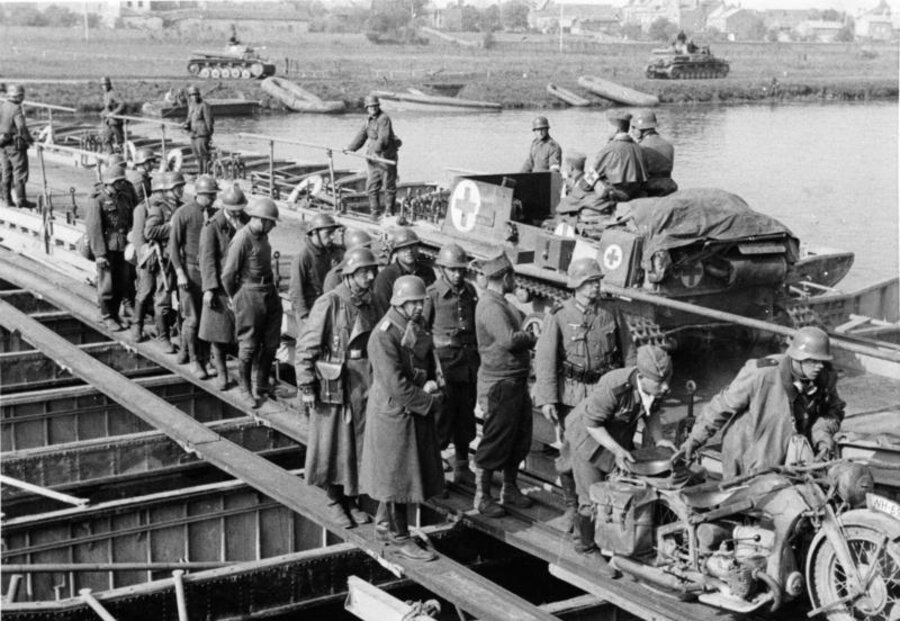
German forces reached and crossed the Meuse River at Sedan on May 13-14 — a breakthrough achieved roughly 60 hours after the offensive began. By May 20, German armor had reached the English Channel near Abbeville, cutting off the Allied armies fighting in Belgium from the rest of France entirely. The war’s most experienced troops were now trapped in a shrinking pocket, with the sea at their backs.
General Maurice Gamelin, France’s supreme commander, ran the campaign from a headquarters at Vincennes with no radio link to the front at all — orders and reports traveled by dispatch rider and could take, by his own staff’s account, up to 48 hours to move in either direction. He was relieved of command on May 18, ten days in, replaced by 73-year-old General Maxime Weygand. Neither change reversed what the Meuse crossing had already set in motion.
By late May, the trapped Allied armies faced a choice with no good version of it. Weygand ordered a coordinated counterattack south to reconnect with the rest of France — a plan that assumed forces that were exhausted, disorganized, and running low on supply could still fight their way through. Lord Gort, commanding the British Expeditionary Force, had to decide whether to follow that order.
You are Lord Gort, commanding the BEF. Your force is cut off in a shrinking pocket in northern France and Belgium. French high command has ordered a coordinated counterattack south — the "Weygand Plan" — to reopen a corridor to the rest of France. Your own assessment is that the attack has no real chance of success. What do you do?
Following the order means fighting alongside your ally, as agreed. Disobeying it, on your own judgment, means abandoning that plan without French high command's approval — and admitting the campaign, for the BEF, is already lost.
Gort chose to disengage. Around May 25, without waiting for French agreement, he ordered the BEF to fall back toward Dunkirk rather than commit to an attack he judged could not succeed — a decision made against his ostensible French superiors' wishes, credited by most historians with preserving the BEF to fight another day. It also planted a grievance that outlasted the campaign: French commanders and, later, French public opinion read the withdrawal as Britain abandoning the fight the moment its own army was at risk. Both readings describe the same nine days in May.
The evacuation and the halt that made it possible
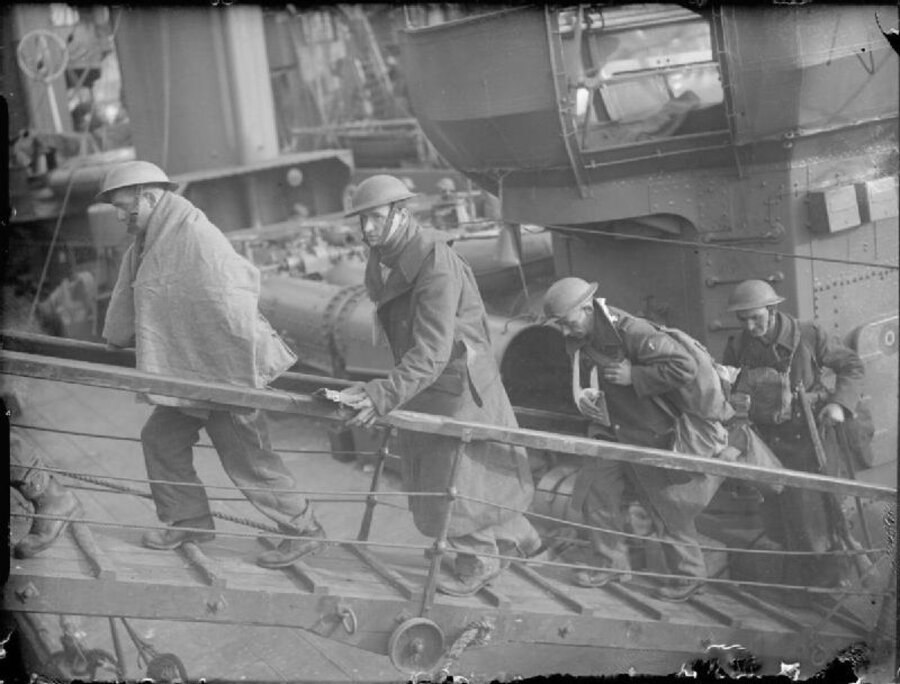
Operation Dynamo, the evacuation from Dunkirk, ran from May 26 to June 4, 1940. Planners had hoped to lift perhaps 30,000 to 45,000 men. The actual total came to roughly 338,000 — about 198,000 British troops and 140,000 French and other Allied troops — carried off the beaches and the harbor mole by a fleet that included Royal Navy destroyers, cross-Channel ferries, and several hundred civilian “Little Ships”: fishing boats, pleasure craft, and lifeboats, requisitioned or simply volunteered for the crossing. Every tank, gun, and truck the BEF owned was left behind in France.
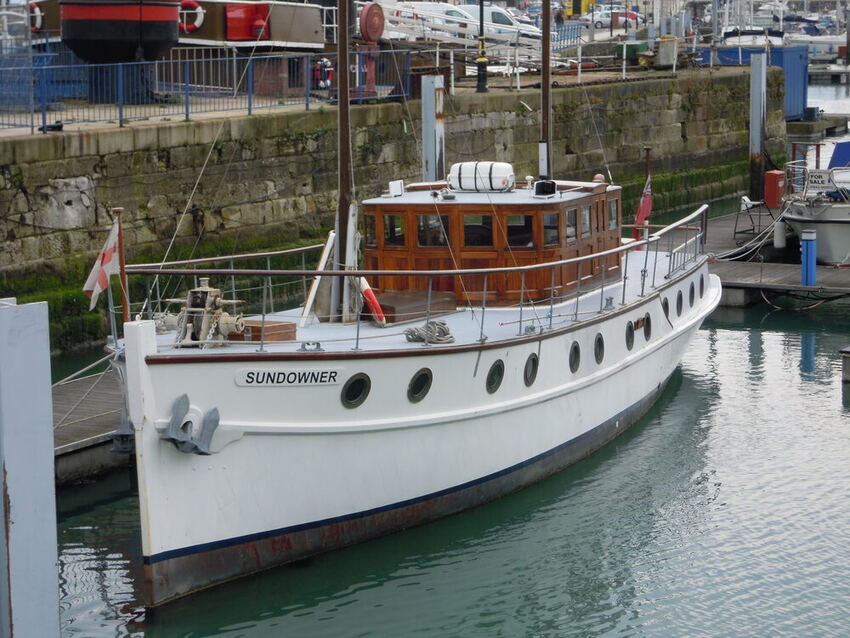
One of those small boats belonged to a 66-year-old retired mariner named Charles Lightoller — the most senior surviving officer of the RMS Titanic, twenty-eight years earlier. When the Admiralty called for small craft, Lightoller personally sailed his own 58-foot motor yacht, “Sundowner,” across the Channel, with his son Roger and a teenage Sea Scout as his only crew. He brought back somewhere around 127 to 130 men, more than twenty times what the boat was built to carry. “Sundowner” survives today, maintained in Ramsgate, the same Kent port she sailed from in 1940.
Winston Churchill, who had become prime minister on May 10 — the same day the invasion began — addressed the House of Commons on June 4, as the evacuation ended. The speech is remembered for its ending, “we shall fight on the beaches.” Less remembered is the line Churchill placed near its start, a deliberate check on how the country should read what had just happened.
"We must be very careful not to assign to this deliverance the attributes of a victory. Wars are not won by evacuations."
Dynamo had saved an army. It had not stopped a war. France still had to fight on alone, and it had eighteen more days to do it in.
Why the panzers stopped
That evacuation almost didn’t get nine days to work with. On May 24, with German armor within roughly 10 to 15 miles of Dunkirk and the BEF’s escape route nearly cut off entirely, Gerd von Rundstedt’s Army Group A halted its tanks — on Hitler’s personal authority — for something like 48 to 60 hours.
The eighteen days after
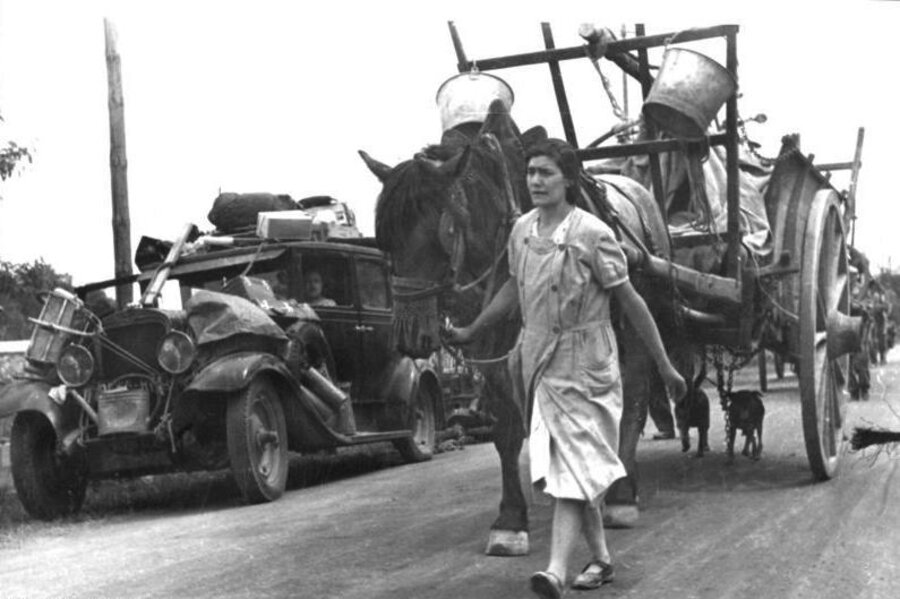
Paris was declared an open city and fell without a fight on June 14. Premier Paul Reynaud, who wanted to keep fighting from French North Africa, was outvoted in his own cabinet and resigned on June 16. His replacement, 84-year-old Marshal Philippe Pétain — the hero of Verdun in the previous war — sought an armistice within hours of taking office.
Hitler insisted the surrender be signed on June 22 in the same railway carriage, in the same forest clearing at Compiègne, where Germany had signed the armistice ending the previous war in November 1918 — a staged reversal of that earlier humiliation, deliberately chosen.
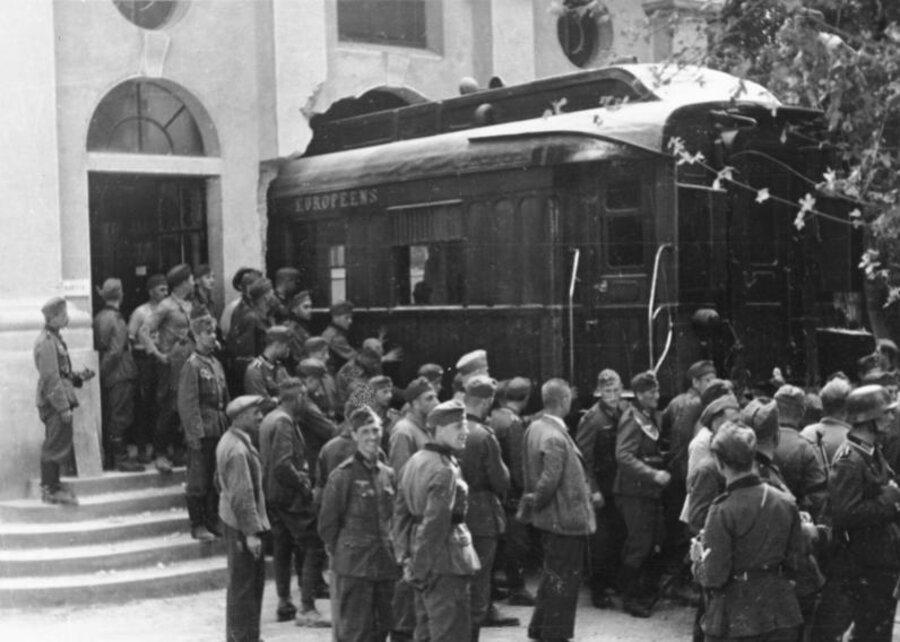
The armistice split France into a German-occupied zone in the north and along the Atlantic coast, and a nominally independent “free zone” governed from the spa town of Vichy — where Pétain’s government, formally granted full powers by the French parliament on July 10, would rule for the next four years. From the invasion on May 10 to the signature on June 22: six weeks, almost to the day.
What Bloch’s own book still argues about
Marc Bloch’s own explanation, written within weeks of living through it, was more precise than the popular shorthand “France was decadent” that later attached to his name. His real target was the French high command specifically — a general staff, in his account, still thinking in terms of slow, methodical, pre-1918 battle while the enemy thought in terms of speed and improvisation — layered onto a broader worry about an insular officer corps and a public he judged had lost some of its civic seriousness. Vichy’s own propaganda then borrowed a cruder version of that same diagnosis for the opposite purpose: Pétain’s radio address on June 25 blamed the defeat on a national “spirit of pleasure” that had beaten the “spirit of sacrifice” — using Bloch’s language, though not Bloch himself, an anti-Vichy figure who would later die in the Resistance. William Shirer’s bestselling “The Collapse of the Third Republic” (1969) carried a similar decline narrative to a mass English-language audience decades later.
This gauge shows where historians' debate actually sits — not a simulated probability. It never invents a number; it points at a real argument.
Since the 1990s, a body of close operational scholarship has pushed back hard against the decadence reading. Robert Doughty's "The Breaking Point" (1990) traces how a specific doctrinal mismatch at Sedan — French reliance on slow, artillery-led "methodical battle" against German combined-arms speed — turned a survivable tactical reverse into an unrecoverable collapse within about 60 hours. Ernest May's "Strange Victory" (2000) argues French intelligence had real, accurate signals of the Ardennes buildup before May 10, and that the failure was one of interpretation and command process, not ignorance or decline. Karl-Heinz Frieser's "The Blitzkrieg Legend" (1995; English 2005), working from German operational archives, goes further still: senior German commanders were themselves alarmed at the risk Guderian and Rommel were taking racing ahead of their own infantry, and "blitzkrieg" as a coherent, pre-planned doctrine is substantially a myth built after the fact. Julian Jackson's "The Fall of France" (2003), the standard modern synthesis, concludes the outcome was close-run — decided by a chain of specific, avoidable command and operational failures compounding within days, not proof of deep national decay. Jackson treats the decadence thesis as historically real and important anyway, as a belief that shaped how contemporaries understood and politically used their own defeat — just not, in his reading, as the thing that actually explains it.
In one sentence: if the losing side had comparable numbers, and in some categories better equipment, was Germany's victory earned by superior doctrine — or handed to it by a chain of specific, avoidable French decisions made under time pressure in May 1940?
Most current scholarship leans toward the second reading, though not completely. Germany's concentration of armor at Sedan was a real, deliberate choice that outperformed French doctrine on its own terms — that much is earned. But the six weeks that followed turned one broken river line into a national collapse through a specific sequence of things that did not have to go the way they went: a headquarters with no radio to its own front, reserve divisions posted opposite the "impenetrable" forest, a panic that spread faster than the actual German army did, and a French cabinet that ran out of will to keep fighting from anywhere but Paris. Marc Bloch, writing it down within weeks of living through it, thought both things were true at once — and most of the historians who've gone back through the archives since agree with him more than they agree with each other.
Sources
- Julian Jackson, The Fall of France: The Nazi Invasion of 1940 (Oxford University Press, 2003)
- Marc Bloch, Strange Defeat: A Statement of Evidence Written in 1940 (French orig. L’Étrange Défaite, written 1940, pub. 1946; English trans. Oxford University Press, 1949)
- Ernest R. May, Strange Victory: Hitler’s Conquest of France (Hill and Wang, 2000)
- Robert A. Doughty, The Breaking Point: Sedan and the Fall of France, 1940 (Archon Books, 1990)
- Karl-Heinz Frieser, The Blitzkrieg Legend: The 1940 Campaign in the West (German orig. 1995; English trans. Naval Institute Press, 2005)
- William L. Shirer, The Collapse of the Third Republic: An Inquiry into the Fall of France in 1940 (Simon & Schuster, 1969)
- Hugh Sebag-Montefiore, Dunkirk: Fight to the Last Man (Viking, 2006)
- Richard Toye, The Roar of the Lion: The Untold Story of Churchill’s World War II Speeches (Oxford University Press, 2013)
- Winston Churchill, address to the House of Commons, Hansard, June 4, 1940
- Imperial War Museums Collections (iwm.org.uk/collections)