Last time: Ethiopia fell to Italy, Guernica burned under bombs flown for Spain's civil war, and the League of Nations proved, twice, that it would protest but not act. If the 1930s had already delivered three dress rehearsals for the next war, why does this series treat what starts in China in July 1937 as something different? Because Ethiopia and Spain were wars their aggressors could stop on their own schedule — bounded actions the rest of the world could look away from. What starts at a bridge outside Beijing is two national armies committing to a war neither side can end for eight years, and within six months it produces the deadliest single episode this series has yet reached. This isn't a rehearsal. It's opening night, on a stage most histories don't point a camera at.
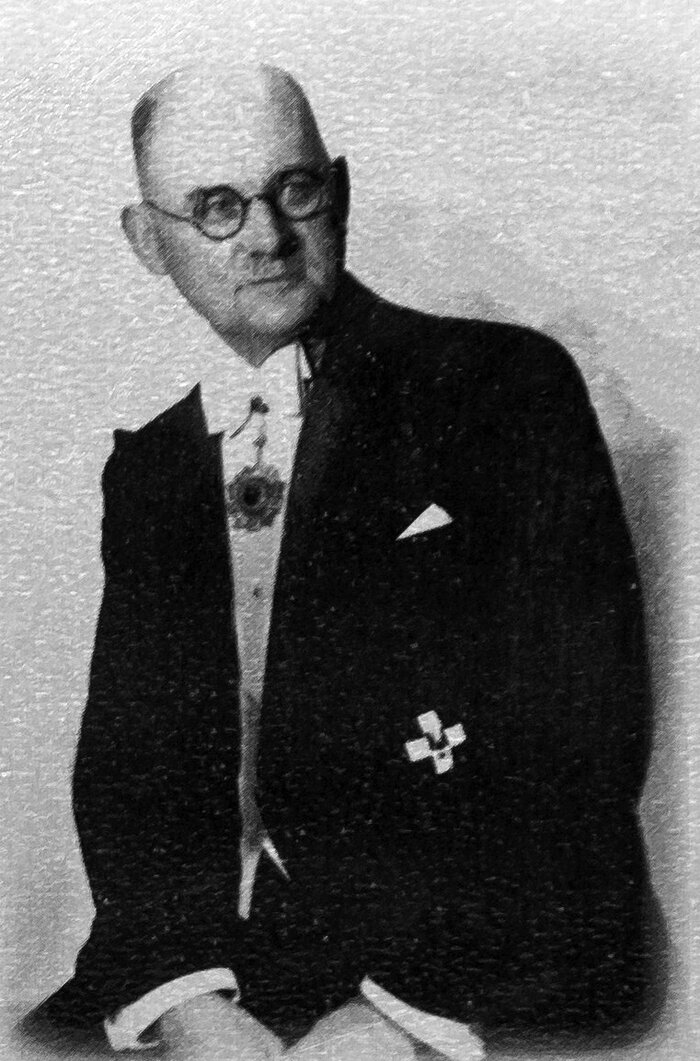
In the summer of 1937, a German businessman named John Rabe had lived in China for most of his adult life, running the Siemens company’s Nanjing office and carrying, since 1934, a Nazi Party membership card — useful, back home, for a company doing business with a government that valued the connection. Nothing about him marked him out as anyone in particular. Not a diplomat, not a soldier, not especially political — a salesman who liked China, had raised his children there, and planned to retire there.
By December of that year, Rabe was standing at the edge of a small fenced district in a burning city, wearing a swastika armband, physically blocking Japanese soldiers from a compound packed with terrified civilians — using the one piece of leverage he had, an alliance between his government and theirs, to make armed men hesitate. He had not trained for this. Almost nobody in this story had. What follows is how a night skirmish at a bridge became, within six months, one of the deadliest and least understood chapters of a war already two years old before Germany invaded Poland.
A bridge, a missing soldier, and a war that wouldn’t stop
On the night of July 7, 1937, Japanese garrison troops stationed near Wanping — a walled town southwest of Beijing, then called Peiping — were carrying out night maneuvers close to a stone crossing over the Yongding River known to Westerners as the Marco Polo Bridge, and to the Chinese as Lugou Bridge. Japan had kept a garrison in the area since 1901, under a treaty forced on China after the Boxer Rebellion. During the exercise, a Japanese soldier went missing. Japanese officers demanded the right to enter Wanping and search for him. China’s 29th Army, garrisoning the town, refused. Shots were fired — accounts differ on which side fired first, and the missing soldier turned up alive within hours, having simply wandered off — but by then both sides had already reinforced their positions, and neither backed down.
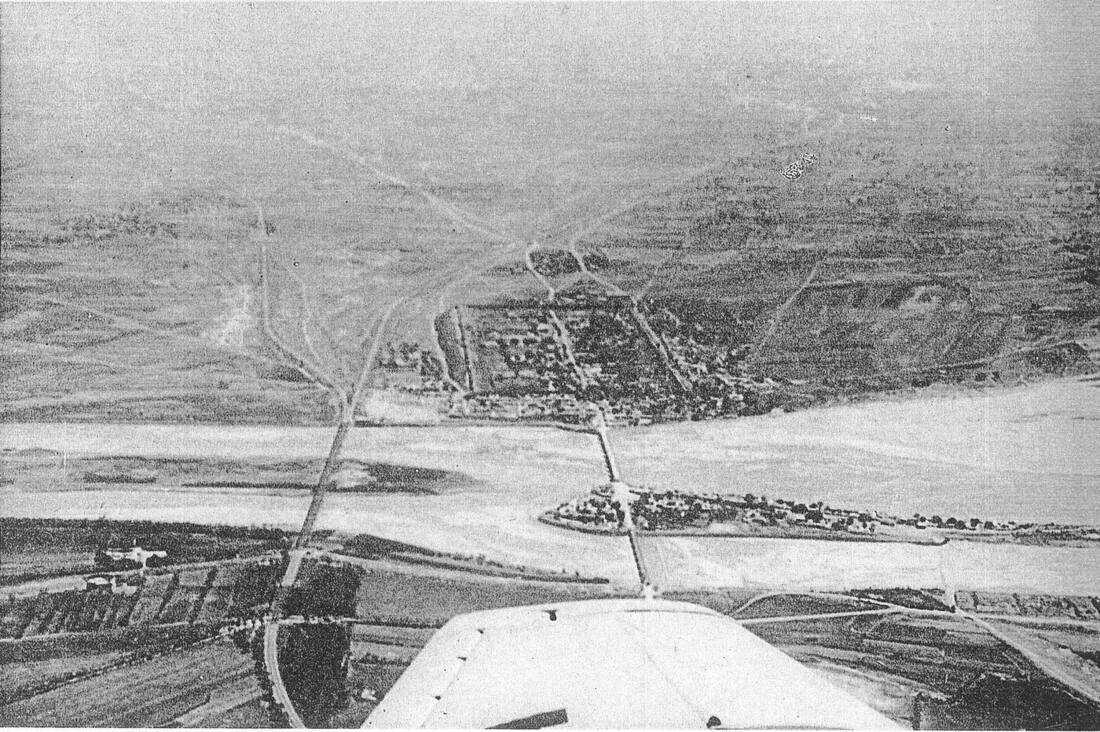
There had been border friction like this before — a smaller, contained clash at Shanghai in 1932, years of garrison tension in the north — and each time, local commanders and diplomats had found a way to paper it over. This time, they didn’t.
Within weeks, full-scale fighting had spread across northern China. Then Chiang Kai-shek, the Generalissimo leading China’s Nationalist government, made a choice that changed the shape of the entire war.
You are Chiang Kai-shek. Japan's army is already advancing across the north, on ground and on a timetable Japan controls. Your own forces are outgunned, undertrained by comparison, and nowhere near ready for a modern war. Do you let Japan keep dictating where this war is fought — or do you choose the battlefield yourself?
Concentrating everything to defend the north risked losing the war on Japan's terms before the rest of the world was even paying attention. Opening a second front meant committing China's best troops to a battle they were likely to lose.
Chiang chose Shanghai. On August 13, 1937, he committed his best German-trained divisions to a deliberate second front in China's largest, most international city — one Japan couldn't destroy without the world watching. It denied Japan a fast war on its own terms; the Battle of Shanghai became Japan's costliest fight to that date. It also cost China 200,000 to 300,000 casualties, and bought the time Chiang used to start moving China's government, industry, and universities inland — the strategy that let China keep fighting for eight more years. It also opened the road, once Shanghai fell, straight toward the capital.
A border skirmish outside Beijing to the fall of a national capital, in under half a year.
Marco Polo Bridge
A night skirmish over a missing soldier and a walled town's right to refuse a search escalates within days into open fighting between Japanese and Chinese forces across the Beijing-Tianjin region. Neither government intends, yet, to fight a general war.
Shanghai
Chiang Kai-shek opens a deliberate second front in China's largest treaty port, drawing Japan into brutal urban combat in full view of the world's press and foreign diplomats. It runs until late November and becomes, casualty for casualty, the costliest battle either side has fought.
The capital moves
With Shanghai fallen and Japanese forces advancing on Nanjing, China's Nationalist government announces it is relocating the capital nearly a thousand miles inland, to Chongqing, in Sichuan — while continuing to fight the retreat toward Nanjing itself.
Nanjing falls
Japanese forces enter Nanjing. What follows over the next six weeks is the subject of the rest of this part — and this series slows down here, deliberately, rather than moving past it the way many Western accounts of "the war" do.
Twenty people who stayed
Most foreign nationals with the means to leave Nanjing did, in the weeks before it fell. A small group — missionaries, doctors, a handful of businessmen, roughly twenty people in total — chose to stay. They organized what they called the Nanjing Safety Zone: a demilitarized district of about two and a half square miles, marked off with international flags and negotiated, informally, with both retreating Chinese officials and the advancing Japanese command. John Rabe, the Siemens representative with the Nazi Party card, chaired the committee that ran it — not because he had any particular standing to lead a humanitarian effort, but because his nationality gave the Zone a form of protection nobody else on the committee could offer. Japan and Germany were allied. A German swastika, laid flat across a rooftop or flown from a flagpole, was one of the few things that could make a Japanese pilot or patrol hesitate.
Somewhere between 200,000 and 250,000 Chinese civilians sheltered inside the Zone’s boundary over the weeks that followed — a number roughly equal to the entire population many mid-sized American cities carried at the time, held inside an area smaller than most city parks, defended by twenty foreign civilians with no weapons and no formal authority at all.
Minnie Vautrin
Nanjing fell on December 13, 1937. What followed, over roughly six weeks, was the mass killing of surrendered Chinese soldiers and civilians, mass rape, and the systematic looting and burning of much of the city, carried out by Japanese forces under the overall command of General Matsui Iwane, with Prince Asaka Yasuhiko — a member of the Japanese imperial family — holding direct field command in the city. Historians call it the Nanjing Massacre, or the Rape of Nanjing. It is the reason this part exists, and it is written here with the restraint the rest of this series has used only once before: no interactive devices built around it, no prediction, nothing to click through. What follows is a record, not an experience to simulate.
Vautrin's diary entries from mid-December 1937 onward describe a routine that never became routine: soldiers arriving at the Ginling gate through the night, sometimes in groups, demanding to search the campus for "soldiers" or simply for women; Vautrin meeting them at the entrance herself, again and again, negotiating, refusing, occasionally succeeding only by sheer persistence and the fact that a foreign face still carried some weight the soldiers hesitated to test. She recorded her own exhaustion candidly — the fear that she would eventually be too tired, or too outnumbered, to hold the gate one more time — alongside the numbers of women arriving daily, swelling the campus far past anything Ginling College had ever been built to hold.
Two individuals among the tens of thousands harmed are documented well enough to be named here rather than folded into a total. Li Xiuying, pregnant at the time, was stabbed dozens of times resisting an assault; her wounds were filmed by John Magee, an American missionary whose secret footage of the massacre’s aftermath is the only surviving motion-picture record shot inside the city, now held at Yale. Decades later she won libel suits in Japan against authors who claimed her story was fabricated. Xia Shuqin, eight when most of her family was killed in front of her, gave recorded testimony into her nineties and won a similar Japanese libel case in 2009. A former Japanese infantryman, Shiro Azuma, kept his own wartime diary describing killings at Nanjing and later gave public testimony about what he had done. None of this is repeated here to illustrate violence — it’s named because a war this size is easy to talk about only in totals, and totals are how it gets forgotten.
How many
The Nanjing Massacre’s death toll is one of the most genuinely contested numbers in modern historical scholarship — not because serious historians disagree about whether a large-scale, systematic atrocity happened (they don’t; that isn’t in dispute among mainstream historians in any country), but because Chinese, Japanese, and Western researchers have used different geographic boundaries, different time windows, and different definitions of who counts, and have arrived at real, named, differently-sourced figures. This series’ law on contested numbers applies with extra weight here: shown side by side, sourced, never smoothed into one invented figure.
A small, politically motivated fringe in Japan denies the massacre happened at all. That position is not part of the legitimate scholarly range above — it is a documented denialist phenomenon, not one more estimate among equals. Zoomed out further, the widely cited estimate for all Chinese deaths across the full Second Sino-Japanese War, 1937 to 1945 — military and civilian combined — runs roughly 15 to 20 million, a range historian Rana Mitter uses in Forgotten Ally. That is the number that makes this part’s title more than a slogan: China’s war ranks among the deadliest theaters of the entire conflict this series is telling, and it had already been running for more than two years before the war most Western accounts start the clock on.
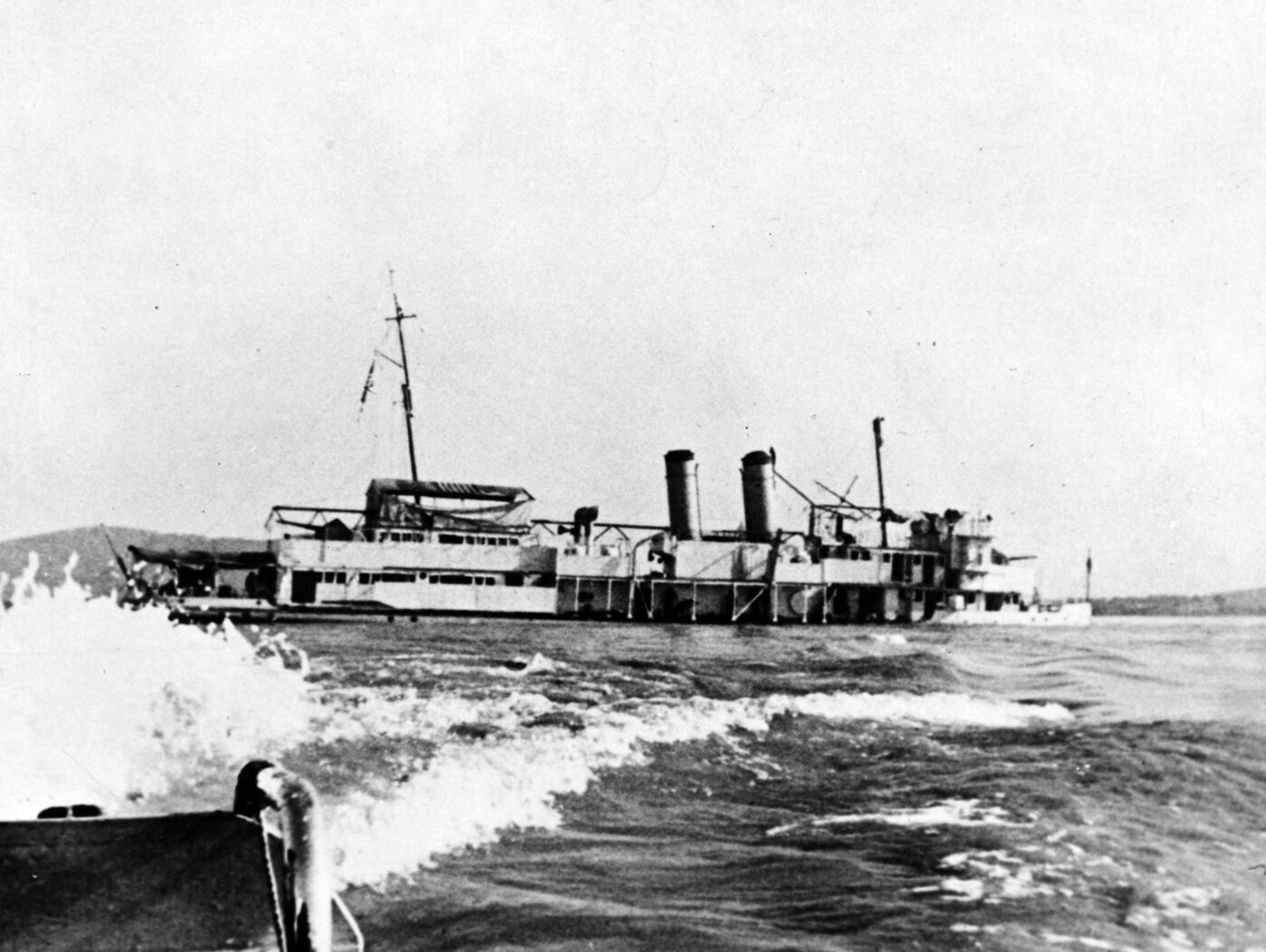
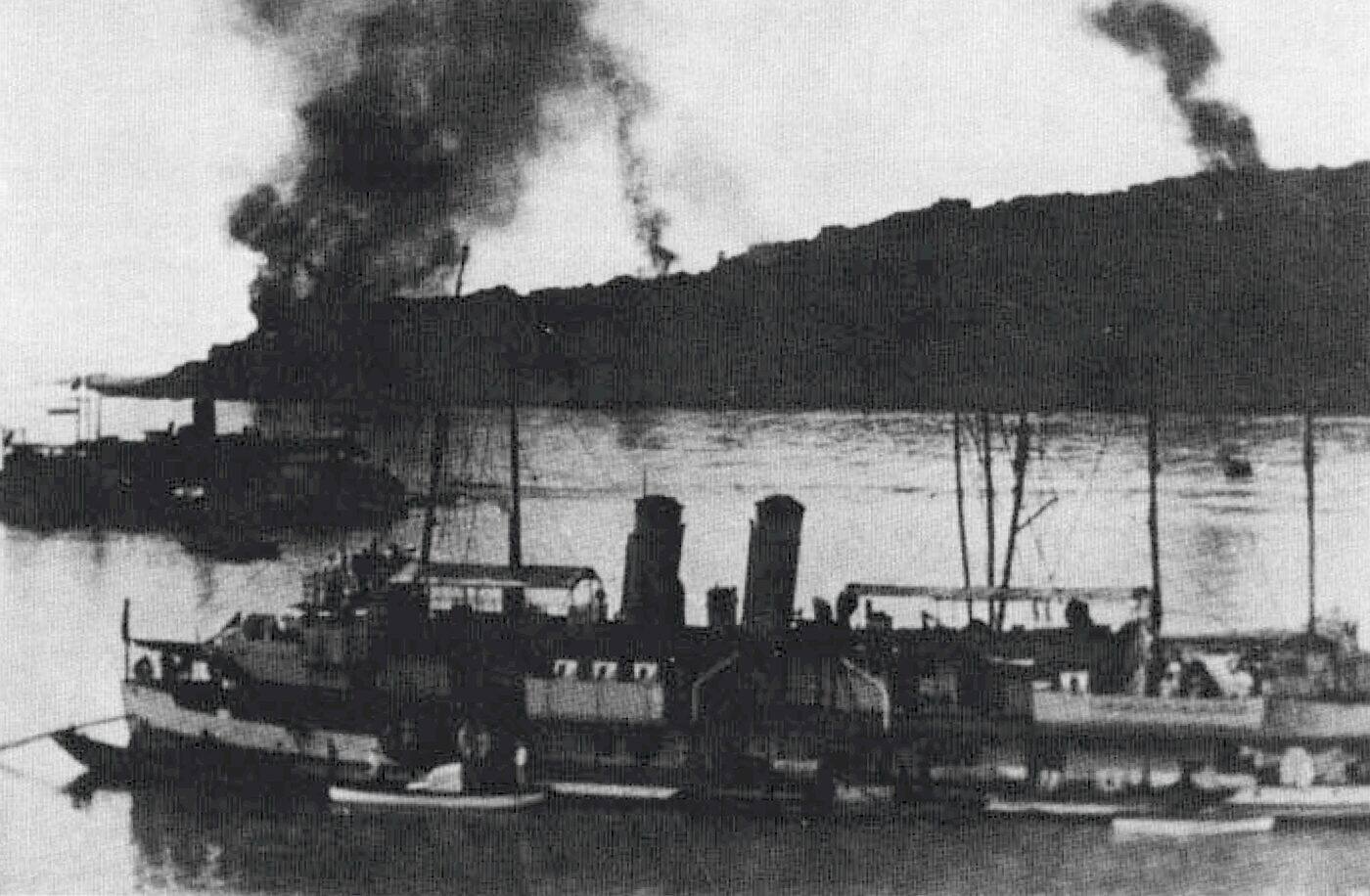
The same week Nanjing fell, the world’s attention was briefly and loudly elsewhere. On December 12, 1937 — the day before the city fell — Japanese naval aircraft attacked and sank the American gunboat USS Panay on the Yangtze River, killing three and wounding dozens. It was a real diplomatic crisis: Japan formally apologized and paid an indemnity, and American newspapers covered it heavily for days. It also, by accident of timing, competed directly for attention with a much larger catastrophe unfolding onshore at almost the same moment.
The war that didn’t end at Nanjing
Nanjing’s fall did not end the war, or even China’s ability to win battles. In spring 1938, Chinese forces won a rare, real victory at Taierzhuang, briefly checking Japan’s advance — but it couldn’t be sustained, and the massive Battle of Wuhan that followed, June through October 1938, broke conventional Chinese resistance in the country’s center. Wuhan fell on October 27, 1938.
After Wuhan, the war settled into the long stalemate this part is scoped to reach. Japan held the coast, the great cities, and the rail lines. China’s government, industry, and universities had by then relocated deep inland to Chongqing, and the country kept fighting — guerrilla resistance and grinding attrition that would not resolve until 1945 — including years of sustained Japanese strategic bombing directed at Chongqing itself, starting in 1938.
That is the argument this part opened with, and it’s worth stating directly rather than leaving it implied. Historian Rana Mitter, in Forgotten Ally (2013), makes the case that Western accounts of “World War II” routinely treat China’s war as a secondary, almost forgotten theater — a footnote that “merges into” the real war once Germany invades Poland — when the more honest reading places China’s war as the conflict’s actual opening act: more than two years of full-scale war, occupation, and now-documented atrocity, tying down large Japanese forces years before Pearl Harbor brought the United States into the Pacific War at all.
This gauge shows where historians' debate actually sits — not a simulated probability. It never invents a number; it points at a real argument.
The question isn't whether the Second Sino-Japanese War happened, or when — every serious historian agrees on July 1937. The debate is periodization: where a global "World War II" should be understood to begin. Most encyclopedias and survey military histories still date WWII's start to September 1, 1939, treating China's war as a separate, earlier conflict that later "merged into" the world war. Mitter's case for centering China's war as integral to the real beginning has gained real traction over the past decade, but it hasn't displaced the 1939 convention most references still use — part of why a fully-fought, two-year war with tens of millions displaced can still read, in popular history, as a footnote to a war that supposedly started somewhere else.
What Nanjing cost the people who tried to help
John Rabe left Nanjing in early 1938 and returned to Germany, where the Gestapo briefly interrogated him for trying to publicize what he’d seen, then ordered him to stay silent. He kept his diary, all six volumes, hidden for the rest of his life. Fired from Siemens after the war, denazified but impoverished, he lived out his final years in real poverty in Berlin; when word reached Nanjing, the city sent him money. His diary wasn’t published in English until 1998, nearly fifty years after he died. Vautrin is buried in Bellevue, Ohio; Ginling College later placed a memorial stone to her on its Nanjing grounds.
None of that undoes what happened in the six weeks between mid-December 1937 and late January 1938. It is part of the same record, though — the fact that in the middle of one of the century’s worst atrocities, a small number of ordinary, unqualified people chose to stay, and that choice is as documented and as real as everything else in this part.
In one sentence: why does this series treat 1937 China as the war's real opening act, rather than a prelude to the war that starts in 1939?
Because by every measure that matters — sustained combat between national armies, occupied territory, mass civilian death, a government fighting on without surrender — China's war was already fully underway, already the deadliest theater on earth, and already reshaping the region years before Poland. Treating it as a footnote to "the real war" isn't a neutral choice of start date; it's a choice about whose war gets to count as the war.
Sources
- Rana Mitter, Forgotten Ally: China’s World War II, 1937-1945 (Houghton Mifflin Harcourt, 2013)
- John Rabe, The Good Man of Nanking: The Diaries of John Rabe, ed. Erwin Wickert (Knopf, 1998)
- Minnie Vautrin diary, digitized, Yale Divinity School Library (divinity-adhoc.library.yale.edu/Nanking/Vautrin.pdf)
- John G. Magee Family Papers, Yale University Archives
- Suping Lu (ed.), They Were in Nanjing: The Nanjing Massacre Witnessed by American and British Nationals (Hong Kong University Press)
- Bob Tadashi Wakabayashi (ed.), The Nanking Atrocity, 1937-38: Complicating the Picture (Berghahn Books, 2007)
- Iris Chang, The Rape of Nanking: The Forgotten Holocaust of World War II (Basic Books, 1997) — used with the historiographical caveats on accuracy and methodology raised by professional reviews; its core account of the atrocity is not disputed by mainstream historians
- International Military Tribunal for the Far East, Judgment (1948)
- USC Shoah Foundation, Nanjing Massacre Collection, Visual History Archive
- Library of Congress research guide, “Sino-Japanese War of 1937-1945” (guides.loc.gov/sino-japanese-war-1937-1945)
- Naval History and Heritage Command, “The Panay Incident” (history.navy.mil)