Last time: by the summer of 1934, Adolf Hitler held the powers of a chancellor and a dead president combined, and the German army had sworn a personal oath of loyalty to him. How did a leader appointed through backroom dealing, not by winning a majority outright, end up with total, unchallenged control inside eighteen months? He used a real emergency, the February 1933 Reichstag fire, to get emergency powers that outlasted the emergency itself, then pushed the Enabling Act through a Reichstag whose opposition was already arrested or intimidated — so every later step looked procedurally legal. By July 1934, after purging his own paramilitary's leadership and folding a dead president's powers into his own office, no institution left inside Germany could still tell him no.
On April 28, 1937, a South African-British reporter named George Steer filed a story for The Times of London that would become one of the most famous newspaper articles of the century. Two days earlier, German bombers had leveled the Basque market town of Guernica. Steer drove through the smoking wreckage himself, counted the dead, and identified the aircraft type from the debris — his story ran under the headline “The Tragedy of Guernica,” and it named the nationality of the bombers within forty-eight hours, before Berlin or its Spanish allies had finished denying it happened at all.
Steer had done this before. A year and a half earlier, in Ethiopia, he had covered a different war for the same newspaper — Italian troops and aircraft fighting their way toward Addis Ababa, and a weapon Italy always denied using. Same reporter, two wars, five years apart, one straight line between them: both times, a government insisted something obviously true wasn’t happening, and both times the truth took decades to become official. This part follows the whole decade Steer moved through — Fascist Italy’s war in Africa, Japan’s military tightening its grip on Tokyo, and the Spanish Civil War that pulled in weapons, ideologies, and volunteers from across the world. Three separate stories, one question underneath all of them: when a government breaks the rules the rest of the world agreed to, what actually happens?
Fascist Italy by the mid-1930s was not a sudden dictatorship — it had been built in careful stages since Benito Mussolini’s followers marched on Rome in October 1922. The 1926 Rocco Laws folded workers and employers into state-run syndicates and outlawed independent unions and opposition parties. A secret police force, the OVRA, was founded in 1927. A 1929 plebiscite returned a suspiciously precise 98.43% for the single Fascist candidate list — a number that tells you more about the counting than the voting. That same year, the Lateran Treaty ended the Italian state’s long feud with the Catholic Church, giving Mussolini’s regime the Church’s quiet blessing. By the time he looked toward Ethiopia, one of the last independent states in Africa and a League of Nations member in its own right, Mussolini governed a fully one-party country of nearly 43 million and wanted an empire to match Rome’s old name for itself.
Italy invaded on October 3, 1935, without declaring war first. Roughly half a million to 685,000 Italian troops, backed by hundreds of tanks and aircraft, faced an Ethiopian force that outnumbered them on paper but had almost nothing to match Italy’s air power. Mussolini personally authorized mustard gas against Ethiopian forces on October 27, 1935, then ordered it used “on a vast scale” that December — 300 to 500 tons dropped over roughly two months, hitting soldiers, villages, and Red Cross medical posts alike. Haile Selassie protested formally to the League that winter. Italy denied everything and pressured foreign medical staff on the ground to sign statements saying no gas had been used.
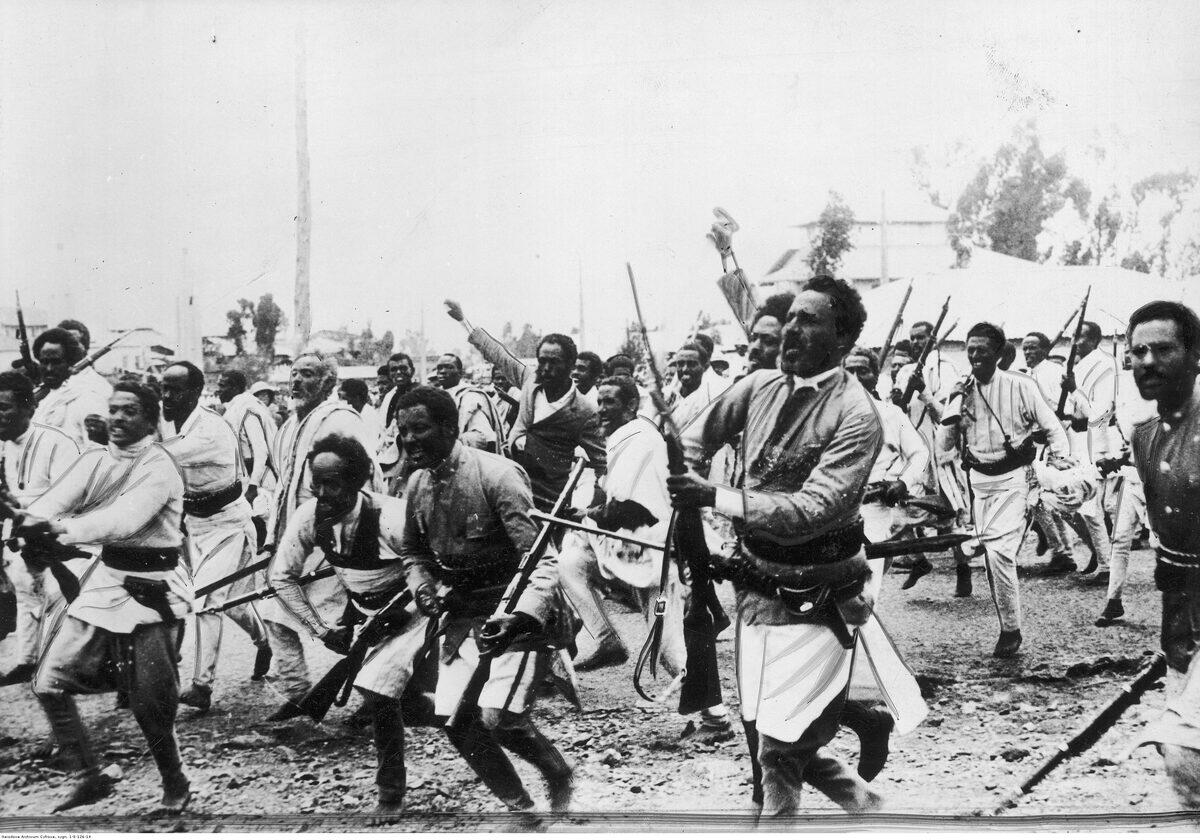
You are Haile Selassie. Italian forces are closing on your capital, your army is broken, and resistance fighters — the arbegnoch, "patriots" — are already forming in the countryside to keep fighting without you. What do you do?
Staying meant leading a guerrilla resistance from Ethiopian soil, at real personal risk, alongside fighters who intended to keep fighting regardless. Leaving meant becoming the first head of state in the League's history to appeal to it in person — but only as an emperor without a throne, addressing a body that had already shown it wouldn't act.
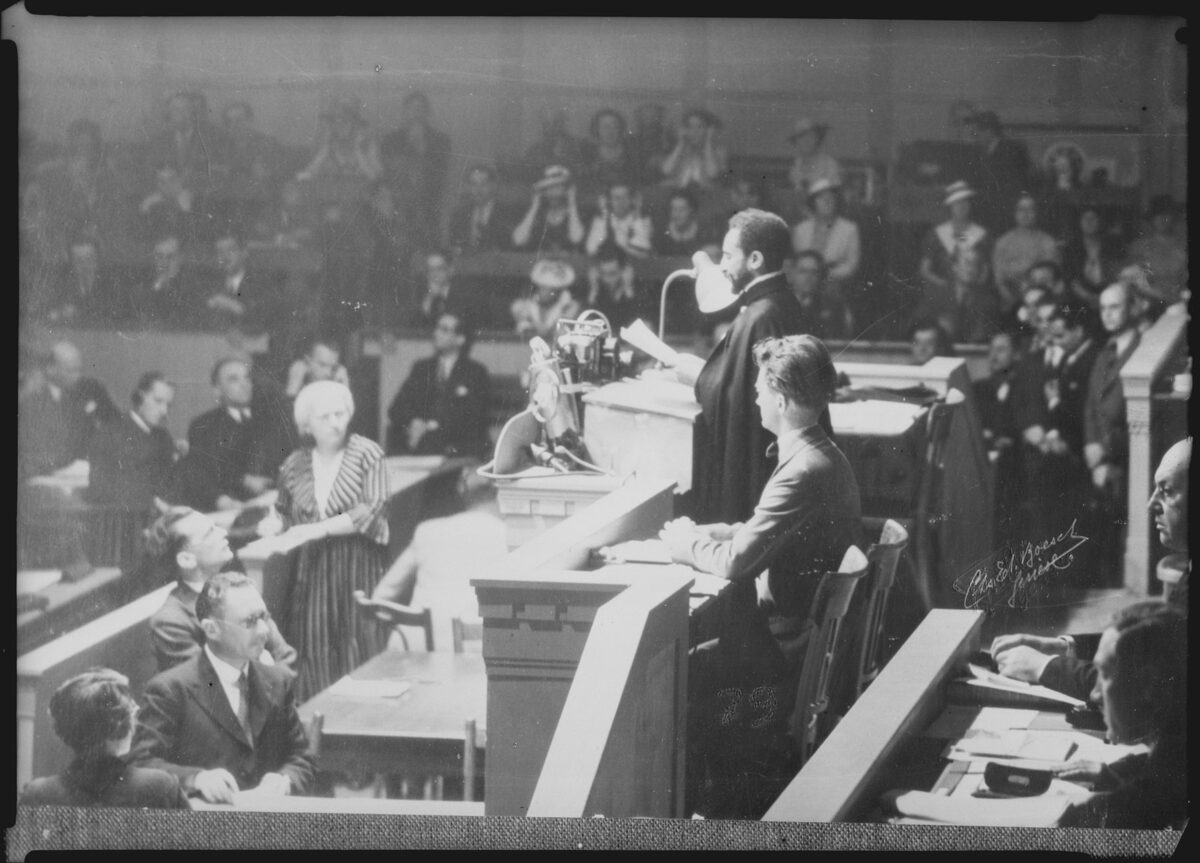
Selassie left. He fled through Djibouti to Britain, and on June 30, 1936, he addressed the League of Nations Assembly in Geneva in person — the only time in the League's entire history a head of state made that appeal directly. He described Italian aircraft with "sprayers installed on board" dispersing what he called "a fine, death-dealing rain" over his people. Some League delegates jeered him from the floor. The Assembly took no further action. The arbegnoch he left behind kept fighting for years anyway — a resistance that outlasted the speech, the sanctions, and, eventually, Mussolini's own empire.
Italy annexed Ethiopia on May 7, 1936, five days after Selassie fled. Guerrilla resistance continued for years, and it came at a horrifying cost: after a February 1937 assassination attempt on the new Italian viceroy, Marshal Rodolfo Graziani, Italian forces carried out a mass reprisal in Addis Ababa — the Yekatit 12 massacre — that historian Ian Campbell’s original interviews with survivors put at roughly 19,200 dead, against Italy’s own acknowledged figure of about 1,400. Italy’s mustard gas campaign, meanwhile, stayed an official secret for sixty years: the Italian government did not formally admit to using chemical weapons in Ethiopia until 1996.
Japan’s military did not seize the government in one dramatic coup — it took the 1930s to do it, one assassination at a time. On May 15, 1932, eleven young naval officers stormed the official residence of Prime Minister Inukai Tsuyoshi and shot him dead. When he reportedly told them, “if I told you, you would understand,” they answered, “dialogue is useless.” What followed was not outrage but sympathy: the court that tried the killers received some 110,000 petitions for clemency, and their sentences were extremely light. Party-led civilian government in Japan effectively ended with Inukai’s murder and never fully came back.
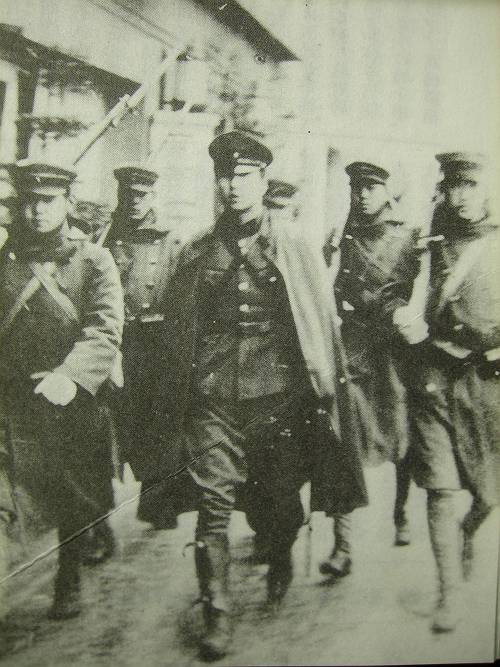
The following year, on February 24, 1933, Japan’s delegate walked out of the League of Nations Assembly after it condemned Japan’s conduct in Manchuria; formal withdrawal followed. Then, before dawn on February 26, 1936, roughly 1,500 soldiers led by about 25 young army officers seized central Tokyo’s government district, assassinating the finance minister, a former army chief, and the Lord Keeper of the Privy Seal, while the prime minister narrowly escaped by hiding. Surrounded within days by more than 20,000 loyal troops and personally denounced as rebels by Emperor Hirohito, the mutineers surrendered by the evening of February 29. Seventeen officers were sentenced to death in the main trial; fifteen were executed that July, and four more instigators — tried separately, including the civilian ideologue Kita Ikki — were executed more than a year later, in August 1937, bringing the total put to death for the mutiny to nineteen. The mutiny failed, but it worked anyway, in the way that matters most: from then on, Japan’s civilian cabinets formed under the army’s veto, because everyone in government now knew exactly what could happen to a minister the army decided it didn’t want.
By late 1936, the pieces Japan and the European dictatorships needed were falling into place around each other. On October 25, Germany and Italy signed a secret protocol; Mussolini used the word “axis” for the relationship in a Milan speech a week later. On November 25, Japan and Germany signed the Anti-Comintern Pact, nominally aimed at the Soviet-led Communist International; Italy joined a year after. None of these were military alliances yet. What they did do was tell three governments, each testing how far the postwar order would let them push, that they weren’t testing it alone.
The Spanish Civil War, which broke out on July 17, 1936, after a military uprising against Spain’s elected government, became the place all of this converged. Fought between the Republic and Nationalist rebels eventually led by Francisco Franco, it drew in foreign power on a scale nobody could openly admit to at the time. Nazi Germany’s Condor Legion put roughly 10,000 troops in Spain at any given moment; Fascist Italy sent 50,000 to 75,000 troops, tanks, and aircraft — its largest overseas military commitment of the interwar period. The Soviet Union sent roughly 3,000 technicians and 772 pilots, paid for with Spanish gold reserves secretly shipped to Moscow. On the Republic’s side, roughly 35,000 volunteers from over fifty countries formed the International Brigades, including about 2,800 Americans and 2,500 Britons who crossed oceans to fight in someone else’s war because they believed it was theirs too.
Britain and France responded by setting up a 27-nation Non-Intervention Committee in London in August 1936. Germany, Italy, and the Soviet Union all signed it — while simultaneously supplying their own sides. It stopped almost nothing. It is the second half of this part’s toothless-enforcement mechanism: a real committee, real signatures, real meetings, and no actual restraint on anyone who didn’t want to be restrained.
This gauge shows where historians' debate actually sits — not a simulated probability. It never invents a number; it points at a real argument.
Spain gets called "the dress rehearsal" for the Second World War in almost every general history — Germany and the Soviet Union field-testing the coming war's weapons, tactics, and ideologies on someone else's soil first. That's the popular framing, and there's real evidence for it. But military historian James S. Corum, in a detailed study of the Luftwaffe's own institutional learning, argues the opposite happened at least as often: Germany's air force drew *misleading* lessons from Spain, because its close-air-support success there came against a weak, disorganized Republican air force that gave German planners a false confidence about how contested airspace would actually behave over France and Britain a few years later. Spain wasn't a clean rehearsal that got the lines right. It taught the wrong lesson almost as often as the right one — and both sides of that argument are backed by named historians reading the same campaign.
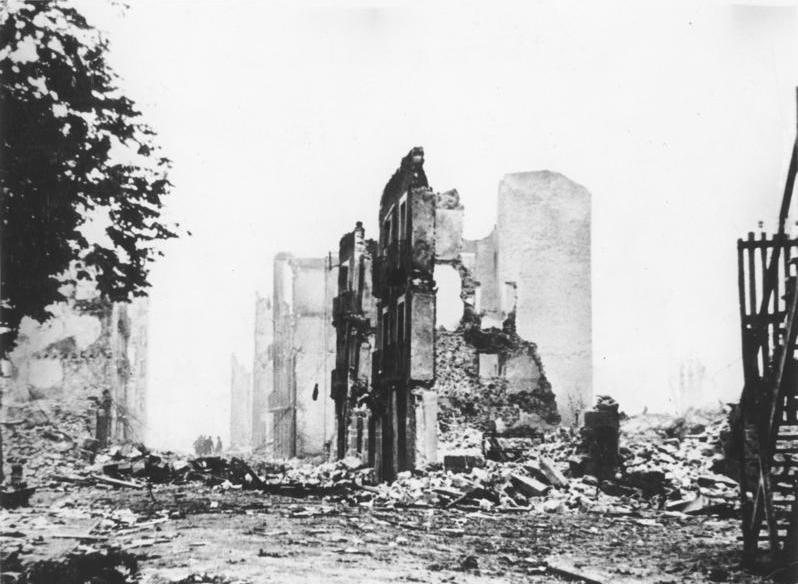
The war’s most infamous single act was the bombing of Guernica on April 26, 1937. German Condor Legion aircraft attacked the Basque market town for nearly three hours during a busy market day; estimates of the dead range from a Nationalist-published claim of twelve to an initial Basque government figure of 1,645, with modern historians generally settling somewhere in the 170-to-300 range. Whatever the precise number, it was George Steer’s dispatch — filed within forty-eight hours, naming the German bombers directly — that made the attack impossible to explain away in real time, however hard the people responsible tried.
"You can go proudly. You are history. You are legend... We shall not forget you, and when the olive tree of peace puts forth its leaves again, entwined with the victory laurels of the Spanish Republic — return!"
The volunteers she was speaking to had come from more than fifty countries to fight a war most of their own governments refused to officially touch. Many left recorded testimony afterward — American veterans of the Abraham Lincoln Brigade in oral history recordings at NYU’s Tamiment Library, British and international volunteers in the Imperial War Museum’s Sound Archive and the International Brigade Memorial Trust’s interview collection — real people explaining, years later and in their own words, why a civil war in someone else’s country felt like theirs too.
None of these three stories ended the way anyone fighting them in 1936 could have known. Mussolini’s African empire lasted five years. Japan’s military, having captured its own government through a decade of intimidation, was about to turn that grip outward. Spain’s war ground on for two more years after Guernica and killed hundreds of thousands of its own people before it ended. But the pattern underneath all three had already set: a rule gets broken, an international body responds with something that looks like enforcement and isn’t, and the government that broke the rule learns exactly how much room the world was willing to give it. Three governments ran that experiment between 1935 and 1937. All three got the same answer.
In one sentence: what did the League of Nations' sanctions on Italy and the Non-Intervention Committee in Spain actually have in common?
Both were real, signed, multilateral responses that deliberately left out the one form of pressure — oil and the Suez Canal for Italy, actual enforcement against Germany, Italy, and the Soviet Union for Spain — that could have changed the outcome, which meant both let the powers watching learn that breaking the rules of the 1930s' international order cost less than it looked like it should.
Sources
- Angelo Del Boca, The Ethiopian War, 1935-1941 (1969)
- Ian Campbell, The Addis Ababa Massacre: Italy’s National Shame (2017)
- SIPRI, “The Use of Chemical Weapons in the 1935-36 Italo-Ethiopian War”
- Haile Selassie, Appeal to the League of Nations (30 June 1936)
- Joseph C. Grew, Ten Years in Japan (1944)
- Hugh Byas, Government by Assassination (1942)
- Hugh Thomas, The Spanish Civil War, rev. ed. (2001)
- Paul Preston, The Spanish Holocaust (2012)
- James S. Corum, The Luftwaffe: Creating the Operational Air War, 1918-1940 (1997)
- George L. Steer, Caesar in Abyssinia (1936) and The Tree of Gernika (1938)
- George Orwell, Homage to Catalonia (1938)
- Stanley G. Payne, A History of Fascism, 1914-1945 (1995)