Last time: a party that couldn't crack 3 percent of the national vote in 1928 becomes, in one election two years later, the second-largest party in Germany's parliament. What actually changed in those two years? Not the party's message, which barely shifted, and not some clever new strategy. What changed was the ground under everyone's feet: the Wall Street Crash of October 1929 cut off the American loans Germany's recovery depended on, and unemployment started climbing toward three million by the time of the 1930 vote — on its way, within two more years, to six million. The Nazi vote rose and fell with that unemployment line for the next three years — a fringe movement handed a mainstream audience by an economic collapse it didn't cause.
In 1932, a young Englishwoman named Christabel Bielenberg was settling into married life in Hamburg, and then Berlin. She had married a German lawyer, Peter Bielenberg, and moved to his country as an outsider who spoke the language but hadn’t grown up inside its politics — she noticed things the way a newcomer notices a household’s habits, without yet knowing which ones were old and which were new. Dinner parties. In-laws. The ordinary, slightly foreign texture of a new marriage in someone else’s country.
She was not blind to what was happening around her. Unemployment was climbing past six million, and Chancellor Heinrich Brüning had been ruling largely through Article 48 of the constitution — a provision meant for genuine emergencies that let the president issue decrees with the force of law, bypassing the Reichstag almost entirely. Germans she met had opinions about this, plenty of them, but Article 48 was already an old habit by the time she arrived, not a weapon someone was visibly about to turn on the republic itself.
The autumn before her marriage, a party that had won 2.6 percent of the national vote just two years earlier had taken 18.3 percent — 107 seats in a Reichstag of 577, suddenly the second-largest party in the country. To most of the people around her, this did not feel like the end of anything. Extremist parties came and went; the republic had survived worse. Nobody she knew yet had any way of seeing that the Germany she was settling into, and nearly everyone in it, would be unrecognizable within three years — not because a war arrived from outside, but because the people running the country decided, one legal step at a time, to let it happen from within.
The September 1930 breakthrough didn’t come out of nowhere, and it wasn’t because most Germans had suddenly become convinced Nazis. The Wall Street Crash had cut off the American lending Weimar’s recovery depended on, and the depression that followed hit Germany harder than almost anywhere in Europe. By 1932 the Nazi vote had climbed with the unemployment line: 37.27 percent, 230 seats, in July — the largest party in the Reichstag, still short of the 305 needed for a majority.
Then something happened that a simple story of “rise” doesn’t explain well. In the next election, four months later on November 6, 1932, the Nazi vote actually fell — to 33.1 percent, down four points and 34 seats. Inside the party there was real alarm: money drying up, membership fatigue setting in. A significant number of contemporaries, some Nazi officials included, read this as the movement having peaked. If the story stopped there, this would be a different history — a fringe movement that surged during a depression and faded once its moment passed, the way plenty of protest parties have.
This gauge shows where historians' debate actually sits — not a simulated probability. It never invents a number; it points at a real argument.
This argument has a name: intentionalist vs. structuralist. Intentionalists — Karl Dietrich Bracher's The German Dictatorship (1969), Alan Bullock's Hitler: A Study in Tyranny (1952) — argue Hitler's own will and long-held program drove events, executing a broadly intended design. Structuralists — Hans Mommsen's The Rise and Fall of Weimar Democracy (1989), Martin Broszat's The Hitler State (1969) — argue the takeover owed less to a master plan than to Weimar's institutional collapse and improvisation among rival power centers; Mommsen once called Hitler a "weak dictator" presiding over polycratic chaos. Ian Kershaw's synthesis, "Working Towards the Führer" (1993), splits the difference: Hitler's will set the horizon, but subordinates across the regime did most of the actual work, anticipating what he wanted rather than waiting on orders. The November 1932 decline genuinely supports a "not inevitable" reading; the counter-case, that Weimar's coalition system and Article 48 rule had already hollowed out parliamentary government, is just as real. Neither side disputes the facts — they disagree how much room those facts left.
What happened next had almost nothing to do with votes. It happened in private rooms, among men who believed they could use Hitler and discard him afterward. President Paul von Hindenburg, 85 and a decorated war hero, had already refused to make Hitler chancellor once, in August 1932, after the Nazis’ strongest result — he found Hitler crude, beneath the office. What changed his mind five months later was not an election. It was a deal.
You are inside Hindenburg's inner circle. Chancellor Schleicher's government has just collapsed, and Hindenburg's son Oskar is furious at Schleicher over an unrelated scandal — an investigation that just publicly exposed how Hindenburg's own East Prussian estate was quietly gifted to him by industrialists in 1927, registered in Oskar's name to dodge inheritance tax. You need a new government, fast. What do you recommend to the president?
Schleicher, the outgoing chancellor, is pushing his own backup plan: a state of emergency, an indefinitely dissolved Reichstag, government through the army — a plan the army's own leadership has warned risks something close to civil war. Franz von Papen, meanwhile, has been meeting privately with Hitler and believes he has found a workable deal.
Hindenburg's circle chose the first option. On January 30, 1933, he appointed Hitler chancellor, with Papen as vice-chancellor and only two other Nazis in an eleven-seat cabinet. Papen reportedly boasted to an ally that he had "hired" Hitler and boxed him in so tightly that within two months "we'll have pushed him so far into a corner that he'll squeal." The deal had actually been sealed three and a half weeks earlier, on January 4, at a private Cologne meeting between Papen and Hitler the public knew only as an unexplained visit. Papen's confidence turned out to be the single most consequential miscalculation in this story.
Seven days after that meeting, on the night of February 27, 1933, the Reichstag building burned. A Dutch council communist named Marinus van der Lubbe was arrested at the scene and confessed to setting the fire alone. The next day, Hindenburg signed the Reichstag Fire Decree under Article 48 — the same emergency power Brüning had used routinely for three years — suspending habeas corpus, press freedom, assembly, and postal privacy indefinitely, and enabling mass arrests of Communists and other opponents. This single decree, not the more famous law that followed a month later, is the legal instrument that stayed in force for all twelve years of the regime that came next.
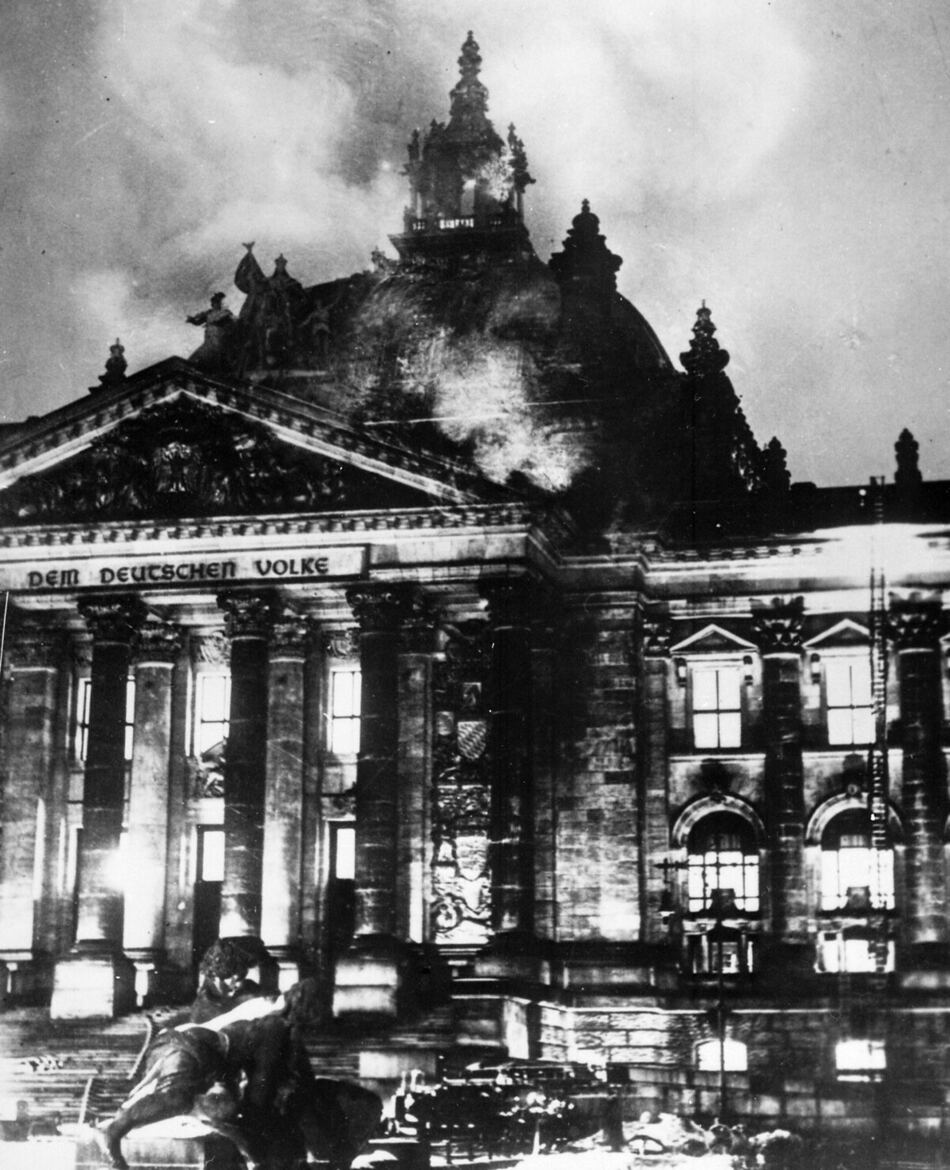
Marinus van der Lubbe
A 24-year-old former bricklayer from Leiden, unaffiliated with the mainstream Communist Party. Found near the burning building, he confessed immediately and insisted throughout his trial that he acted alone, protesting fascism's rise. Whether he actually did — or SA members were also involved, via a tunnel from Göring's residence next door — is still a live, named historiographical dispute, not a settled fact from 1933.
The election a week later, March 5, ran under the Fire Decree’s emergency conditions — opposition papers banned, Communist candidates already arrested. The Nazis won 43.9 percent, their best result yet, still short of a majority. Sixteen days on, March 21, came a piece of theater built to reassure anyone worried this new government wouldn’t respect the old order.
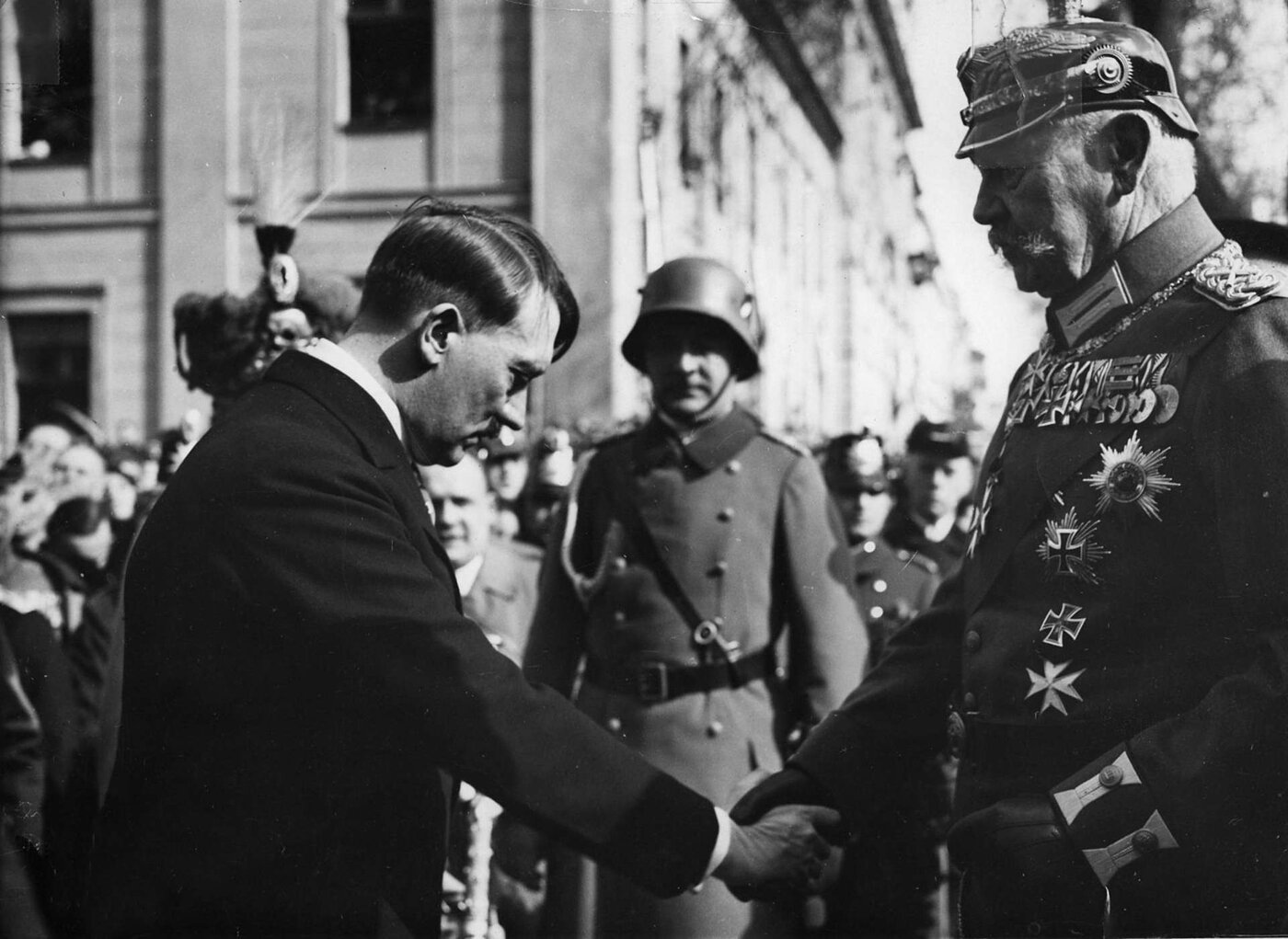
At the Garrison Church, Hitler — in a formal morning coat, not a uniform — bowed and shook hands with the elderly, decorated Hindenburg in front of the cameras. The message was aimed at conservative, nationalist, Protestant Germany: nothing has really changed, the new government stands in the old one’s line. Two days later, on March 23, the Reichstag met at the Kroll Opera House — the real building was still burned out — to vote on the Enabling Act, letting Hitler’s cabinet enact laws, including ones that broke from the constitution, without Reichstag approval, for four years. It passed 444 to 94. Every “no” vote came from the Social Democrats, the only party to oppose it as a bloc. The Communists’ 81 deputies weren’t even present; they were already under arrest or in hiding, and Göring, presiding as Reichstag president, lowered the quorum to compensate.
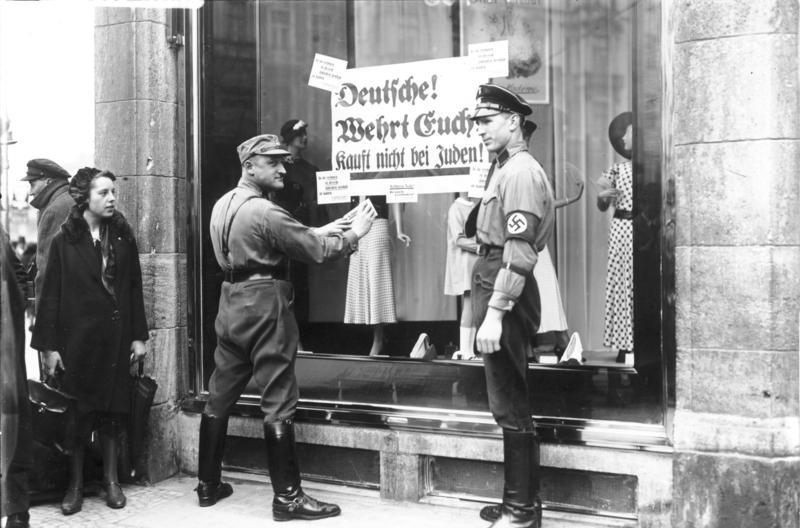
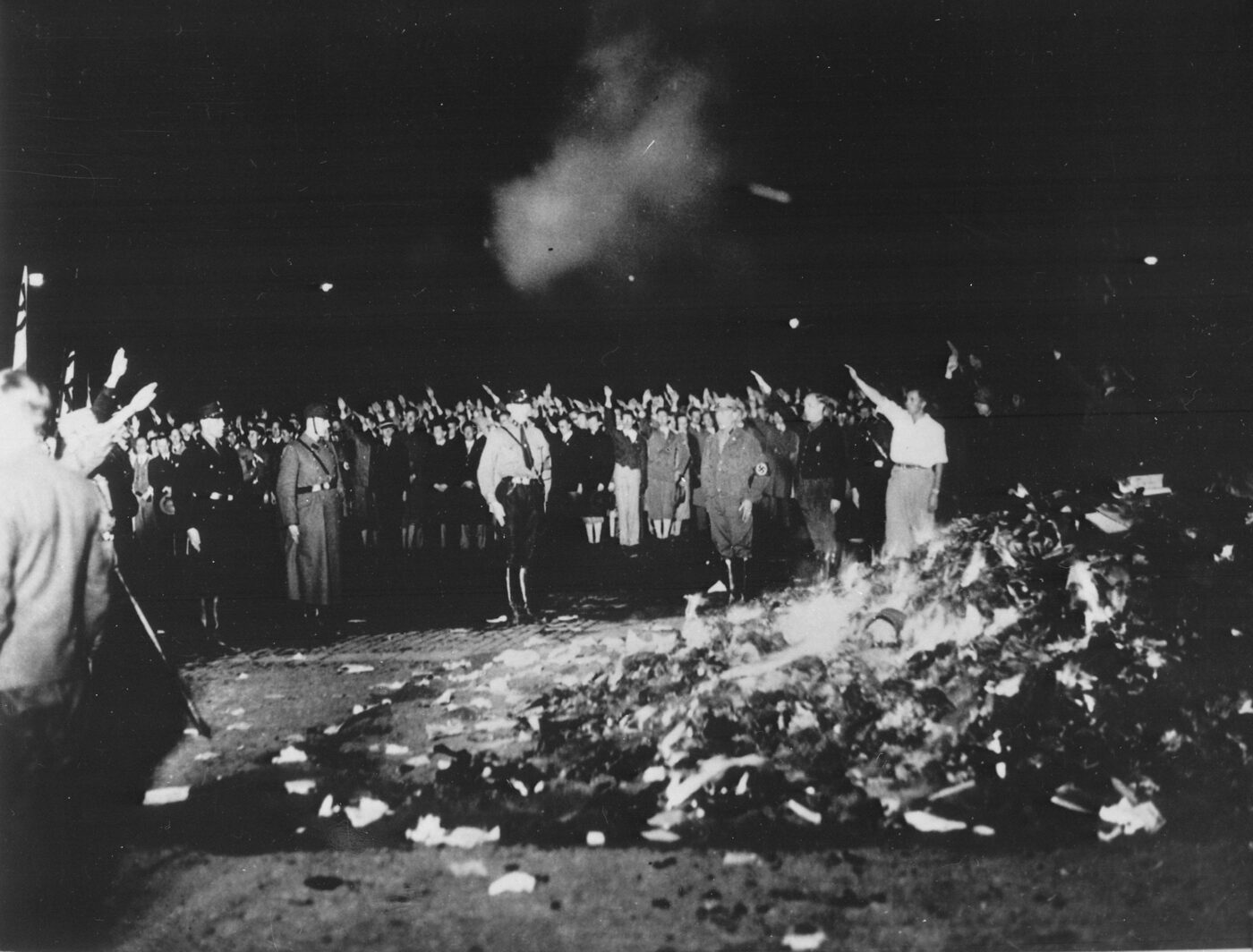
What came next moved fast, and in the open. On April 1, the SA ran a national boycott of Jewish-owned businesses — the government’s first coordinated antisemitic action, signs in shop windows reading “Germans, defend yourselves, don’t buy from Jews.” On May 10, students burned books by Jewish, socialist, and other “un-German” authors, most visibly at Berlin’s Opernplatz. By July 14, a new law made the Nazi Party the country’s only legal one. A concentration camp had already opened near Munich in March — Dachau, publicly announced by Heinrich Himmler as a facility for political prisoners.
Victor Klemperer, a Dresden professor, decorated WWI veteran, and — under the new regime's racial laws — classified as Jewish, kept a diary through these months that reads like it's being written by someone who cannot quite believe what he's watching. His entries from the weeks after Hitler's appointment record the boycott, the early arrests, and a conviction shared by educated, skeptical people around him: that a government running on terror and street violence simply could not last long in a country like Germany. He kept writing anyway, dated entry by dated entry, for the rest of the decade.
The last piece happened over a year later, finishing what the Enabling Act had started. By mid-1934, the SA — the party’s own street militia, several million strong — had grown into a power center Hitler no longer fully controlled, resented by the army and by conservative allies who wanted it curbed. On the night of June 30 through July 2, 1934, the regime murdered its own SA chief, Ernst Röhm, former chancellor Kurt von Schleicher and his wife, party rival Gregor Strasser, and dozens more — Hitler’s own count afterward put it at 74 dead; historians’ estimates run higher, with over a thousand arrested. The public justification, an imminent SA coup, rested on evidence later established as fabricated. No credible coup plot has ever been substantiated. The purge destroyed the SA’s independent power, satisfied the army’s demand that it be brought to heel, and settled old scores.
A month later, on August 2, 1934, Hindenburg died at his East Prussian estate, aged 86. Within hours, a law merging the presidency and chancellorship into “Führer and Reich Chancellor” took effect, and the Wehrmacht swore personal loyalty to Hitler by name, not to the constitution or the office. The law had been drafted and dated August 1 — the day before Hindenburg actually died. A plebiscite two weeks later ratified the merger at an official ~90 percent. Every check this part has followed — the Reichstag’s power, the presidency’s independence, a coalition system built on compromise — had, one lawful-looking step at a time, stopped existing.
In one sentence: was the destruction of Weimar democracy carried out through a coup, or through the law?
Almost entirely through the law — and that's the part most worth remembering. Hindenburg's appointment of Hitler was a legal act. The Fire Decree was signed under an existing constitutional provision. The Enabling Act passed a sitting parliament by the votes it needed. The succession law followed normal legislative process, just drafted a day early. Actual force — the SA's street violence, the camps, the 1934 murders — did the enforcing, but almost none of the structure required breaking the law to build. That's what historians mean by "the legal revolution," and why it's harder to see coming than a coup would be.
Sources
- Ian Kershaw, Hitler 1889-1936: Hubris (Allen Lane, 1998)
- Karl Dietrich Bracher, The German Dictatorship: The Origins, Structure, and Effects of National Socialism (Praeger, 1970; German orig. 1969)
- Hans Mommsen, The Rise and Fall of Weimar Democracy, trans. Elborg Forster & Larry Eugene Jones (University of North Carolina Press, 1996; German orig. 1989)
- Martin Broszat, The Hitler State (Longman, 1981; German orig. 1969)
- William Sheridan Allen, The Nazi Seizure of Power: The Experience of a Single German Town, 1922-1945, rev. ed. (Franklin Watts, 1984)
- Benjamin Carter Hett, Burning the Reichstag: An Investigation into the Third Reich’s Enduring Mystery (Oxford University Press, 2014)
- Victor Klemperer, I Will Bear Witness: A Diary of the Nazi Years, 1933-1941, trans. Martin Chalmers (Random House, 1998)
- Christabel Bielenberg, The Past Is Myself (Chatto & Windus, 1968)
- Sebastian Haffner, Defying Hitler: A Memoir, trans. Oliver Pretzel (Farrar, Straus & Giroux, 2002)
- Richard J. Evans, The Coming of the Third Reich (Penguin, 2003)
- USHMM Holocaust Encyclopedia: “The Reichstag Fire,” “Reichstag Fire Decree,” “The Enabling Act of 1933,” “Röhm Affair,” “Death of German President von Hindenburg” (encyclopedia.ushmm.org)
- German History in Documents and Images (germanhistorydocs.org)