In the autumn of 1923, a sixteen-year-old Berlin schoolboy named Raimund Pretzel — he would later write under the name Sebastian Haffner — watched his father’s life savings stop being money. His father was a civil servant, careful with money the way careful people are: decades of steady saving, meant to be there when it was needed. Then, within a few months, it wasn’t. By Haffner’s own account, the whole sum wouldn’t have covered a single newspaper by the time the year was out.
Nothing had been stolen. No law had changed the number in the account. What had changed was what the number was worth, and it changed so fast that “worth” barely meant anything anymore. Prices in Berlin were posted twice a day. Workers were paid every morning and spent the money by lunchtime, before it lost still more value by evening. Haffner watched grown adults — his father’s generation, people who had done everything right — try to explain this to each other and fail, because nothing in their experience had prepared them for it.
He also remembered something less comfortable to admit: for a sixteen-year-old with no savings to lose, the chaos was, for a while, almost thrilling. It took him longer than it should have, he wrote later, to notice what that same chaos was doing to people who weren’t sixteen — whose whole lives had just been erased on paper, with nobody to hold responsible for it.
This is the decade this series calls the Hangover: the eleven years between the treaty that ended one war and the election that opened the road to the next one, without anyone fully grasping it yet.
What the treaty actually did
The Treaty of Versailles was signed on June 28, 1919, in the Hall of Mirrors at the Palace of Versailles — deliberately the same room where the German Empire had been proclaimed in 1871. Germany lost territory in the west and east, its army was capped at 100,000 men with no air force, no submarines, no tanks, and the Rhineland was demilitarized. All of that stung. But the clause that did the most political damage over the next decade was a single sentence: Article 231, which assigned Germany and its allies legal responsibility for “all the loss and damage” the Allied governments had suffered. Historians today, including Sally Marks and Margaret MacMillan, read it as a narrow legal hook for billing reparations, not a moral verdict. Almost nobody in Germany read it that way at the time — to the German public, it looked like a signed confession of sole guilt, forced on a defeated country that hadn’t been allowed to negotiate. That gap, between what the clause was built to do and what an entire country believed it meant, shaped German politics for the next decade.
The reparations bill that followed, fixed in 1921 at 132 billion gold marks, made the anger concrete. It also wasn’t quite what it looked like.
Germany’s new government, meanwhile, had already been built somewhere else entirely. Berlin was too dangerous to meet in — the Communist Spartacist uprising had just been crushed there, and its leaders, Rosa Luxemburg and Karl Liebknecht, murdered in custody in January 1919. So the National Assembly convened instead in the small town of Weimar, opening February 6, 1919. The constitution it wrote that August built a real parliamentary democracy — but with pure proportional representation, which split the vote into a dozen-plus competing parties, and with Article 48, a clause letting the president rule by emergency decree in a crisis. It was written as a safety valve. It would later become something closer to a trapdoor.
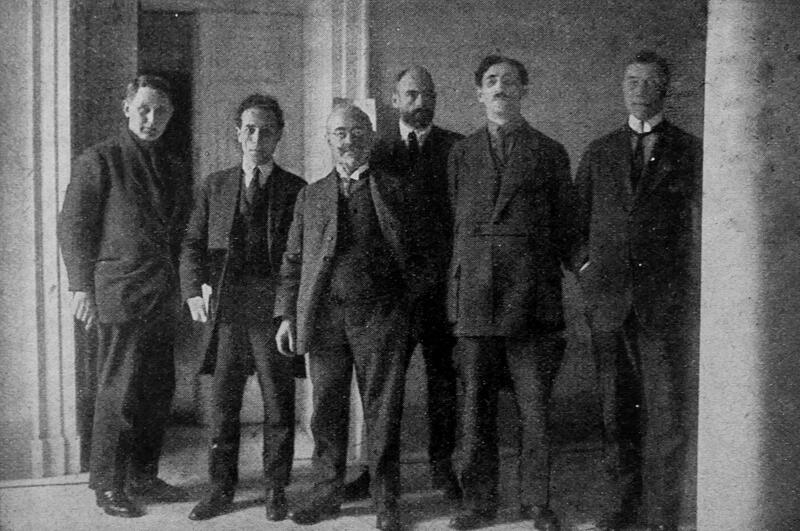
Walther Rathenau
An industrialist, writer, and one of the republic's most capable diplomats, Rathenau became foreign minister in early 1922 and pursued "fulfillment" — meeting reparations obligations while negotiating them down. To the far right, as a Jewish architect of that policy, he embodied everything they blamed for Versailles.
The spiral
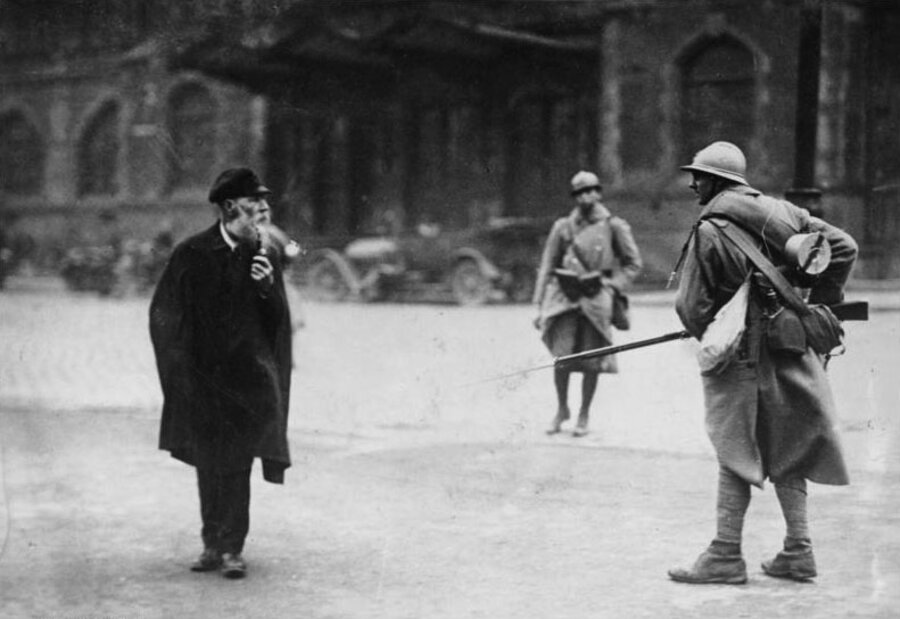
By January 1923, Germany had fallen behind on reparations deliveries of timber and coal. France and Belgium responded by occupying the Ruhr, Germany’s industrial heartland — sending troops in to run the mines and railways themselves.
You lead Germany's government. French and Belgian troops have just occupied the Ruhr, the country's industrial core. What do you do?
Complying under occupation would look like surrender to a public already furious over Versailles. Open military resistance was impossible — the treaty had seen to that. There was a third option, one that didn't require a single soldier.
Chancellor Wilhelm Cuno's government chose passive resistance — and chose to fund it. Ruhr workers and officials who refused to cooperate kept getting paid anyway, out of Berlin. There was only one way to raise that kind of money fast: print it. The government had already been financing postwar deficits by printing marks since 1921. Funding an entire regional strike the same way didn't create the hyperinflation from nothing — but it was the spark that turned an already-serious inflation into a currency-destroying one within months.
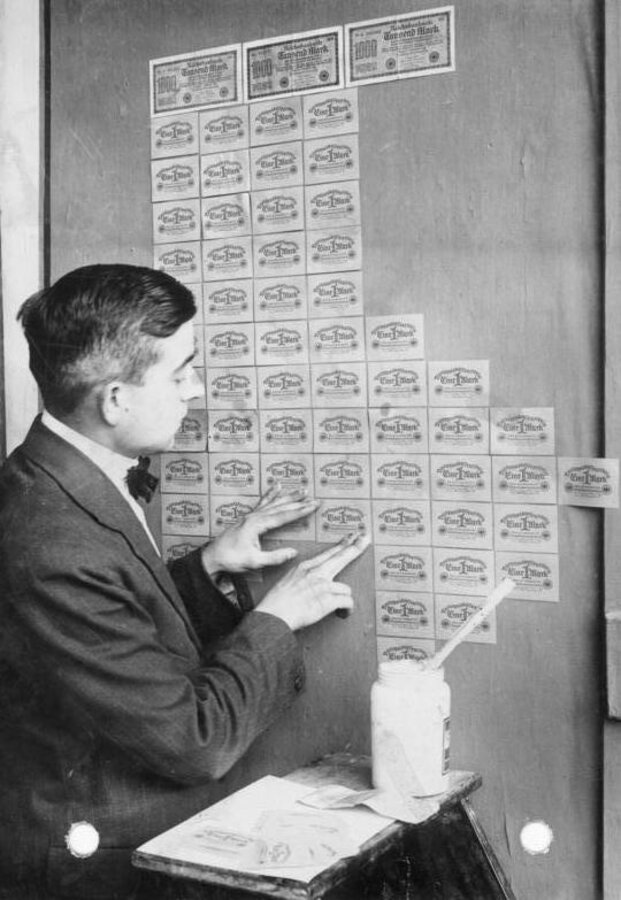
Reichsbank president Rudolf Havenstein had been printing marks to buy foreign currency “at any price” since 1921, accelerating the very collapse he was trying to manage; he died in office on November 20, 1923. Amid the chaos, on the night of November 8-9, Adolf Hitler and the retired general Erich Ludendorff attempted a coup in a Munich beer hall — the Beer Hall Putsch — which collapsed the next day under police gunfire, ending with Hitler’s arrest.
What finally stopped the spiral wasn’t quite what the public was told stopped it.
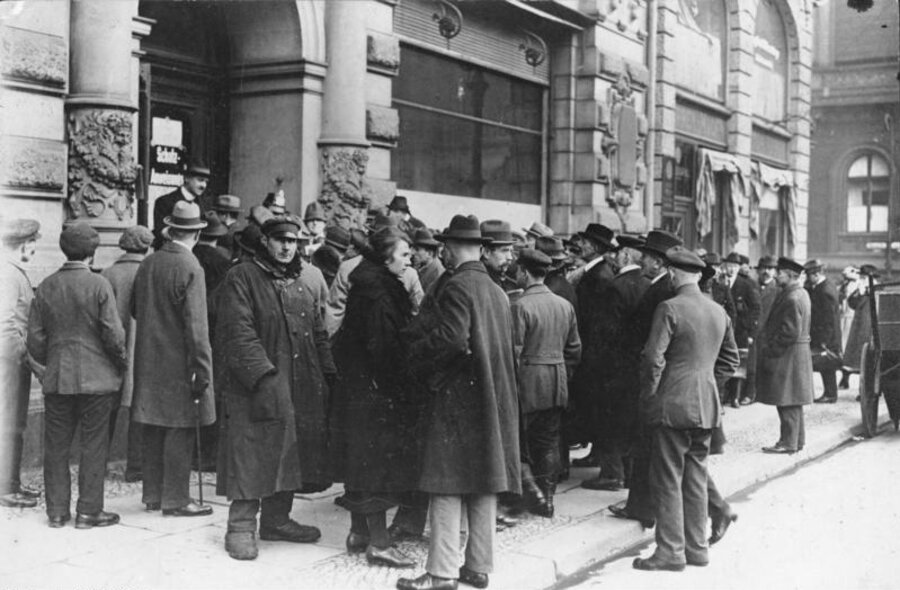
Haffner later described his generation of Berlin teenagers living through 1923 in two registers at once — genuinely frightened by what was happening to their families, and, at the same time, half-thrilled by a world where none of the old adult certainties held anymore. It took him longer than it should have, he admitted, to see that the second feeling was a luxury available only to someone too young to have anything left to lose.
The years that almost worked
What came after 1923 is the part of this story people skip past fastest, and it matters the most for what comes next.
The Dawes Plan of 1924 rescheduled reparations and opened Germany to a flood of American loans. Gustav Stresemann — chancellor for a hundred days at the height of the 1923 crisis, then foreign minister until 1929 — pursued a strategy of diplomatic “fulfillment”: meet Germany’s obligations, and use that credibility to renegotiate them down. It worked better than almost anyone expected. The Locarno Treaties of 1925 saw Germany, France, and Belgium mutually guarantee their existing borders; Germany joined the League of Nations in 1926; Stresemann and French foreign minister Aristide Briand shared that year’s Nobel Peace Prize. The Young Plan of 1929 cut reparations again. Weimar culture — Bauhaus design, Expressionist film, cabaret — flourished alongside it. In the May 1928 Reichstag election, the Nazi Party won 2.6 percent of the vote and twelve seats out of several hundred: a fringe party, five years after the hyperinflation, going nowhere.
That number is worth sitting with, because it corrects something a lot of people assume without checking. The 1923 hyperinflation did not lead directly to the Nazi rise — the clock doesn’t run that way. Five years after the worst of the crisis, the party that would end the republic was a rounding error.
None of this recovery was faked. Real wages rose, real diplomacy happened. But it depended on something most Germans never saw clearly: a steady inflow of short-term American loans, refinancing German industry year after year — loans that could, in principle, be recalled at any time.
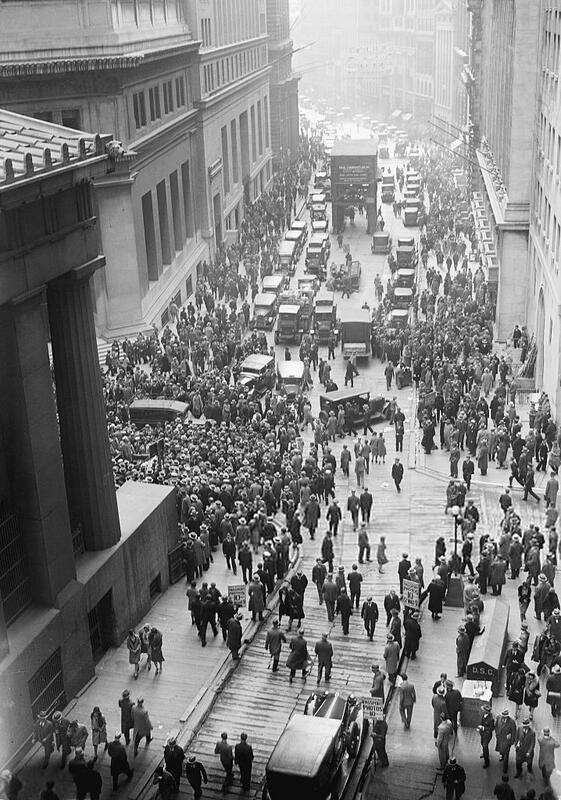
Stresemann died suddenly on October 3, 1929. Three weeks later, the Wall Street Crash hit New York. American banks began recalling those short-term loans, and the credit propping up the recovery started to disappear. German unemployment, about 1.3 million in 1929, was heading toward 3 million by the end of 1930. In March 1930, the governing coalition collapsed over how to pay for unemployment insurance. President Paul von Hindenburg appointed Heinrich Brüning chancellor; when the Reichstag rejected his austerity budget that July, Brüning began governing by Article 48 emergency decree instead of parliamentary majority — the safety valve from 1919 now doing the opposite of what it was built for. He then dissolved the Reichstag and called new elections.
This gauge shows where historians' debate actually sits — not a simulated probability. It never invents a number; it points at a real argument.
Was the republic's collapse baked in from the start, or did it depend on choices that could have gone differently after 1929? Karl Dietrich Bracher, in The German Dictatorship (1955), argued the republic was fatally flawed from birth — its elites in the army, courts, and civil service never reconciled to democracy, Article 48 a loaded gun built into the constitution itself. Hans-Ulrich Wehler's broader "Sonderweg" (special-path) thesis extends this: Germany's political culture, he argues, stayed authoritarian underneath its rapid industrial growth. On the other side, Detlev Peukert and Richard J. Evans both argue the mid-1920s stabilization was real, not a mirage, and that Hitler's path to power ran through a specific, avoidable sequence of elite miscalculations after 1930. Economic historian Harold James makes the sharpest version: it was specifically the severity of the Depression that "destroyed the political center" — without the 1929 crash, the republic might well have held. Both camps agree on every fact here. They disagree about what those facts add up to.
Brüning’s new election was set for September 14, 1930. Turnout hit 82 percent, the highest since the republic’s founding. The Nazi Party’s vote surged from 2.6 percent to 18.3 percent — 107 seats, up from twelve. Overnight, a party most of Germany had written off two years earlier was the second-largest in the Reichstag.
Bella Fromm, a Jewish society journalist covering Berlin's diplomatic circuit, began keeping her diary that same year. Her entries from the days after the vote record a startled, uneasy recalculation — diplomats and officials who had dismissed the Nazis as a spent fringe force suddenly needing to take the party seriously, without yet agreeing on what "seriously" should mean.
One more thing was true in 1930 that almost nobody outside a small circle knew: since 1922, under a public treaty of friendship signed at Rapallo, Germany’s army had been secretly training tank crews and testing aircraft at hidden facilities inside the Soviet Union, circumventing Versailles’s disarmament limits through the very decade this part covers. The republic that looked, in its “golden years,” like it was rejoining the community of nations had never actually stopped quietly rebuilding the military Versailles was supposed to have taken away.
Haffner was twenty-three that September, watching the results the way he’d watched everything else in this decade — as an ordinary Berliner trying to work out what he was looking at. This time, he later wrote, it didn’t feel thrilling. It felt like something with a shape he couldn’t yet see the whole of.
In one sentence: what actually radicalized German voters toward the Nazi Party — the 1923 hyperinflation, or something else?
Not the hyperinflation directly — the documented rebuttal is the 1928 election, five years after 1923's worst chaos, where the Nazi Party still managed only 2.6 percent of the vote. What actually moved the number was the Depression that began in October 1929: the sudden loss of the American credit propping up the mid-decade recovery, unemployment climbing toward three million, and a governing coalition that broke apart trying to answer for it. The 1923 currency collapse is the more dramatic story. The 1929 credit collapse is the one the numbers actually point to.
Sources
- Richard J. Evans, The Coming of the Third Reich (2003)
- Detlev Peukert, The Weimar Republic: The Crisis of Classical Modernity, trans. Richard Deveson (1992; German orig. 1987)
- Karl Dietrich Bracher, The German Dictatorship, trans. Jean Steinberg (1970; German orig. 1955)
- Harold James, The German Slump: Politics and Economics 1924-1936 (1986)
- Adam Fergusson, When Money Dies: The Nightmare of the Weimar Hyper-Inflation (1975; 2010 reissue)
- Sebastian Haffner, Defying Hitler: A Memoir, trans. Oliver Pretzel (2002)
- Harry Kessler, Berlin in Lights: The Diaries of Count Harry Kessler, 1918-1937, ed./trans. Charles Kessler (1971/1999)
- Edgar Vincent, Viscount D’Abernon, An Ambassador of Peace (1929-30)
- Bella Fromm, Blood and Banquets: A Berlin Social Diary (1942)
- Sally Marks, “The Myths of Reparations,” Central European History 11:3 (1978)
- Ian Johnson, Faustian Bargain: The Soviet-German Partnership and the Origins of the Second World War (2021)
- Margaret MacMillan, Paris 1919: Six Months That Changed the World (2001)