Last time: was the Brusilov Offensive Russia's best campaign of the war, or the one that cost it the most to win? Both, and the two readings aren't actually in tension — that's what makes the offensive worth holding onto past this part. It achieved everything a campaign is supposed to achieve: it broke an enemy army and changed the strategic picture on two other fronts. It also consumed the one resource an army the size of Russia's could least afford to spend twice: the trained people who made it more than its headcount. A win, honestly counted, is not the same question as a win the institution that achieved it could actually afford.
Everything this series has followed so far happened inside Europe. It didn’t stay there. Within months of August 1914, fighting had opened in German East Africa, in the Pacific, off the coast of Chile and the Falklands, and by 1915 in the Dardanelles and Mesopotamia — a direct result of empire: Britain, France, Germany, and the Ottoman Empire all held territory and treaty obligations far outside Europe, and a war between them was, almost automatically, a war fought wherever those holdings touched.
Japan entered on the Allied side within weeks, honoring the Anglo-Japanese Alliance, and by November 1914 had seized Germany’s Chinese treaty port at Tsingtao along with German-held island groups across the Pacific — a campaign largely settled before most of Europe had finished mobilizing. Germany’s African colonies became fronts in their own right; the most extraordinary of them, German East Africa, was defended by a force under Colonel Paul von Lettow-Vorbeck that never lost a major engagement and was still in the field, undefeated, when it received word — some two weeks after the fact — that the Armistice had already been signed in Europe.
The clearest test of that logic came in the Dardanelles.
You are Winston Churchill, First Lord of the Admiralty. The Western Front is deadlocked. The Ottoman Empire, weaker than Germany or Austria-Hungary, controls the straits into the Black Sea — Russia's only warm-water supply route from its allies. What do you propose?
A naval force, and later ground troops, forcing the Dardanelles Strait to take Constantinople, knock the Ottoman Empire out of the war, and open a supply corridor to Russia — without committing the mass of men a Western Front breakthrough would require.
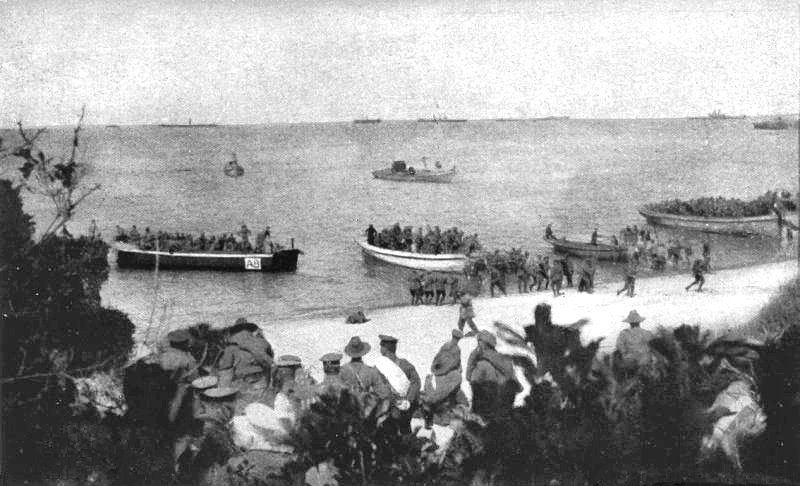
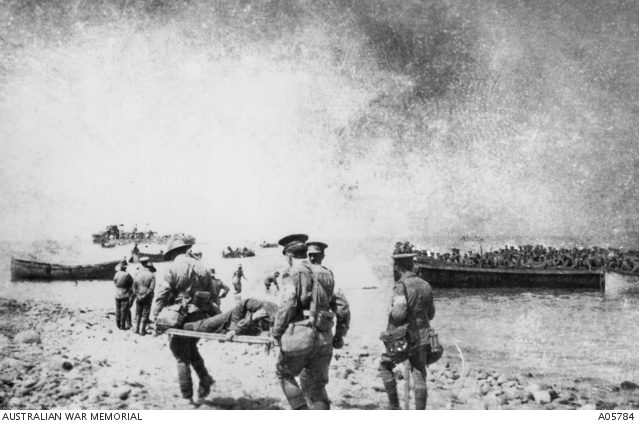
The Allies pushed the naval and land campaign against the Dardanelles and Gallipoli. The initial naval attack in March 1915 failed to force the strait; the land campaign that followed, beginning with landings at Gallipoli on April 25, 1915, met determined Ottoman resistance under commanders including Mustafa Kemal (later Atatürk) and stalled into its own trench deadlock on the peninsula's cliffs and gullies. Allied forces — British, French, and a large contingent of Australian and New Zealand troops, whose landing that April 25 is still marked as a national day of remembrance in both countries — evacuated by January 1916. Total casualties across all sides are estimated at several hundred thousand; exact figures vary by source and by whether disease deaths are counted alongside combat losses. Churchill, held substantially responsible, resigned his post that May.
The "Easterners" — Churchill among them, later joined by figures including Lloyd George — argued throughout the war that peripheral campaigns against the Central Powers' weaker partners could achieve real strategic effect without the horrific attrition of the Western Front, and that Gallipoli's failure was one of execution and timing rather than concept. The "Westerners," including commanders like Haig and Robertson, held that Germany's army was the war's actual center of gravity and that any resource spent elsewhere was resource not spent on the front that would decide the outcome either way. Peter Hart's history of the campaign leans toward the execution-failure reading — poor planning, inadequate reconnaissance, and repeated tactical missteps rather than a fundamentally unsound idea. The underlying strategic question the two camps argued over was never fully settled by Gallipoli's outcome alone.
The other campaigns this part opened carried their own costs, less remembered but comparably large. In German East Africa, the British-led forces that eventually wore Lettow-Vorbeck’s campaign down relied on hundreds of thousands of African porters to move supplies where no railway reached — carrier deaths from disease and exhaustion are documented but poorly recorded at the time, and modern estimates for the campaign as a whole run into the hundreds of thousands, a figure historians treat as more reliably a lower bound than an exact count. In Mesopotamia, a British-Indian force under General Townshend advanced on Baghdad in 1915, was besieged at Kut, and surrendered in April 1916 — one of the largest British surrenders to that point in the war — before British and Indian troops under a different command took Baghdad the following year. India alone contributed more than a million soldiers and laborers to the British war effort across every one of these theaters; French colonial forces from West Africa, North Africa, and Indochina did the same for France. Almost none of those soldiers, or the colonial subjects they represented, had any vote in the decision to send them.
In one sentence: did fighting this war across Africa, the Middle East, and the Pacific make it more winnable, or just wider?
Some of both, unevenly distributed. Japan's Pacific campaign and the naval blockade genuinely narrowed Germany's options. Gallipoli and the African campaigns mostly widened the war's cost without shortening it — real strategic logic, real strategic failure, and real human cost carried overwhelmingly by people who had no say in any of it. The empires that made this a world war were the same empires that decided, without asking, whose soldiers and whose porters would carry that width.