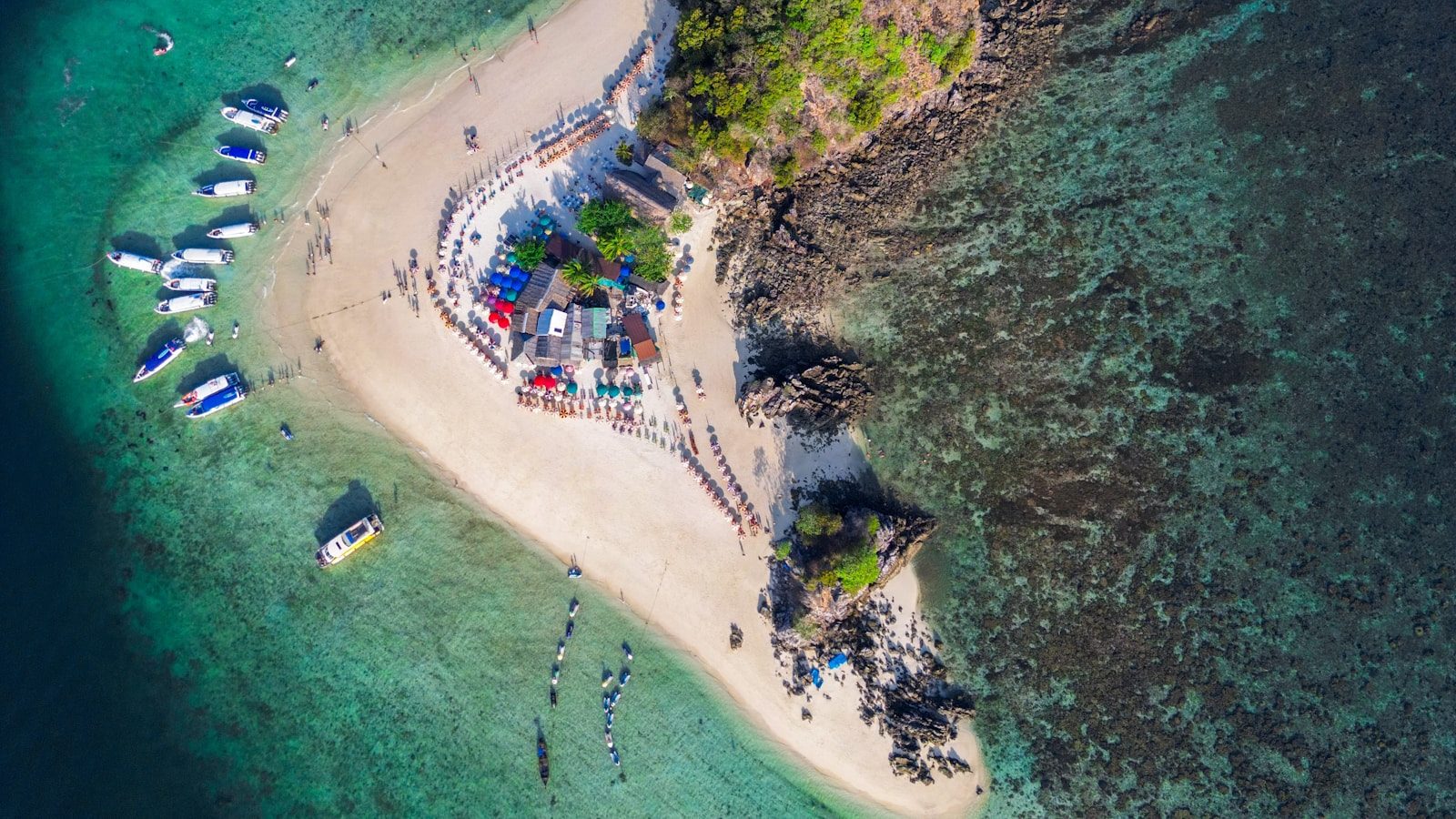
On 3 February 2026, the Republic of Nauru — twenty-one square kilometres of worked-out phosphate rock in the central Pacific, population around twelve thousand — cut the price of belonging to it. The contribution required under its Economic and Climate Resilience Citizenship Programme dropped by $25,000, to a promotional $90,000, with the discount set to expire on 30 June, after which the standard rate of $115,000 resumes.
Sit with the grammar of that. A promotional price. An expiry date. A standard rate to which the offer will revert. This is the language of a mattress sale, applied to the oldest and most jealously guarded thing a state possesses — membership of itself. The procedure is fully remote: an applicant need never visit Nauru, not to submit documents, not to take the oath. Processing runs three to four months. The passport opens about 87 destinations, which the industry’s comparison sites note, with the deadpan of a product review, “limits its appeal for applicants who mainly seek wider travel freedom.”
And the programme’s name is not decoration. Nauru launched it at the UN Climate Change Conference in November 2024, as a mechanism to fund relocation of its population away from a coastline the sea is taking. A state that may not physically persist is selling perpetual membership to strangers, to finance its own survival. There is no cleaner sentence about the twenty-first century than that one.
⁂
Nauru is the newest stall in a functioning global market with a published price list. The floor: Vanuatu, from roughly $130,000, citizenship in one to two months, the fastest on earth — biometrics can be given in Dubai, Hong Kong or Nouméa, none of which are in Vanuatu. The mid-market: the five Eastern Caribbean states — St Kitts and Nevis, Dominica, Grenada, Antigua and Barbuda, St Lucia — which in July 2024 did what any commodity cartel does when discounting turns ruinous and agreed a harmonised minimum price of $200,000. The market’s late luxury tier, Malta’s golden passport at over a million euros, closed on 29 April 2025, when the Court of Justice of the European Union ruled in Commission v Malta that citizenship granted through a predominantly transactional process breached EU law. New stalls are opening where the old ones shut: Sierra Leone, São Tomé and Príncipe, El Salvador since 2023; Argentina, Botswana and St Vincent expected to begin issuing in 2026. By the Investment Migration Council’s count, more than eighty sovereign states now run some form of investment migration programme.
The scale is no longer boutique. The five Caribbean programmes alone have issued over 100,000 passports. And for the sellers, this is not a side business. Estimates of citizenship revenue as a share of GDP run from around 5 percent for Antigua and Grenada, through 10–20 percent for Vanuatu and St Lucia, to figures for Dominica and St Kitts that various analyses place anywhere from 14 percent to as high as half of government revenue in peak years. Whatever the precise number, the structure is the same: for a set of microstates with no minerals, little industry and a rising sea, the primary export is the legal fact of themselves.
⁂
It is worth being precise about what is actually being sold, because it is not, mostly, a home. The typical buyer will never visit. What the passport contains is other countries’ trust — the visa-free access that third states have extended to Dominica or Vanuatu on the assumption that those governments know who their citizens are. A citizenship-by-investment programme monetises that assumption. The issuing state collects the fee; the receiving states absorb the risk. It is, structurally, the same trade as the ship registries of St Kitts and the Comoros selling last-voyage flags to dying vessels: a small sovereignty renting out its legal personality, priced not by what the state is but by what other states will honour.
Which is why the crackdown, when it came, took the form it did. The European Union cannot forbid Vanuatu to sell passports. What it can do is repossess the trust — and it has. Schengen access for Vanuatu passport holders was suspended in stages from 2022 and made permanent by the European Council in December 2024, explicitly because of the citizenship programme; people who had bought partly for European travel watched the product’s main feature deleted retroactively by a third party. The same instrument is now aimed at the Caribbean: the Commission has cited the five states’ 100,000-plus passports and low rejection rates, and has reportedly written asking them to phase out their programmes by 1 June 2028, with a visa-suspension review due in late 2026. The buyers hedged in response, as buyers do — the industry now openly advises “multi-layered mobility strategies,” a second citizenship plus a residence permit elsewhere, portfolio theory applied to belonging.
The precedent worth noticing is the Malta ruling. The court’s logic was that citizenship cannot be commodified without hollowing out what citizenship is — that a passport sold is a different object from a passport belonged to, even if the two are typographically identical. The market’s existence tests that proposition annually, at scale, and so far the market is winning on volume while the court wins on territory.
⁂
The honest complication is that the sellers’ case is better than the mockery allows. The IMF itself has recognised these programmes as fiscal lifelines for microstates. Dominica rebuilt after Hurricane Maria substantially on passport revenue. Nauru’s programme, whatever its optics, is one of the only instruments available to a state whose land is literally being subtracted — the alternative funding sources on offer from the countries now objecting have been, to put it gently, not oversubscribed. When the rich world sells belonging, it calls it a talent visa or a golden residence permit and hosts a conference; the UAE has built an entire immigration architecture on exactly this trade, at higher prices, to applause. The objection to the microstates is not really that citizenship is for sale. It is about who is permitted to run the shop.
But the deepest thing in this story is not the hypocrisy. It is the price itself. For most of history, the question “what is membership of a nation worth?” was unanswerable — the kind of question that defined the sacred precisely because no market would touch it. Now there is a ticker. Belonging to Nauru: $90,000, while the promotion lasts. To Dominica: $200,000, cartel minimum. To Malta: unavailable, by court order, which is its own kind of price. Somewhere in that spread — between a sinking island’s discount and a continent’s refusal to sell at any price — is the most precise measurement anyone has ever taken of what the world thinks a country is.
The offer expires June 30. The country, they hope, does not.
Liked this? Get the next one in Working Theory.
Going weekly in August (it's in beta now). One genuinely interesting read on building, the brain, and the science most people missed.